

Chinese steelmakers are paying closer attention to the quality of iron ore they purchase as they look to keep production costs down. Higher-grade ore is more expensive, but it can also help mills operate more efficiently. With profitability under pressure, steelmakers must decide whether these benefits justify the additional cost.
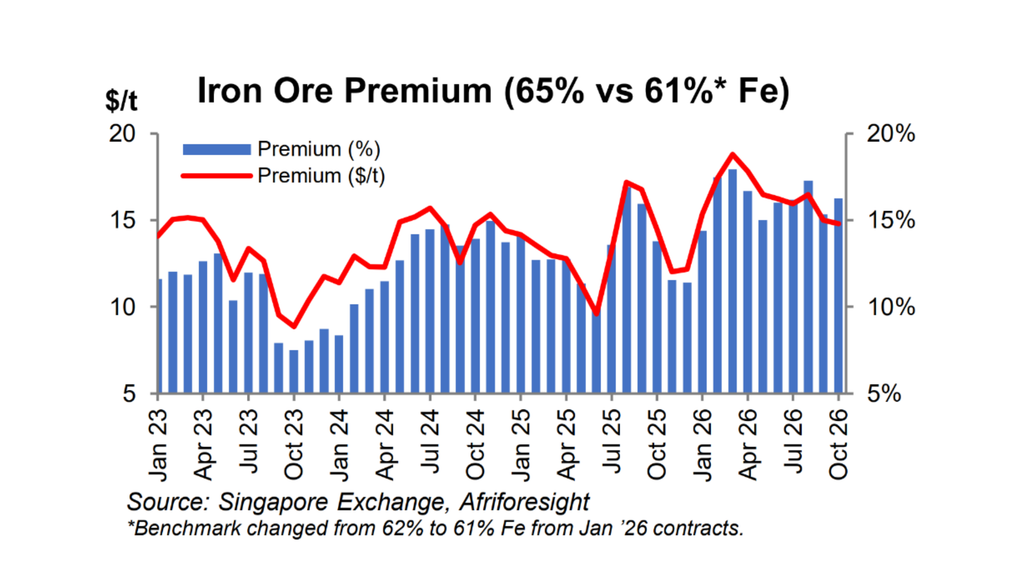
Despite difficult market conditions, high-grade iron ore continues to command a relatively strong premium. The premium for 65% Fe iron ore over the 61% Fe benchmark reached nearly 18% in March 2026, before fluctuating and averaging around 16% in October to date. This suggests that higher-quality material remains attractive to steelmakers, even as they become more cautious about spending.
The appeal of higher-grade ore lies in the savings it can offer. Higher iron content and fewer impurities mean less waste material needs to be processed, helping mills reduce fuel consumption and improve productivity. However, these savings depend on factors such as coke prices, furnace efficiency and the quality of other raw materials. Mills therefore need to consider the overall cost of producing steel rather than simply choosing the cheapest ore.
Meanwhile, growing supply could put pressure on premiums. Brazil remains a major supplier of high-grade ore, particularly through Vale’s Carajás operations, but Guinea’s Simandou project is bringing another significant source into the market. With iron ore reserves averaging around 65% Fe, Simandou is expected to become an important supplier to Chinese steelmakers. Rio Tinto’s Simfer operation reached an annualised production rate of about 10mntpa in the 3rd quarter of 2026, with plans to reach 60mntpa during the 2nd half of 2028. As these volumes increase, mills will have more options when sourcing premium ore, increasing competition among suppliers.
Looking ahead, growing supplies of high-grade ore could limit further increases in premiums, although China’s efforts to improve steelmaking efficiency and reduce emissions should continue supporting demand. The premiums mills are willing to pay will depend on whether the savings from using higher-grade ore justify its higher price.
For more on the outlook for Iron Ore; see our Iron Ore forecasts.
Compiler: Devon Allers (devon@afriforesight.com)