


Nickel ore prices remain under pressure (see graph) as disruption to Indonesian supply has so far been insufficient to materially tighten the broader nickel market, with downstream consumption in China remaining subdued and stocks providing a sizeable buffer.
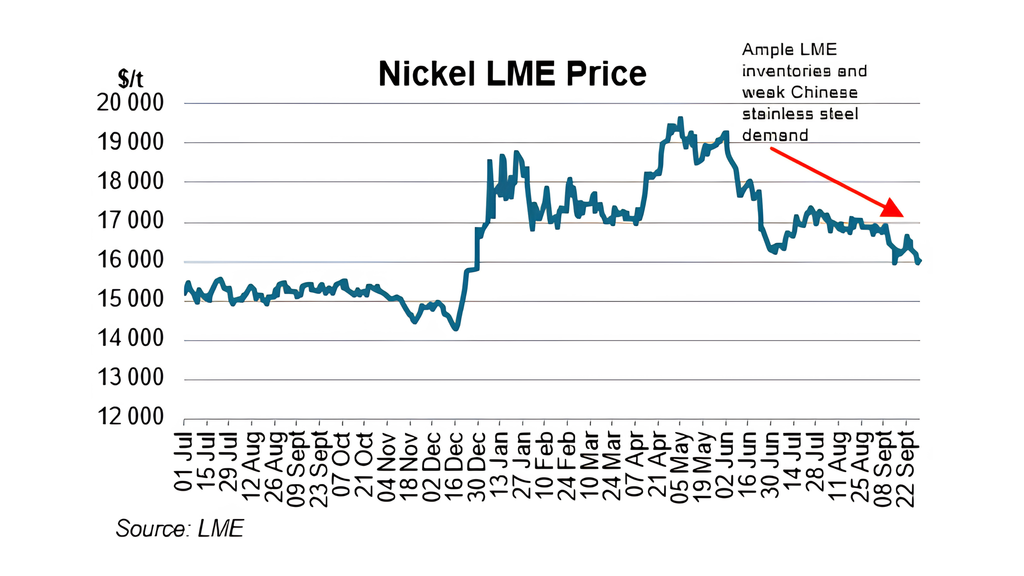
Indonesia’s nickel industry is facing an increasingly important operational constraint as the El Nino-driven drought reduces water availability in the Sulawesi smelting hub. Smelting facilities in the Morowali Industrial Park (IMIP) began cutting operating rates from 22 September, with the disruption potentially reducing nickel pig-iron (NPI) output – as NPI is produced from nickel ore, lower smelter utilisation reduces near-term ore demand, partly offsetting the potential bullish impact of tighter Indonesian supply.
Indonesian ore availability is also proving less constrained than initially feared following stricter output quotas implemented by government at the beginning of the year. Additional 2026 output quotas are being progressively approved, with the market increasingly focused on actual mine production and shipments rather than further quota announcements.
Furthermore, the supply-side impact is being absorbed by a soft Chinese market. With a declined September 300-series stainless steel production, output is expected to decline further in October due to the shortened operating schedule during China’s National Day holiday. This reflects continued weakness in downstream demand.
At the same time, high LME inventory overhang is visible in the refined nickel market – see graph below. The continued accumulation of exchange stocks leaves a substantial volume of deliverable metal available despite Indonesian production disruptions, reinforcing the perception that the market remains well supplied.
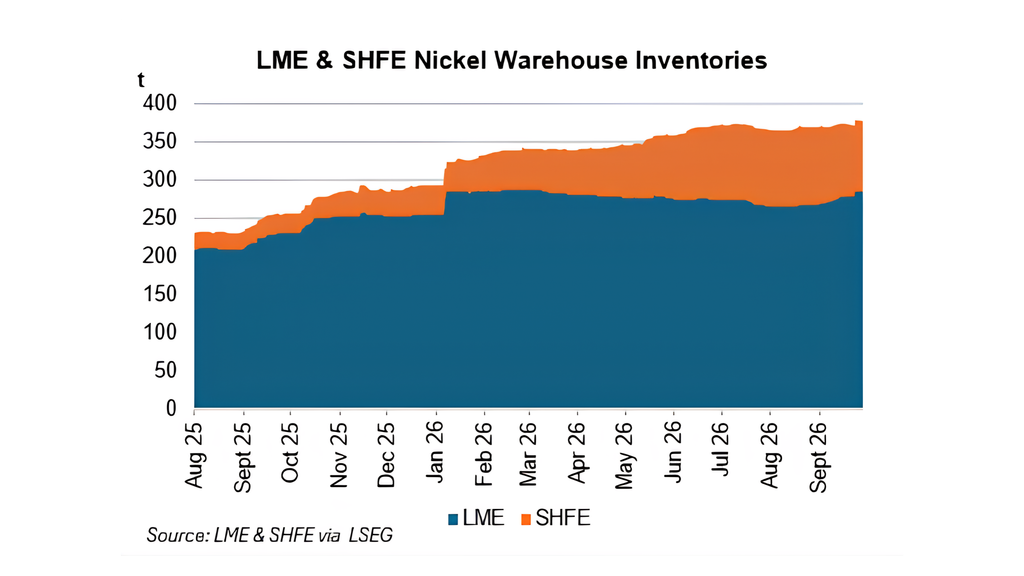
Overall, the nickel market remains caught between a genuine Indonesian supply risk and a weak demand environment. Water shortages could become increasingly significant if the El Niño-driven disruption persists, but high LME inventories, accumulated NPI stocks and subdued Chinese stainless steel consumption are limiting the immediate price response. Until inventories begin to draw down and Chinese downstream purchasing improves, supply disruptions are likely to provide only intermittent support, leaving nickel ore prices vulnerable to further downwards pressure.
For more on the outlook for Nickel; see our Nickel forecasts.
Compiler: Khomotso Rabutla (khomotso@afriforesight.com)