

Manganese ore prices fell by 13.3% in July, ending the month at $3.27/dmtu, more than 25% below its April peak. The decline marks a sharp reversal from earlier in the year, when higher freight and energy costs helped lift prices. Those pressures have since been overtaken by a simpler market imbalance: Chinese buyers need less ore, while more material is arriving at the country’s ports.
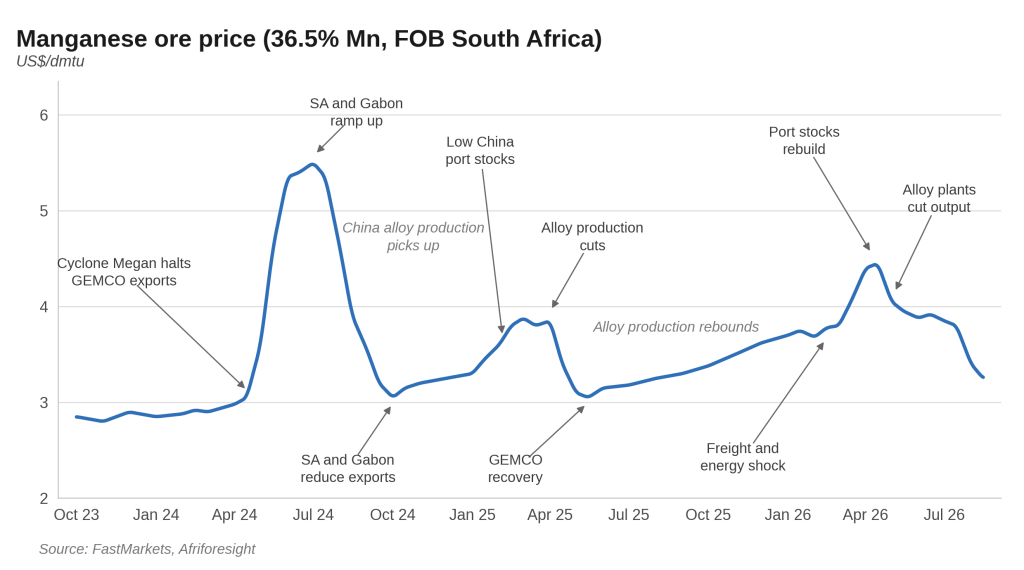
Manganese ore is mainly used to produce alloys that strengthen steel, so demand is closely linked to conditions in the steel industry. China’s silicomanganese producers are currently facing weak selling prices and poor profit margins, prompting many plants to reduce output. As a result, alloy producers are purchasing only the small quantities of ore needed for immediate production rather than building up stocks.
At the same time, concerns about an ore shortage have eased. Australian supply has normalised following the recovery of South32’s GEMCO operation, while the company drew down accumulated inventories and increased manganese sales during the June quarter. South Africa’s output has remained strong and improved rail performance in Gabon lifted Eramet’s transported ore volumes during the 1st half of the year. Global manganese ore supply is expected to remain elevated during the 2nd half, supported by South African production and the continued normalisation of Australian supply.
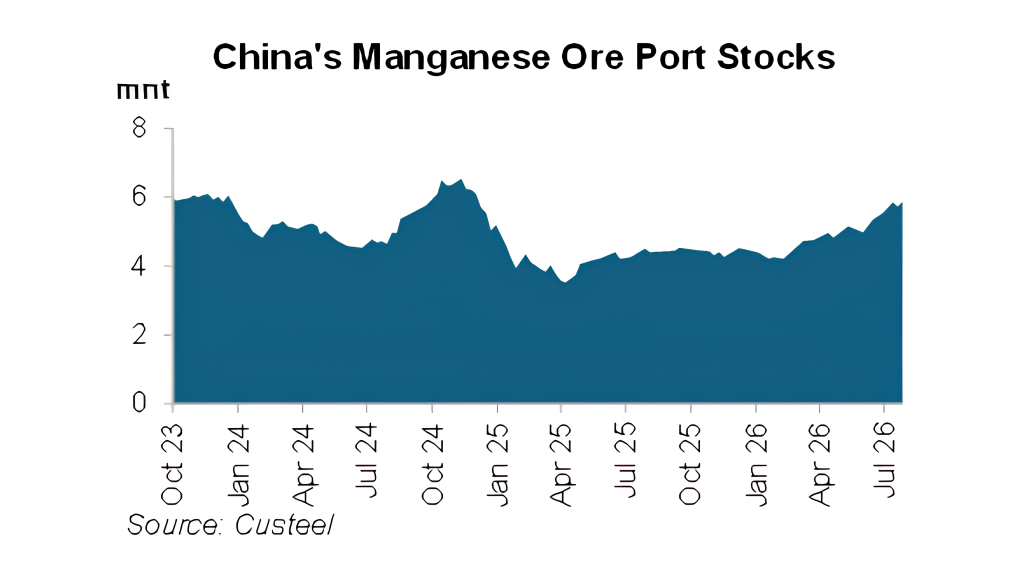
The combination of weaker demand and steady cargo arrivals has caused inventories at China’s manganese ore ports to rise by 33.5% since the beginning of the year to almost 5.9mnt. The build-up is important because it leaves buyers with little incentive to rush into the market or accept higher prices. Instead, alloy plants can purchase ore only when needed, knowing that ample material is already available at the ports.
Rising inventories have also increased competition among traders. Some sellers are holding cargoes purchased during the earlier price rally and are now lowering their offers to secure sales and avoid further losses. Major producers – including South32, Consolidated Minerals and Eramet’s Comilog – also cut the prices quoted for September shipments of Australian, South African and Gabonese ore. Because buyers can now get new shipments at lower prices, they are less willing to pay more for ore already stored at Chinese ports, pushing prices down further.
The near-term outlook for manganese prices will therefore depend largely on whether China’s steel and silicomanganese production recovers strongly enough to absorb the accumulated stocks. Demand may improve moderately during the 2nd half of the year, but supply is also expected to remain relatively high. Until alloy margins strengthen, production increases and port inventories begin to decline, weak purchasing and abundant ore availability are likely to keep manganese ore prices under pressure.
For more on the outlook for Manganese; see our Manganese forecasts.
Compiler: Devon Allers (devon@afriforesight.com)