

Graphite prices are usually analysed with reference to new energy vehicle (NEV) sales, battery demand and mine supply; but the majority of the graphite used in lithium-ion battery anodes are derived through synthetic means by graphitising carbon-rich feedstocks, commonly petroleum coke – this is where the oil price become relevant.
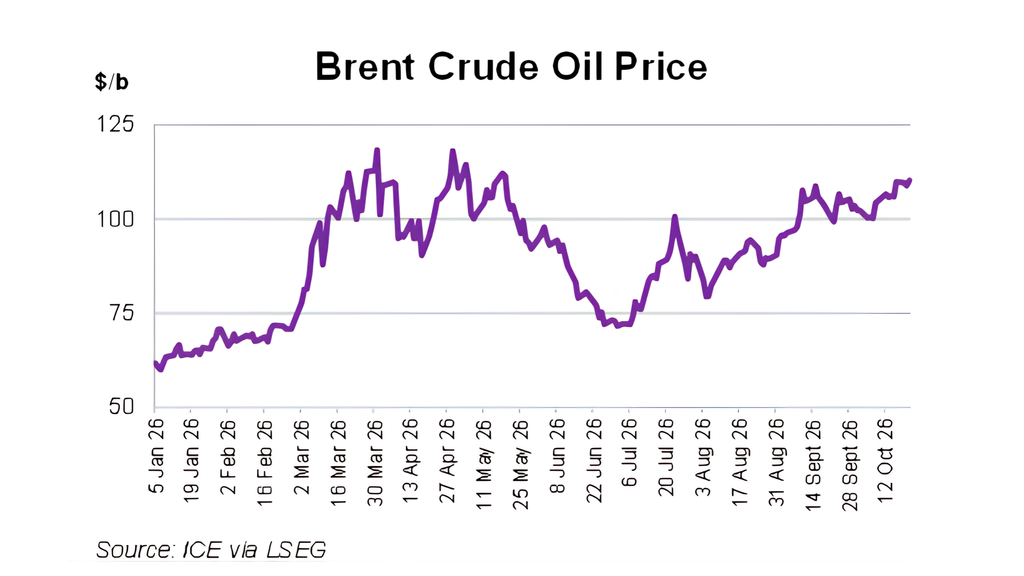
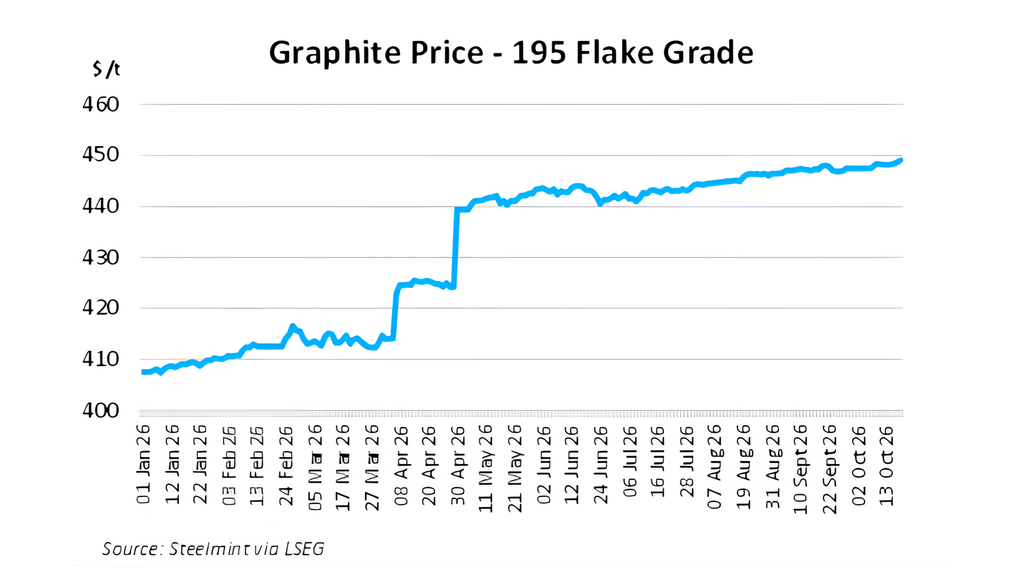
Brent Crude oil prices are up 81% from 1 January 2026 (see first graph) as the war in the Middle East upended global supply. As oil is a crucial feedstock for synthetic graphite production, higher oil prices pushed up prices of synthetic graphite; in turn, demand for natural graphite as an alternative to synthetic graphite has increased, with natural graphite prices increasing by 10% over 2026 (next graph).
Currently battery makers have been absorbing the feedstock and processing costs rather than raising battery prices and risk losing market share. But as synthetic graphite becomes more expensive to produce, natural graphite could become a more attractive alternative for battery manufacturers seeking to manage costs.
Unlike synthetic graphite, natural graphite is mined and processed from graphite-bearing ore, rather than derived from petroleum coke. Its cost base is more exposed to mining and mineral processing, although beneficiation processes, electricity and freight remain sensitive to energy and logistics costs.
However, switching between synthetic and natural graphite use in batteries is not quite straightforward: material must meet certain specifications for purity, cycle life and charging performance. The extent to which battery manufacturers switch between the two materials will depend on their relative prices and technical requirements, although environmental concerns may also play a part, with the production of synthetic graphite a more polluting process.
Higher demand for natural graphite presents opportunities for producers in Africa who are looking to ramp up production. In Mozambique, Syrah Resource restarted operations at its Balama mine in the first 1st half of 2026, targeting 60-80ktpa production in 2026. Several projects are also under development in Tanzania, including Black Rosk Mining’s Mahenge and Volt Resource’s Bunyu mines, with government eager to accelerate development, in May 2026 urging the holders of 28 graphite mining licenses to begin production or risk losing the licenses.
For more on the outlook for Oil & Graphite; see our Oil & Graphite forecasts.
Compiler: Kirthi Ramdhanee (kirthi@afriforesight.com)