

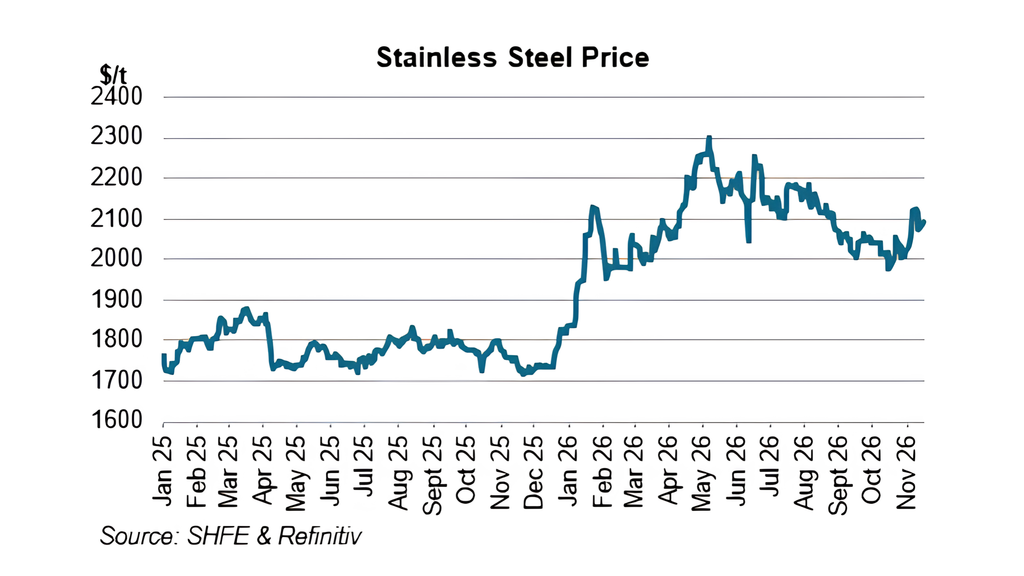
Stainless steel prices failed to get the typical boost experience during the September – October China “peak-season” (see graph), with prices retreating for most of the period; and although gains in nickel and other raw material costs have provided some underlying support since mid-October, subdued downstream purchasing and cautious market sentiment have limited price increases.
China’s stainless steel market continues to face pressure from subdued domestic consumption, with weak manufacturing activity and ongoing difficulties in property-related industries limiting downstream demand. With local purchasing remaining cautious, mills are increasingly competing for sales in export markets, adding downwards pressure to international prices and increasing competition for producers in emerging markets. Buyers continue to prioritise immediate requirements rather than rebuilding inventories, reflecting limited confidence in a near-term improvement in consumption.
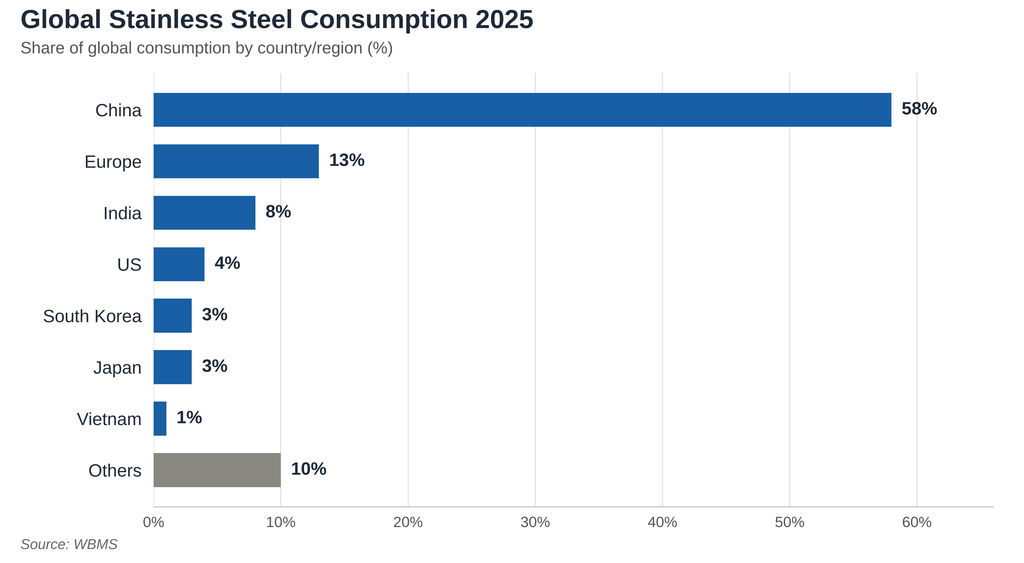
The weakness in China is mirrored in Europe – the 2nd largest global consumer in 2025 (see graph). Despite tighter import restrictions, demand for European domestic production also remains subdued as customers continue to manage existing inventories. Weak purchasing activity in the automotive and household appliance sectors has further constrained order books, suggesting that improvements in trade protection alone will not be sufficient to generate a meaningful recovery in stainless steel consumption.
For South Africa, continued weakness in international demand and competition from lower-priced Chinese imports present additional challenges for local steel producers. Although the proposed IDC transaction involving ArcelorMittal South Africa, valued at approximately R10bn, could provide an important opportunity to preserve domestic steelmaking capacity, the recent plans by Ferroglobe to mothball its South African furnaces – producing essential metallurgical additives for stainless steelmaking, further highlight the pressures extending beyond primary steel production, with weak local demand, electricity costs and uncertainty around industrial operating conditions affecting the viability of upstream operations.
Overall, the stainless steel market remains constrained by weak downstream demand, with China and Europe yet to demonstrate a convincing recovery in consumption. Although raw material cost support and adjustments in inventory levels could limit further price declines, stronger demand will be necessary to establish a sustainable upward trend. For South Africa, increased infrastructure investment, improved industrial competitiveness and stronger local procurement will be critical to supporting domestic stainless steel production.
For more on the outlook for Stainless Steel; see our Stainless Steel forecasts.
Compiler: Khomotso Rabutla (khomotso@afriforesight.com)