

Higher energy and shipping costs in the wake of the war in the Middle East are making it harder for iron ore miners to turn a profit. Major iron ore producer Vale estimates that around 10% of global seaborne supply is currently operating at a loss, with about 15mntpa already taken offline. More production cuts could help steady prices, but new supply and weak Chinese steel demand leave little room for a strong recovery.
Iron ore prices fell from around $111/t in early June to $90-91/t in October and early November. China’s struggling construction sector and thin steelmaking margins have held back demand, while major exporters continue to ship large volumes. Guinea’s Simandou project is also increasingly adding to supply and could reach 120mntpa by 2030, although the ramp up is unlikely to be smooth. With an iron content of 65–68%, its ore will also give steelmakers more choice when buying higher-quality material.
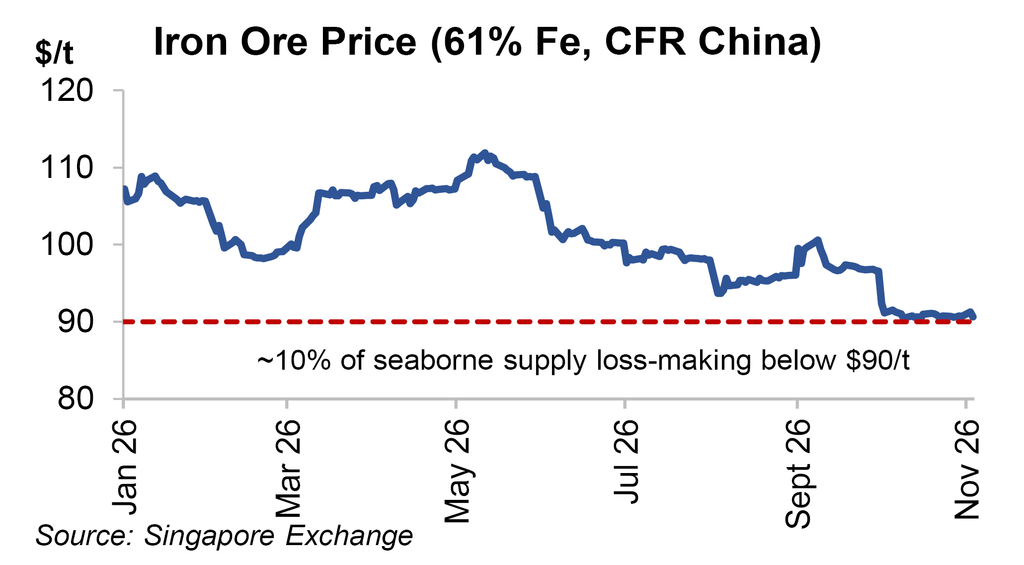
At these prices, higher-cost miners have little breathing room. UBS estimates that 150-170mntpa of supply becomes loss-making below $90/t. Much of this unprofitable production is located in Brazil, where producers are already feeling the strain: Mineração Usiminas and CSN Mineração announced production cuts in September, while Itaminas planned an October plant suspension as freight costs squeezed margins. Others may choose to absorb losses for a while, as shutting down and restarting can be expensive. Meanwhile, large, low-cost producers in Australia and Brazil are also expected to maintain output at current levels in the near term.
Shipping costs add another complication: they can lift the delivered price in China while leaving exporters with less after paying freight. Higher costs may therefore help cushion prices without bringing much relief to miners.
South African exporters face similar pressures. Kumba reported that freight between Saldanha Bay and China’s Qingdao port reached $32/t in September, compared with an average of $23/t during the first nine months of 2026. Higher-grade ore can earn premiums, but competition from Simandou means quality alone will not guarantee healthy margins. Reliable rail services and efficient ports will be increasingly important in getting ore to buyers at a competitive cost. Further cuts by loss-making producers could help stabilise the market, but expanding supply and weak Chinese demand are likely to keep prices under pressure. South African miners will need to make the most of their ore quality while keeping production and transport costs in check.
For more on the outlook for Iron Ore; see our Iron Ore forecasts.
Compiler: Devon Allers (devon@afriforesight.com)