


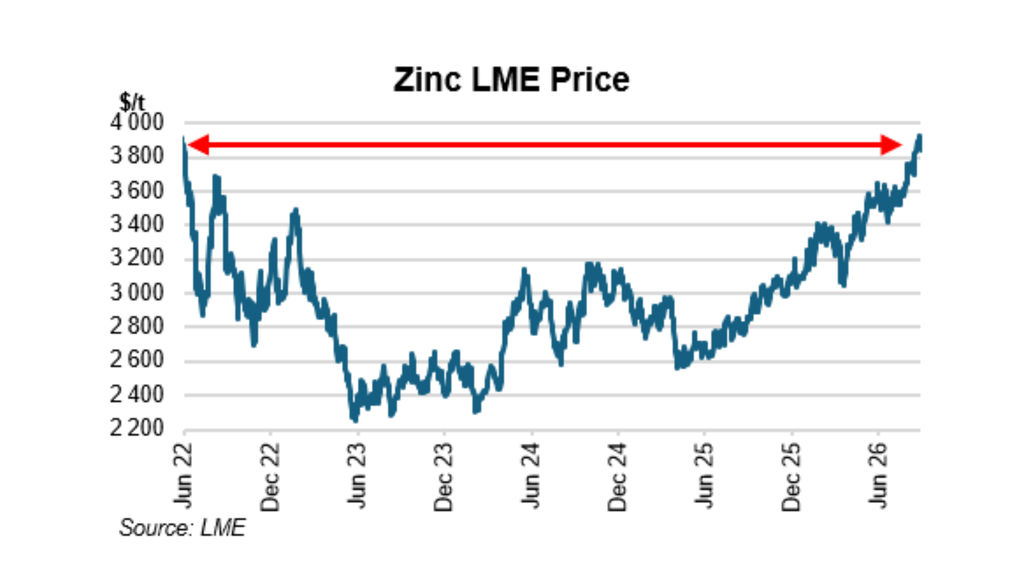
Zinc LME prices have surged to their highest level in more than 4-years, reaching trading just short of $4000/t in early September (see graph) – the main driver for price increases has been tight supply, after a fire at a major plant in Kazakhstan, the war in the Middle East cutting off Iranian output, and disruptions at Chinese mines; as a result, global inventories have been drawing down.
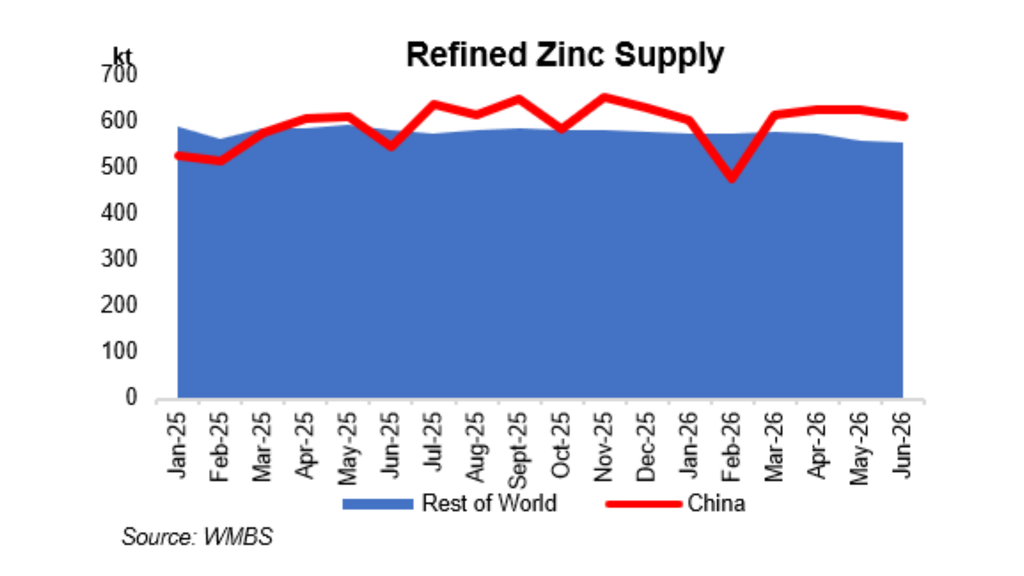
The more interesting development, however, is the growing divergence in supply trends between China and the rest of the world – see graph below. Chinese refined zinc production increased by 5.9% year-on-year in the 1st half of 2026, while production across the rest of the world contracted by 3.4%.
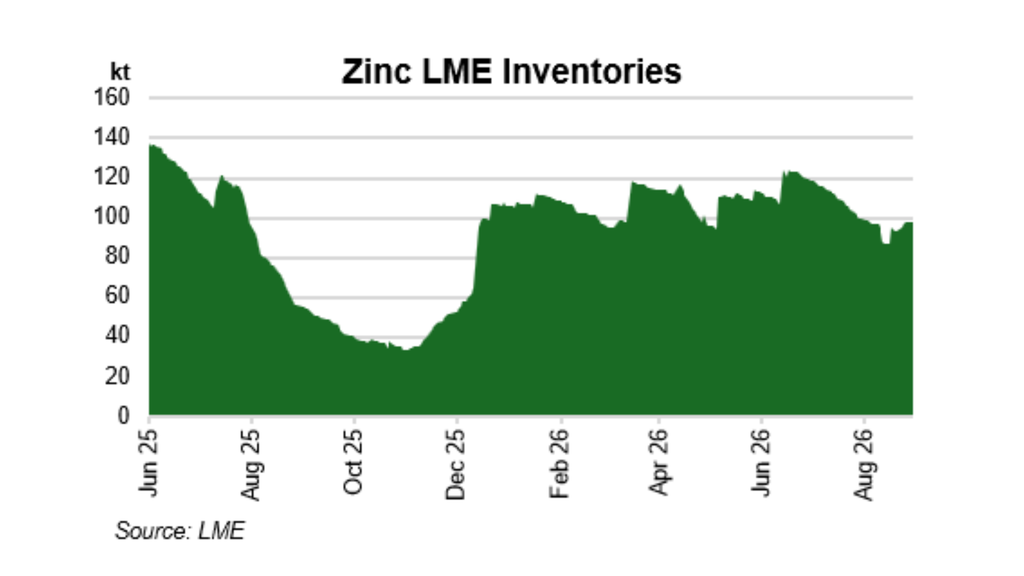
This has created an unusual market dynamic. Zinc is not simply becoming scarce globally; availability is becoming increasingly regional. LME inventories remain low, just below 100kt – see graph below; with Chinese production expanding, European consumers are increasingly dependent on metal moving out of China to relieve tightness.
The pressure is visible particularly in the concentrate market. Treatment charges have fallen to deeply negative levels as smelters compete for feedstock (essentially paying miners for the privilege of refining their ores). The collapse in treatment charges signals that the constraint is occurring further upstream, where insufficient mine supply is competing against existing smelting capacity.
China’s rising exports of refined zinc have provided some relief to the LME market. However, with a significant share of LME registered stocks already cancelled and awaiting physical delivery, the market remains vulnerable to further withdrawals or supply disruptions.
If Chinese exports continue to rise, the current squeeze could ease. But if European mine and smelter capacity continue to weaken, the geographic imbalance could become a more structural feature of the zinc market.
The key question for zinc prices is therefore shifting: It is no longer simply whether there is enough zinc globally, but whether enough metal can reach the markets where it is needed.
For more on the outlook for Zinc; see our Zinc forecasts.
Compiler: Khomotso Rabutla (Khomotso@afriforesight.com)