


Middle Eastern oil exports have recovered from the sharp declines seen immediately following the outbreak of the war in the Middle East in late February (see graph), but the improvement has not brought equal relief to diesel markets. Oil exports initially rebounded in June after the sides agreed to a Memorandum of Understanding to re-open traffic through the Strait of Hormuz, and have managed to remain near these elevated levels even after the deal collapsed as the US military facilitates clandestine tanker “shuttle runs”; despite a recent escalation in Iranian attacks on ships in the region and the raging Saudi/Houthi war, data suggests October exports are on track to match or even surpass pre-war levels.
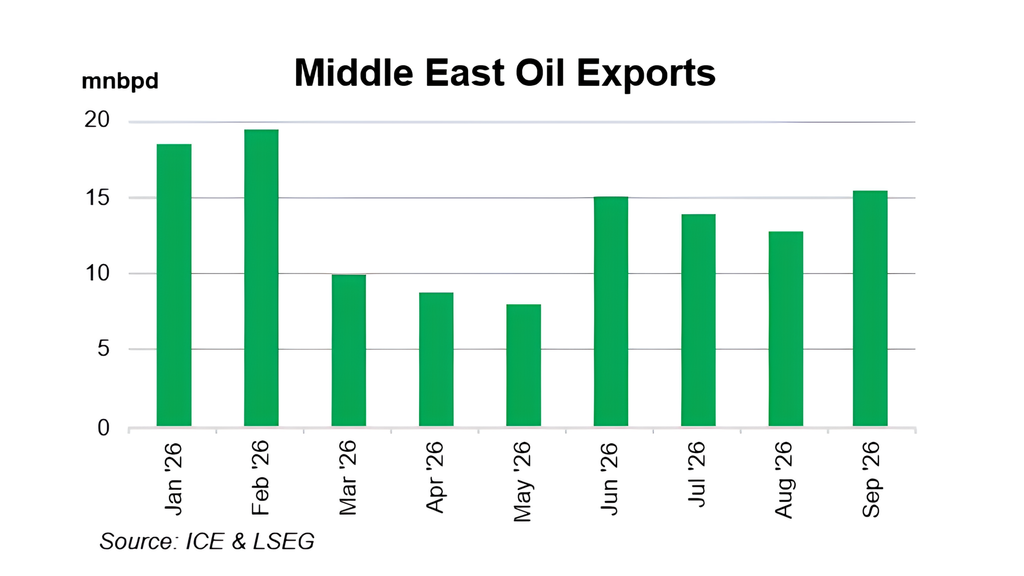
However, diesel availability remains constrained by disruptions to refining capacity in the Middle East and Russia. Diesel prices have therefore risen more sharply than crude oil (see graph), with knock-on effects across fuel-dependent sectors such as industry and mining, keeping costs elevated even as oil availability improves.
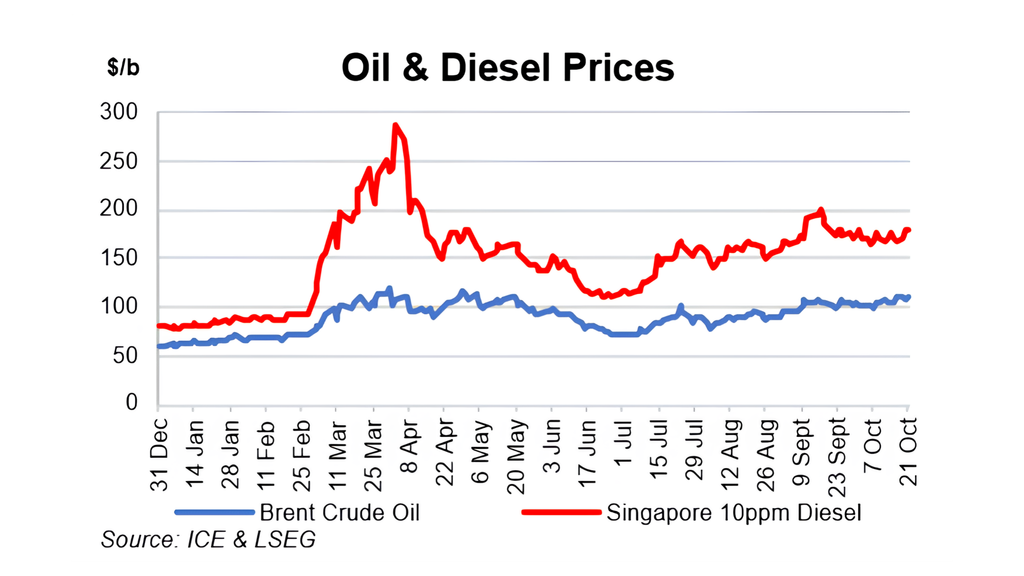
The diesel squeeze reflects disruption to refining and fuel distribution, rather than just crude availability. Reduced refinery activity in the Middle East and lower output from Asian refiners have restricted supplies, while Ukrainian attacks on Russian refineries have compounded the shortage – shipments of refined products from the Middle East are still down by about half from before the war. A 7-fold surge in tanker freight rates over the past year have also added to delivery costs. These constraints help explain why diesel prices remain notably elevated relative to oil (see graph): additional oil refining may be needed, before shortages of diesel and other refined products can ease.
The knock-on effects are particularly relevant to mining, where diesel powers trucks, and heavy machinery used in mineral processing, while also contributing to the cost of transporting inputs and finished products. Australia illustrates the scale of this exposure, with coal and iron ore mining accounting for a substantial share of the sectors diesel consumption. Australia is the world’s largest diesel importer, and exports the most iron ore and second most coal globally. Thus, higher diesel prices have immediate effects on mining margins and delivered commodity costs, particularly at open-cast operations where increasing strip ratios require more waste removal per tonne of final sold product, entailing higher diesel use to power machinery. These operations therefore face the combined pressure of higher diesel costs and greater fuel requirements to maintain production. Additionally, bulk shipping costs are closely tied to diesel prices. High shipping costs are thus adding to delivered prices for mined commodities.
With diesel-market tightness expected to persist well into 2027, the downstream effects of the conflict could continue to weigh on mining and logistics costs even if crude flows recover more consistently. Sustained relief will depend on recovering refinery output, more reliable fuel shipments and the rebuilding of inventories, and not only on higher oil exports. Until then, fuel-intensive mines could face continued margin pressure, particularly where commodity prices do not rise sufficiently to offset higher operating costs.
For more on the outlook for Oil; see our Oil forecasts.
Compiler: Chinmaya Alur (chinmaya@afriforesight.com)