

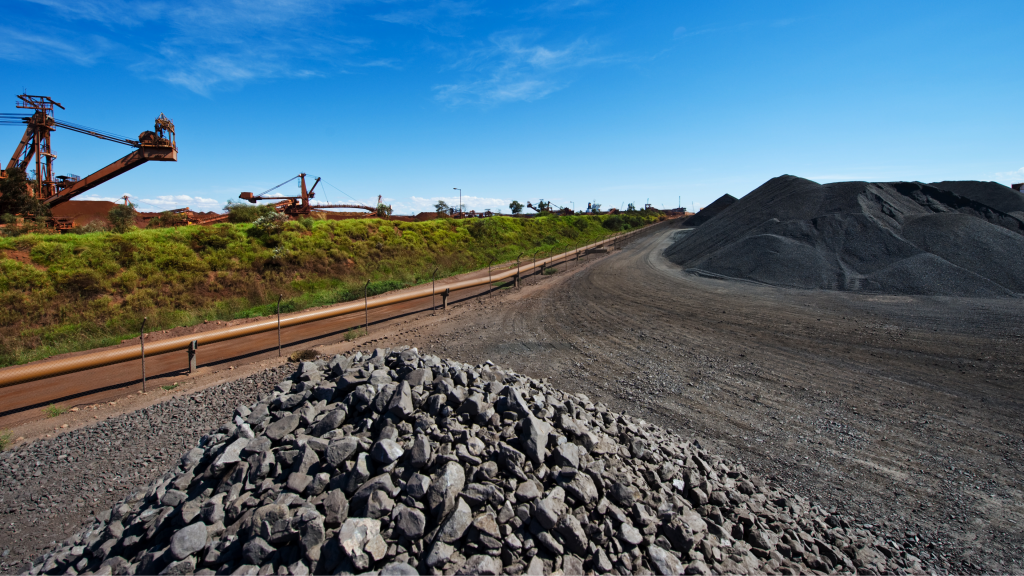
China’s steel demand remains weak, although a seasonal recovery is expected in September and October, which could provide some support to manganese alloy demand and ore prices. However, the manganese ore market entered the 2nd half of 2026 with supply much stronger than a year earlier. Australian production has recovered following GEMCO’s cyclone-related disruption, South African output remains high and Gabon continues to move significant volumes, while Ghana is targeting further growth – but domestic factors continue to have a meaningful impact on profitability of major producers.
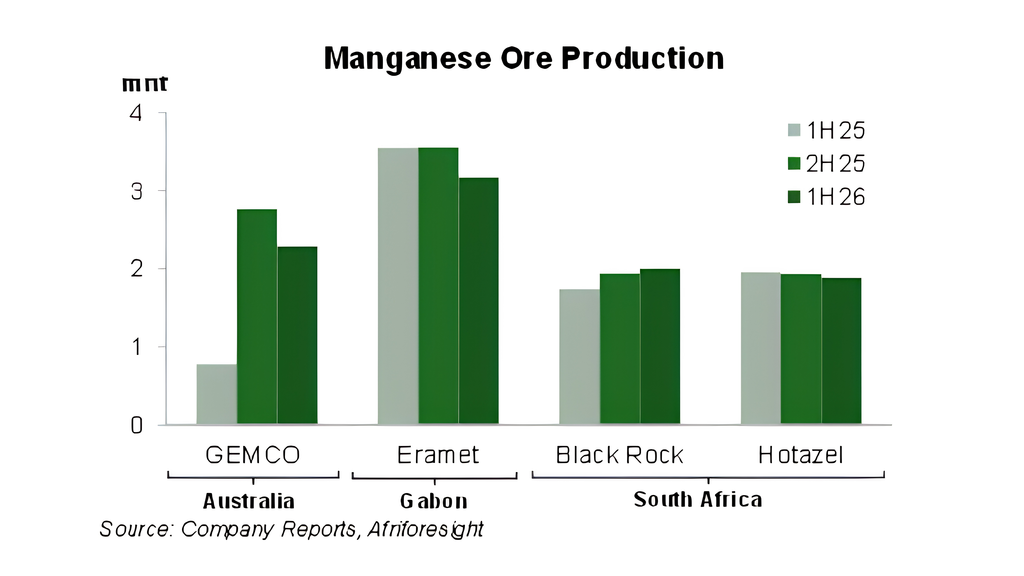
Australia has seen the strongest recovery in supply. South32’s GEMCO returned to normal production following disruptions caused by Tropical Cyclone Megan in March 2024, restoring a major source of high-grade manganese ore to the market. The reconstruction of export infrastructure has helped operations normalise after the initial recovery, with production remaining strong in the 1st half of 2026.
Gabon remains another major supplier of high-grade ore. Eramet’s Comilog production eased in the 1st half of 2026 but remained at high levels; improved performance on the Trans-Gabon railway also supported ore movements. Further improvements in rail reliability should allow more mined production to reach the export market.
However, stronger production has not translated evenly into improved profitability, with a clear gap emerging between producer margins.
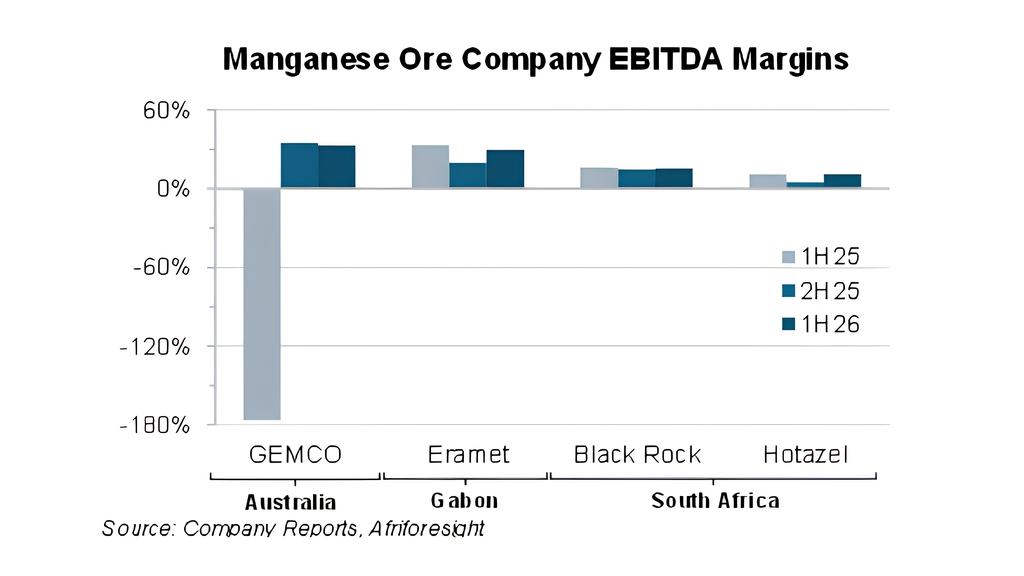
Producers in Australia and Gabon continue to operate with the strongest margins among the major producers. GEMCO’s EBITDA margin remained above 30% in the 1st half of 2026, while Comilog’s margin recovered to around 30%. Their relatively high-grade ore, lower operating costs and improving logistics help protect profitability even as the market becomes better supplied.
South Africa maintained relatively stable to higher production but faced greater margin pressure. ARM’s Black Rock increased output in the 1st half of 2026, yet its EBITDA margin remained around 15% as weaker manganese ore prices and higher unit costs limited profitability. South32’s Hotazel production was broadly stable, but its margin remained lower at around 10%, with higher trucking, diesel and other operating costs weighing on returns. An improvement in rail availability remains crucial to better margins, as current reliance on road transport raises costs and reduces the benefit of South Africa’s large manganese resource base.
Ghana is also contributing to the stronger supply outlook. Ghana Manganese Company is targeting around 8mnt of production in 2026 (up 54% from 2025), with output expected to strengthen in the 2nd half as wet-season disruptions ease and additional mining equipment supports operations.
The manganese market is therefore becoming more competitive. Australian supply has recovered, Gabon is improving ore movements, South African producers continue to maintain high output and Ghana is targeting further growth. However, the difference in company margins shows that production alone does not determine profitability, with low-cost producers, higher-grade ore and reliable logistics remaining key advantages as supply increases.
For more on the outlook for Manganese; see our Manganese forecasts.
Compiler: Devon Allers (devon@afriforesight.com)