

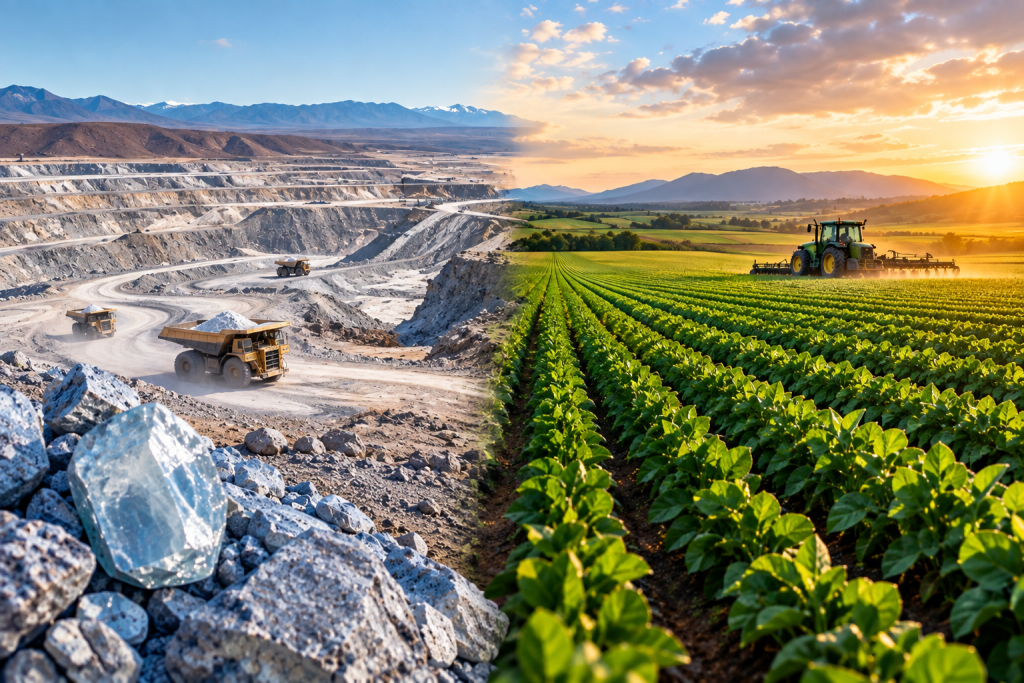
Lithium is a crucial input to the global energy transition, where it is an essential element for batteries used in electric vehicles (EV) and energy storage systems. However, the push for new lithium supply is creating a growing conflict over land use. While this conflict has been playing out in major lithium producing regions, South Africa is no exception.
The development of lithium resources in South America’s “Lithium Triangle” of Argentina, Chile and Bolivia has faced intense opposition from local communities regarding potential contamination of water resources and abuses of indigenous rights. Similar tensions are emerging elsewhere. In the western regions of the US, lithium development is increasingly competing with agriculture, cities and other industries for scarce water as number of droughts experienced increases, with Lithium America targeting 85% water recycling at its 160ktpa Thacker Pass lithium carbonate project.
The conflict highlights a difficult sustainability trade-off: lithium helps reduce carbon emissions from vehicles and energy generation compared to fossil fuels, but the land and communities affected by its extraction still bear concentrated environmental and social costs – this tension is illustrated in the graphic below.
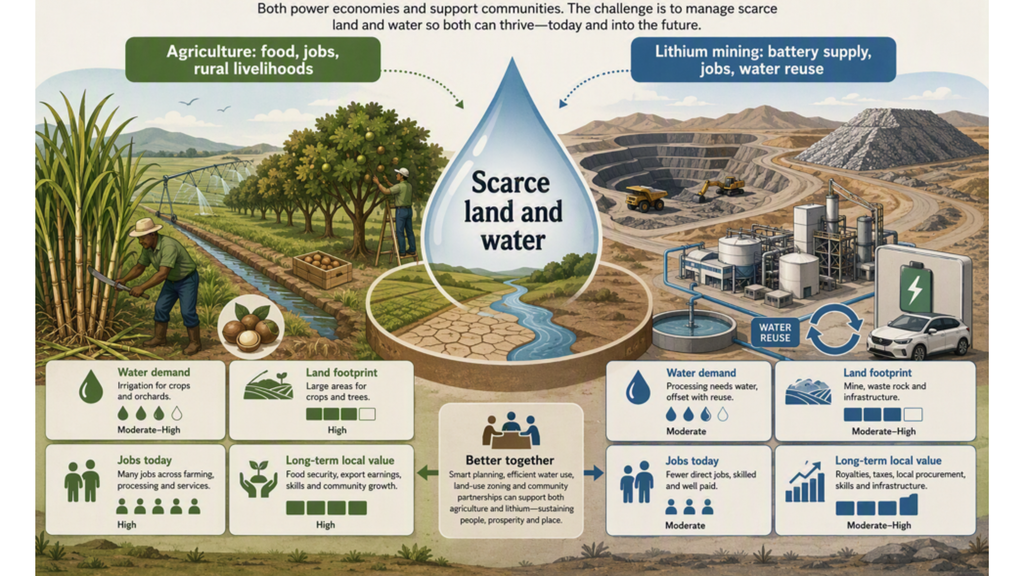
In South Africa, more than a dozen lithium prospecting licences have been granted along the southeast coast, mainly in Kwa-Zulu Natal, since 2023, covering 730km2, across 117 farms and beaches. The Sugar Cane Growers Association estimates that lithium exploration and potential mining could threaten around 30 000 jobs across farming and tourism services in a region where agriculture and tourism are the major economic activities.
South Africa provides a clear example of this tension. SA Lithium’s existing operation in the region already covers around 1.5km2 of pits and 1.8km2 of waste dumps, with plans to expand over a much larger area. New mining licences would affect the sugar cane and macadamia farms already impacted by the lithium prospecting licences, as well as a nearby sugar mill which processes 2mntpa of cane from 2k small-scale and 600 commercial growers.
SA Lithium says it has relocated 150 farmers voluntarily, created more than 1000 jobs, and prevents mine water from entering local rivers by capturing it for processing and dust suppression; farmers, however, argue that relocation to less productive land could permanently reduce the long-term viability of agriculture.
The bottom-line is that sustainability is not only about lowering carbon emissions, but also about what the mine is displacing. Lithium miners should balance lithium output against agricultural production, water availability, land quality and community livelihoods.
For more on the outlook for Lithium; see our Lithium forecasts.
Compiler: Kirthi Ramdhanee (kirthi@afriforesight.com)