


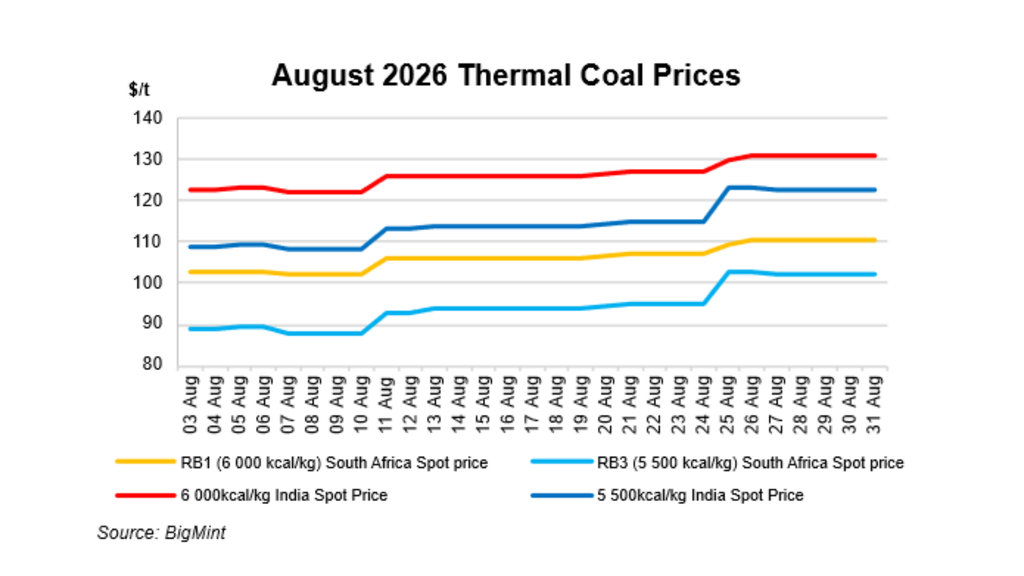
South African and Indian thermal coal spot prices have risen in recent weeks (see graph), supported by stronger Indian import demand after monsoon rains disrupted domestic coal mining and rail deliveries. At the same time, rainfall has been below usual seasonal levels in some areas, keeping temperatures elevated and cooling related electricity demand high.
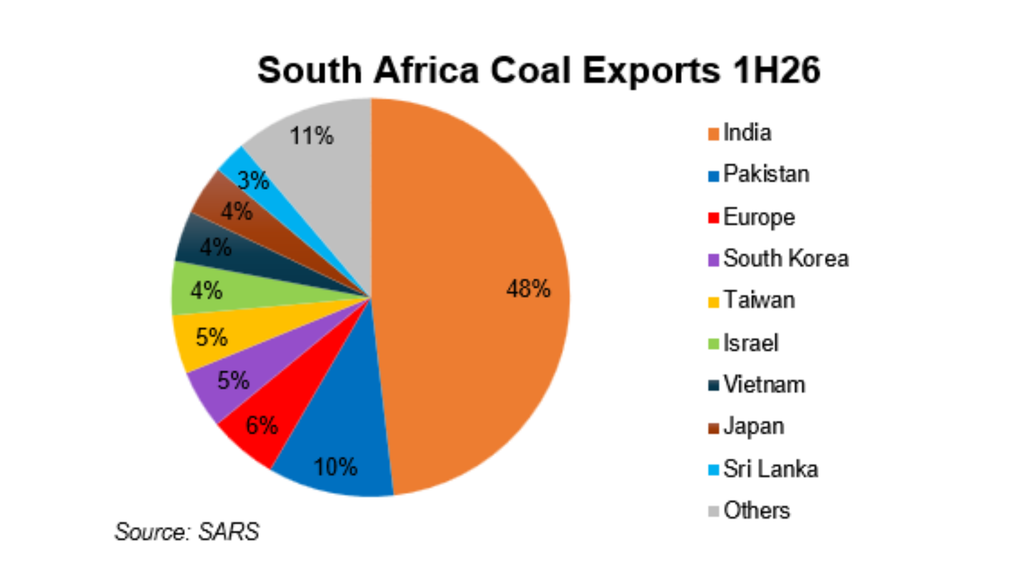
India is South Africa’s largest thermal coal export market (see graph), and the grades it imports strongly align with South Africa’s main export products – while RB1 is the SA benchmark export price, much of the country’s export volumes are lower grade RB3 spec. State-owned Coal India produces large volumes of even lower quality coal, but comparatively less RB3 and RB1 equivalent coal, driving up India’s import demand.
The impact of the monsoon disruption coupled with higher electricity demand has been most visible in the inventory levels at coal-fired power stations, where 47 plants were operating with critically low stocks by 30 August, up from 31 at the end of July.
India’s current shortage has emerged despite its longer term strategy of reducing thermal coal imports by raising domestic production. In this case, the issue is less a shortage of domestic coal supply, but rather the difficulty of moving enough coal from mines to power stations during the monsoon. When domestic deliveries are delayed, utilities must either draw on inventories or secure alternative supply, typically by importing more.
South Africa is well placed to benefit from stronger Indian buying, with improved rail deliveries to Richards Bay giving producers greater scope to respond to higher export demand. The support, however, could prove temporary once monsoon disruption subsides, India’s domestic mining and rail operations normalize, and Indian utilities rebuild stockpiles.
However, the current supply shortage comes as global energy markets remain tight and high natural gas prices continue to encourage coal for gas switching, especially in East Asia (India has very limited gas-fired power capacity). This could keep prices higher for longer if stronger Asian power demand raises competition for seaborne cargoes.
For more on the outlook for Coal; see our Coal forecasts.
Compiler: Chinmaya Alur (chinmaya@afriforesight.com)