

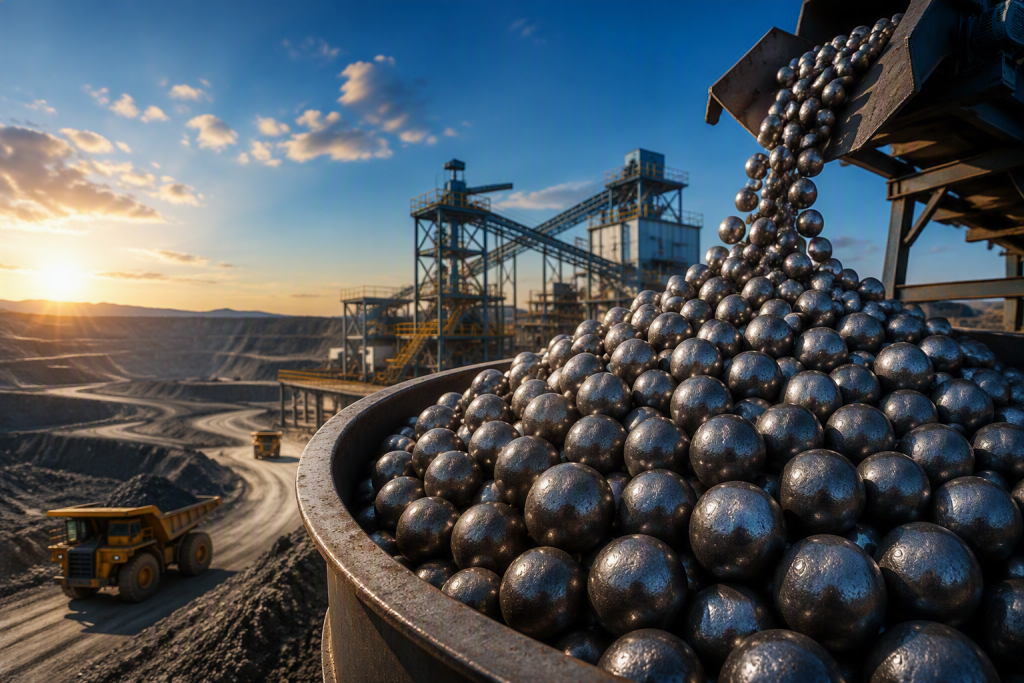
High-chrome grinding media (HCGM) is attracting increased attention from miners looking to reduce wear, improve grinding efficiency and control processing costs. Demand for grinding media is also being supported by high levels of mine throughput, while declining ore grades at some operations means miners increasingly need to process more material to maintain metal output.
HCGM can offer advantages for mines looking to improve processing efficiency. Its resistance to abrasion and corrosion can reduce wear compared with some conventional steel products, potentially lowering media consumption and supporting more efficient mineral processing. However, the benefits vary between operations depending on ore characteristics and mill conditions
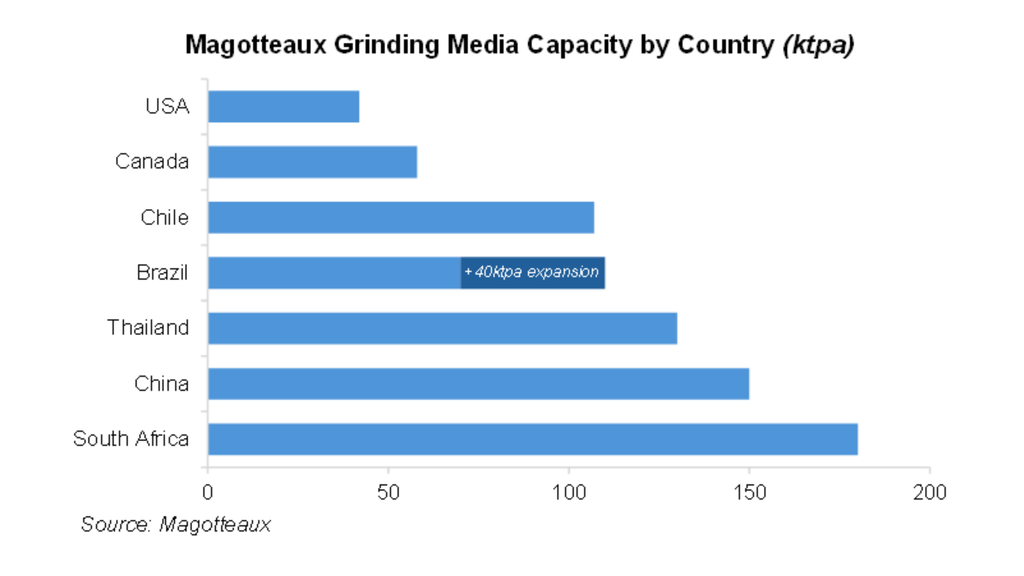
Leading producers of HCGM are taking note. Magotteaux has a broad grinding-media production footprint across major mining regions, with capacity in South Africa, China, Thailand, Brazil, Chile, Canada and the US. South Africa has the company’s largest combined capacity, consisting of both high-chrome and forged media, while Brazil has become another important production centre following the latest expansion. Not all of this capacity is high chrome, but the geographic spread allows the company to supply major mining markets from regional production bases.
South Africa is an important part of this production and demand network, with its sizeable domestic grinding-media market supported by PGM, gold and other mineral-processing operations. Major PGM operations such as Mogalakwena and Rustenburg require extensive crushing and milling before flotation, while large gold operations such as South Deep also provide steady demand for grinding media. This diversified mining base helps support domestic consumption, although demand can vary with mine output, grades and processing activity across the different commodities.
In August, Magotteaux expanded HCGM capacity at its Contagem plant in Minas Gerais by more than 40ktpa, lifting total capacity at the site to around 110ktpa. The expansion was aimed at meeting growing demand in Brazil and across Latin America, while also improving plant efficiency.
The expansion comes as Latin America’s large copper industry continues to process substantial volumes of ore. At Collahuasi in Chile, quarterly ore throughput increased by around 13% between 1st quarter 2025 and 2nd quarter 2026, despite the average copper grade declining by around 7%. At Quellaveco in Peru, throughput increased by around 9% over the same period, while the ore grade fell by 20%.
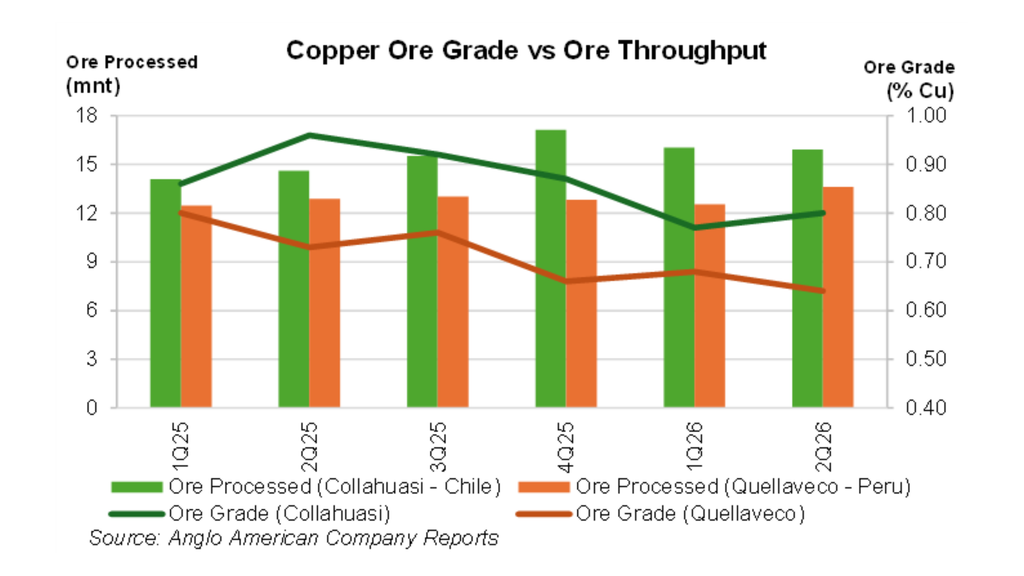
This relationship is important for grinding-media demand. Lower ore grades can require miners to process greater volumes of rock to maintain metal production, increasing the amount of material passing through crushing and grinding circuits. Grinding media is consumed continuously during this process, meaning demand can remain strong even when growth in finished copper production is limited.
Adoption of high chrome media is likely to remain a gradual process, rather than a rapid replacement of conventional forged media. Mining companies generally require extensive plant trials before changing a critical consumable, while higher initial costs must be weighed against potential savings from lower wear and improved processing performance.
Nevertheless, new capacity in Brazil and continued high throughput at major Latin American mines suggest a supportive demand environment. With miners facing pressure to process increasingly complex and, in some cases, lower-grade ores, improving grinding efficiency should remain an important focus and support further demand for higher-performance grinding media.
For more on the outlook for Grinding Media HC; see our Grinding Media HC forecasts.
Compiler: Devon Allers (devon@afriforesight.com)