

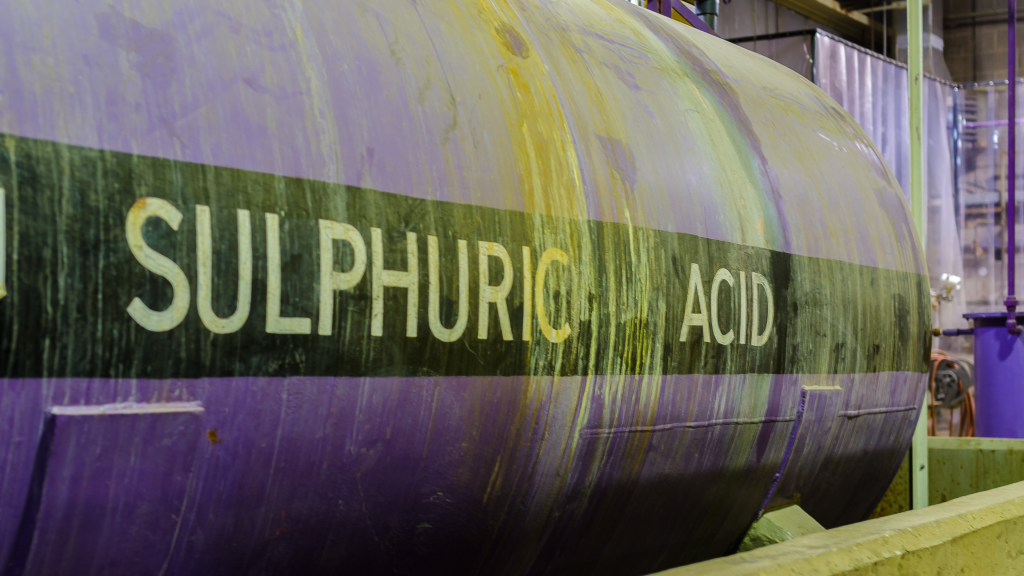
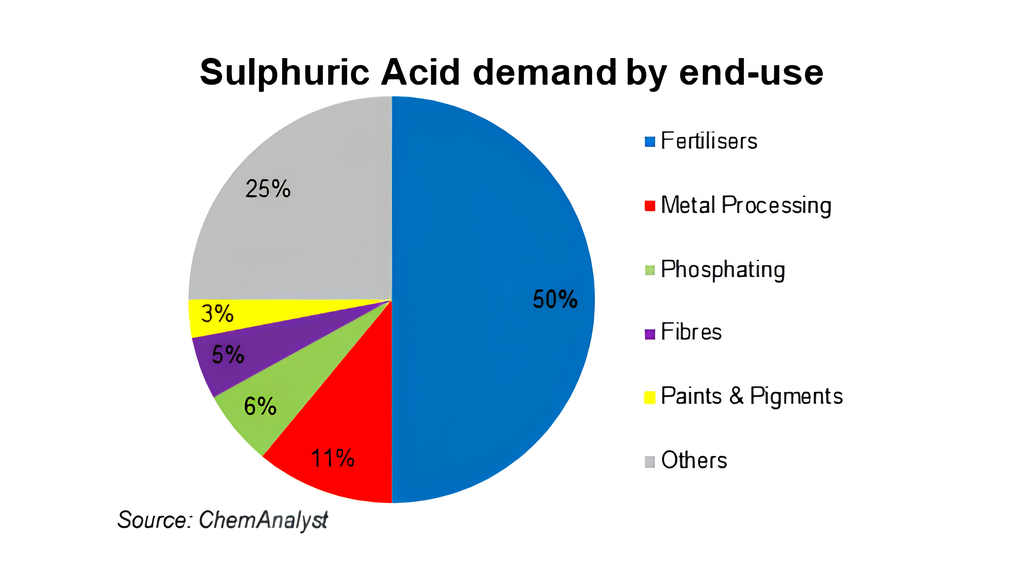
Global sulphuric acid supply remains constrained, with limited evidence of a broad recovery despite improving availability from alternative sulphur sources – sulphuric acid is a key input for the production of fertiliser and in a number of metal beneficiation processes, especially base metals (see graph). Disruptions to Middle Eastern sulphur flows also continue to affect feedstock availability, while higher imports from alternative origins are helping individual markets manage the shortfall rather than restoring global supply.
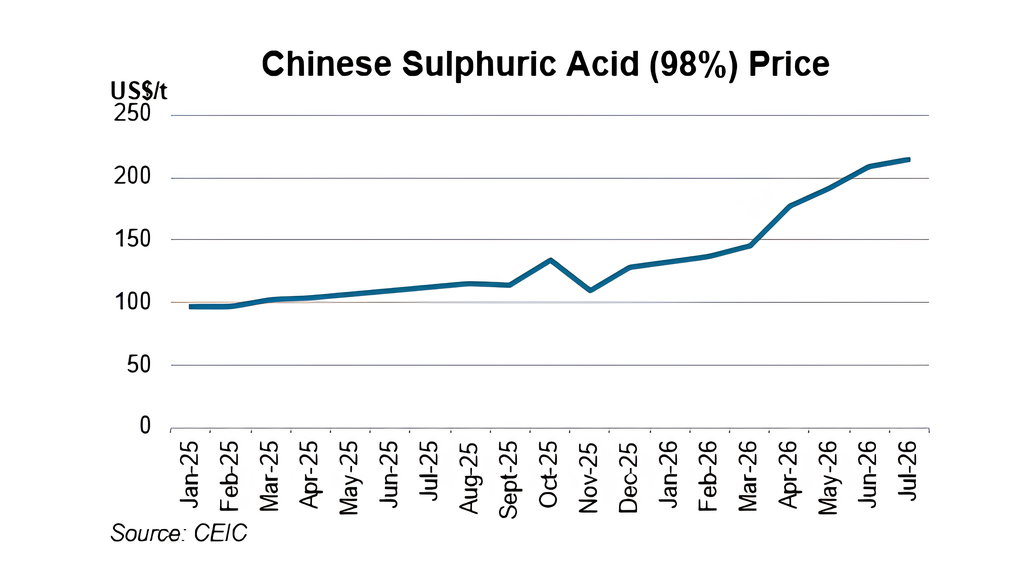
Sulphur availability remains the key pressure point for sulphuric acid producers. Since the start of the US war with Iran in late February, Middle Eastern supply disruptions have reduced the availability of prompt sulphur cargoes. The resulting tightness has kept sulphur prices elevated, in return keeping sulphuric acid prices high – see graph below.
There are signs that alternative supply routes are beginning to respond. Kazakhstan has resumed sulphur exports; while Indonesia substantially increased sulphur imports in July, Indonesia did not record sulphuric acid imports or exports during the month, suggesting that additional sulphur is mainly being directed towards domestic requirements rather than creating significant additional merchant acid supply.
China has also recorded a modest improvement in sulphuric acid production. Output increased 4% month-on-month in August, marking the first monthly increase since March. Nevertheless, production remained 15.5% below August 2025 levels, while January-August output was down 4.6% year-on-year. The latest increase therefore indicates some stabilisation rather than a return to previous production levels.
The sulphuric acid supply shortage is becoming increasingly visible in mining markets. In Zambia, sulphuric acid availability remains a concern for smaller mining operators, with some warning that continued shortages could lead to operating disruptions. At the same time, stronger copper production and refined exports are supporting underlying acid demand, placing additional pressure on already limited regional availability.
Alternative production routes can provide some relief, particularly where additional sulphur can be secured or where smelter-based acid production is available. However, these sources cannot immediately replace disrupted merchant volumes. Transport constraints, limited conversion capacity and competition between fertiliser (50% of end-use demand) and industrial consumers mean that additional sulphur does not automatically translate into additional sulphuric acid supply.
Overall, the global sulphuric acid market has yet to show a sustained recovery in supply. Alternative sulphur flows from Kazakhstan and other origins, together with higher imports into markets such as Indonesia, are providing additional flexibility, but remain insufficient to fully compensate for disrupted supply. The market is therefore likely to remain sensitive to any recovery in fertiliser or industrial demand. For now, alternative routes can help sustain demand in selected regions, but they appear more capable of cushioning the shortage than eliminating it. If consumption strengthens before Middle Eastern sulphur flows normalise, the existing supply deficit could become more visible again.
For more on the outlook for sulphuric acid; see our sulphuric acid forecasts.
Compiler: Khomotso Rabutla (khomotso@afriforesight.com)