


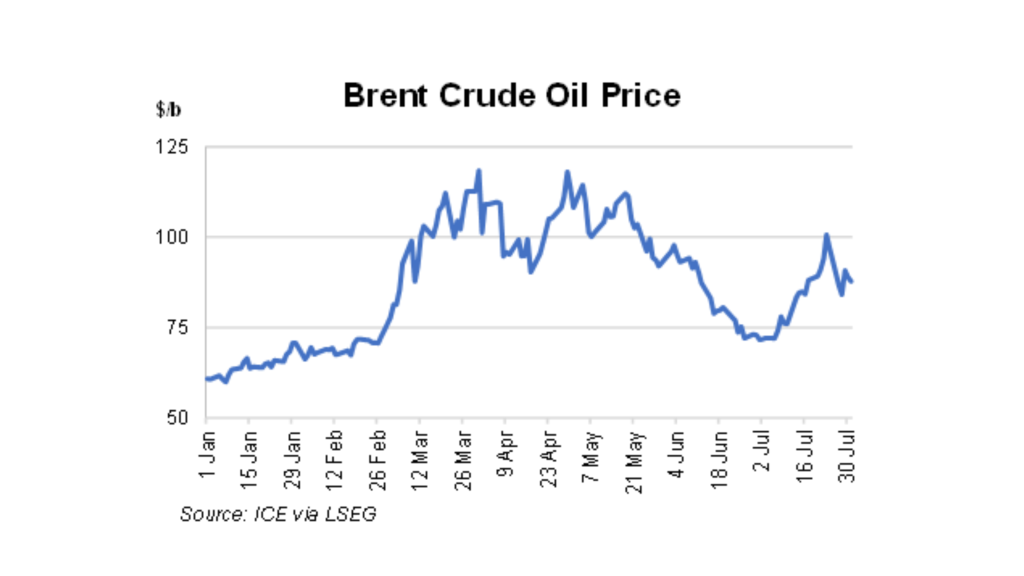
The US/Iran war is now in its sixth month, with no clear end in sight. The war has sent oil prices on a rollercoaster ride (see graph), surging at the onset as traffic through the Strait of Hormuz was cut off, but falling back again towards prewar levels as ceasefire agreements raised hopes that oil from the Middle East will start flowing again; prices, however, have climbed again in July as renewed strikes again slowed traffic through the Strait to a trickle, while alternative routes through the Red Sea to bypass the Strait have also come under attack.
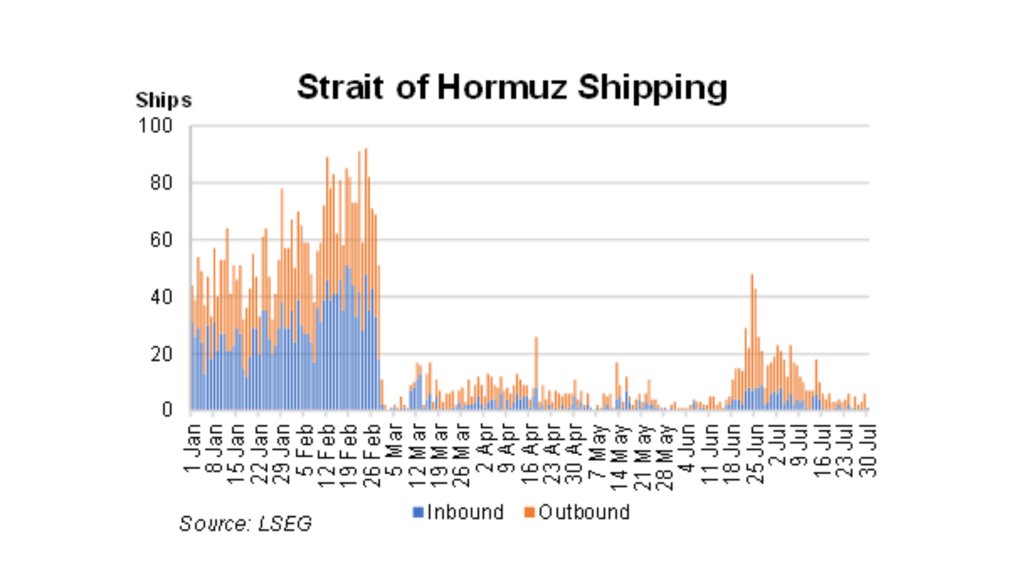
At the outbreak of the war, the Strait of Hormuz was the main chokepoint, curbing 20% of global oil. Iran and the US each restricted vessel movements, severely curbing shipping numbers, see graph below.
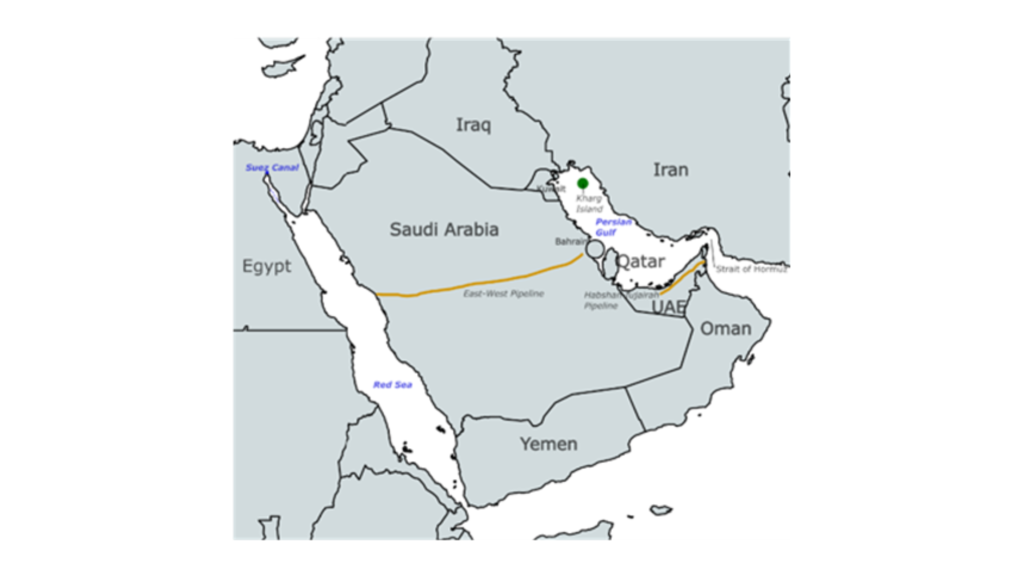
Amid the Strait of Hormuz restrictions, Saudi Arabia used its East-West pipeline to shift oil to Yanbu port on its west coast along the Red Sea. The pipeline allowed Saudi Arabia to ship oil south, through the Bab el-Mandeb Strait and into global markets.
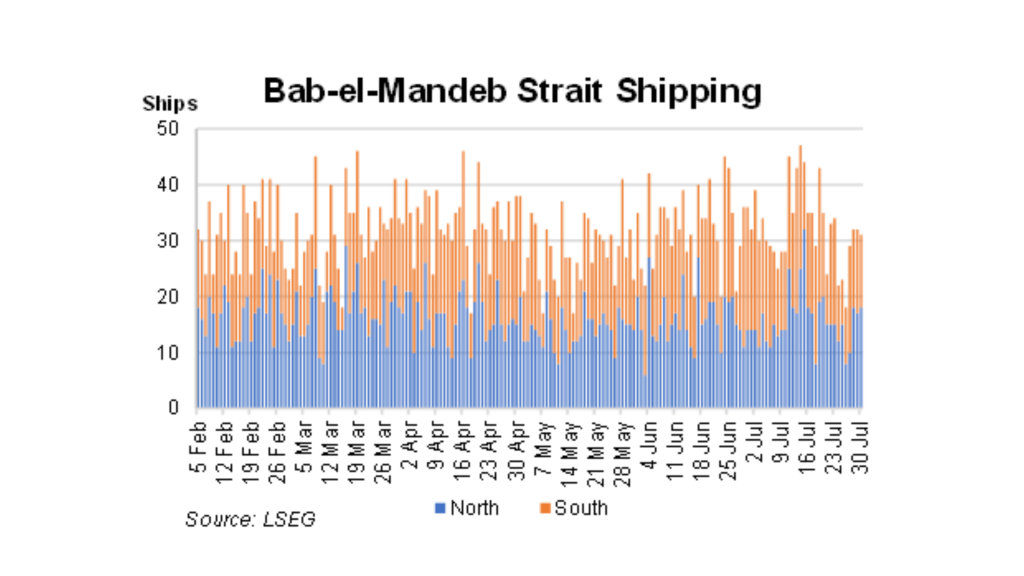
But as Iran tries to exert control over Middle East oil shipments to maximise its leverage in negotiations, its Houthi allies operating from Yemen stepped up attacks on Saudi ships heading south through the Bab-el-Mandeb Strait (the Houthis are also partially pursuing its own objectives in a near decade-long war against the Saudi’s). These attacks forced Saudi ships to start moving north in an attempt to ship oil through the Suez Canal (see graph ) – this route, though, adds considerable travel time and costs to oil shipments.
It appears now, however, that the Suez Canal route too is coming under attack: 2 tankers moored in Egypt’s Damietta port on the Mediterranean Sea were set alight in a drone attack – while no one has claimed the attack, it is reasonable to assume that they were an additional warning from Iran to shippers of Saudi crude.
With oil storage levels across the globe rapidly depleting, the world is becoming desperate for a solution to the conflict that will unleash pent-up cargoes from the Middle East. While Oman has proposed a joint system with Iran to toll the Strait of Hormuz, the US strongly opposes the plan. But with US mid-term elections less than 100 days away and fuel prices climbing, President Trump may be increasingly eager to make concessions.
For more on the outlook for Oil; see our Oil forecasts.
Compiler: Vinesh Chetty (vinesh@afriforesight.com)