


Global LNG prices have risen sharply since the start of the Iran war in late February (see graph), as supply disruptions from major producer Qatar removed a significant portion of supply from the market. Strong demand for cooling-related electricity generation in Europe and Asia has added to market tightness since late May, while the need for Europe to replenish depleted gas storage ahead of winter will strain markets further.
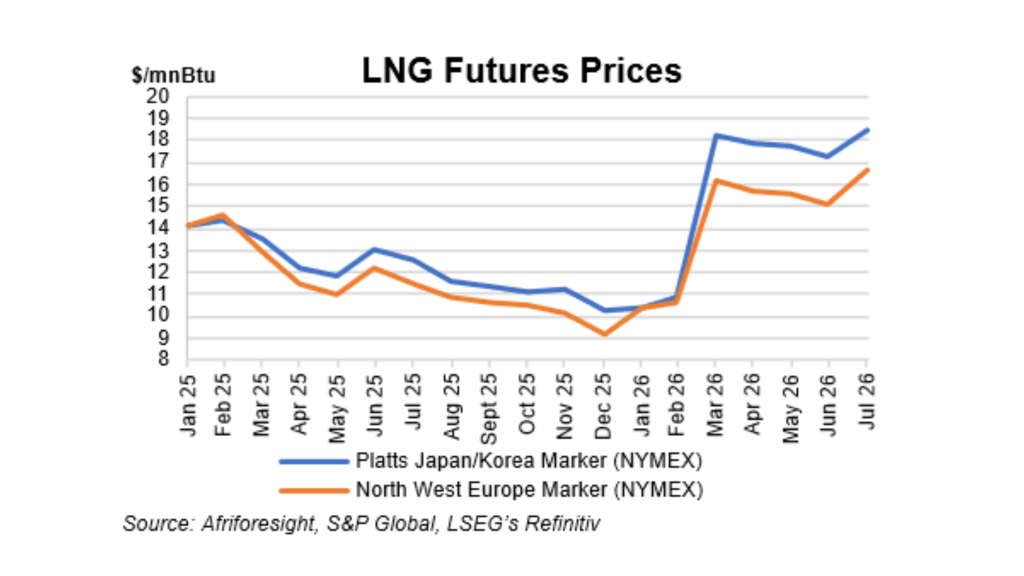
Since the onset of the war, shipping through the Strait of Hormuz has become extremely risky as tankers come under attack, while damage to Qatar’s Ras Laffan LNG complex (around 48mncmpd of capacity, supplying around 20% of the global LNG markets) has curtailed available cargoes.
The impact is particularly significant for Asia, which sourced 25% of its LNG imports from Qatar in 2025. A heatwave experienced across Asia since April in has boosted cooling-related electricity demand, reflected in an increase of over 15% in Japan and China’s LNG imports month-on-month in June; shipping data suggest imports remained elevated over July.
While Europe is less directly exposed to shipments from Qatar, which accounted for only about 7% of its LNG imports last year, competition for scarce cargoes across the globe is set to put additional pressure on markets as winter approaches. EU member states are required to fill gas storage sites to 90%, although the target can now be met at any point between 1 October and 1 December – replacing the previous fixed 1 November deadline, with a 10% points deviation allowed in case of difficult market conditions. The revised rule provides some flexibility but does not remove the urgent need to secure substantial volumes before winter, with European inventory levels currently well below levels achieved in recent years (see graph).
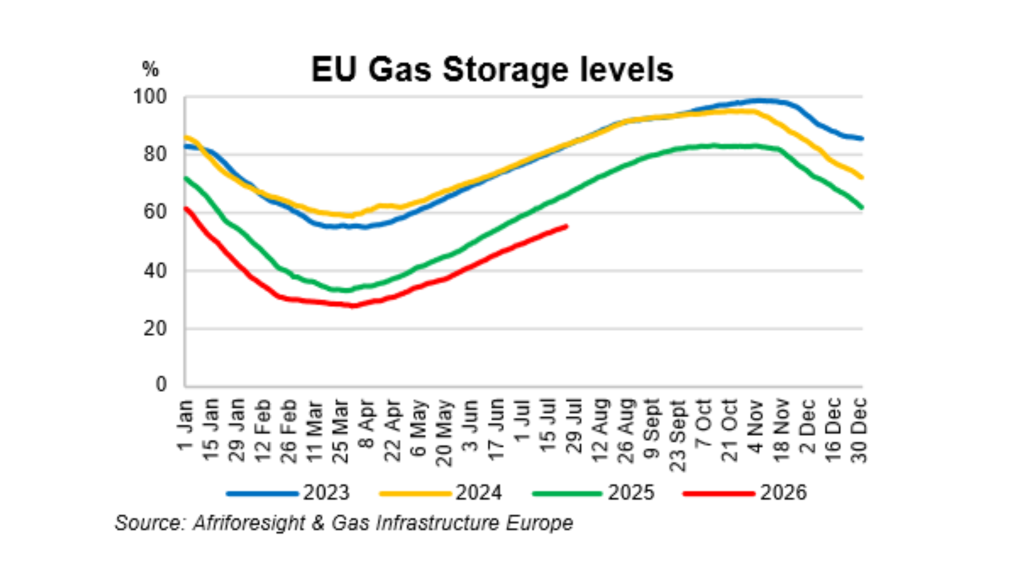
On/off/on-again strikes in the Middle East keeps everyone guessing as to when the Strait of Hormuz will reopen again for shipping, but even a full reopening would not immediately restore lost supply as damage to Ras Laffan limits the scope of recovery – a force majeure in place since March has now been extended into October. This means the loss of Qatari supply is likely to persist through a period of strong seasonal demand, ensuring that the market remains vulnerable to further price spikes for the remainder of the year.
For more on the outlook for LNG; see our LNG forecasts.
Compiler: Chinmaya Alur (chinmaya@afriforesight.com)