

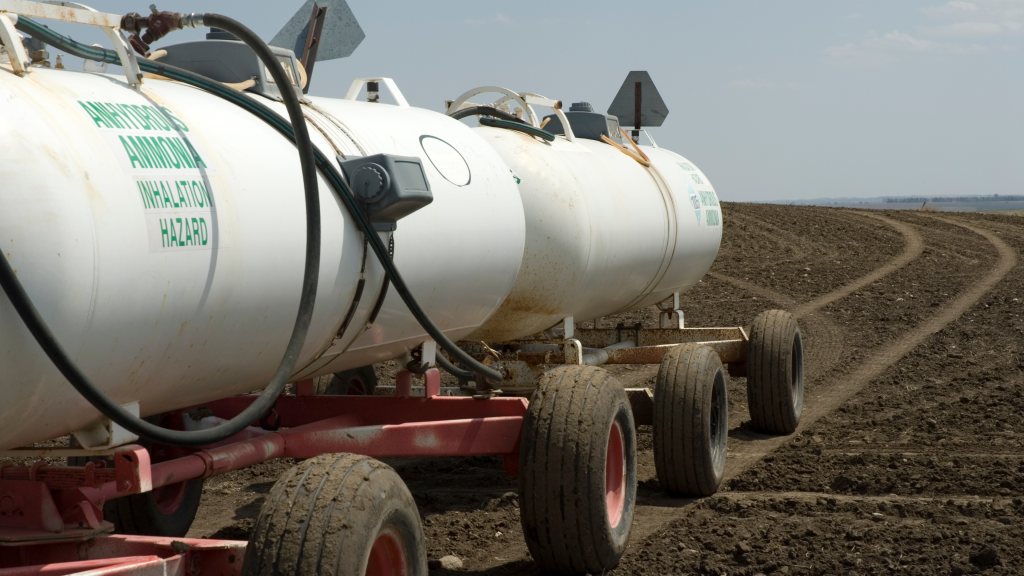
Global ammonia prices remain elevated despite easing from highs reached in April 2026 (see graph), as the Middle East war tightened both global natural gas markets and ammonia supply – indeed, a renewed surge in gas prices over the past month suggests little relief for ammonia prices in the near term.
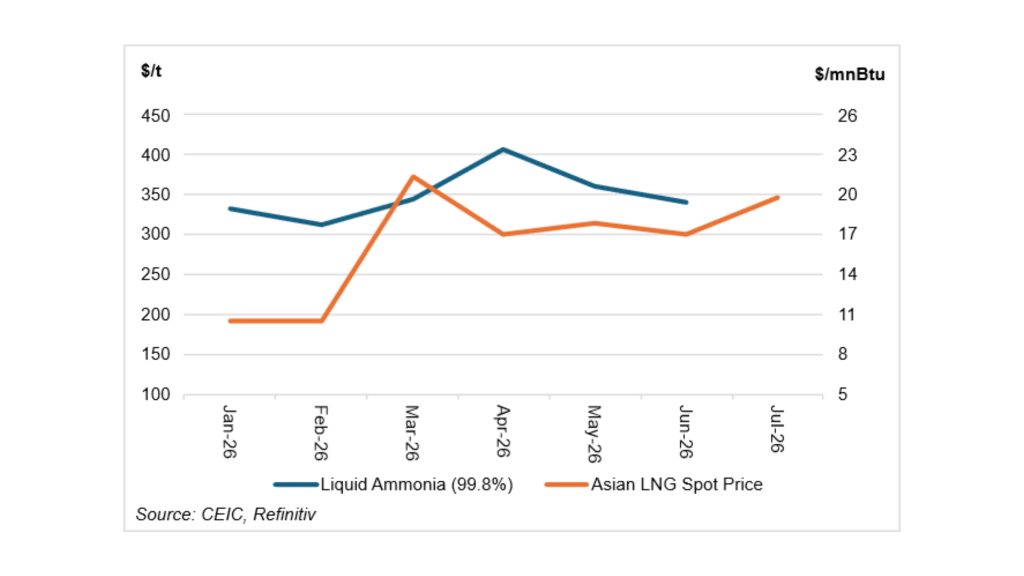
About 70% of ammonia is produced using natural gas. As a result, prices for ammonia largely track the cost of its gas inputs, if with a bit of a lag. The closure of the Strait of Hormuz, through which around 20% of global liquified natural gas (LNG) supply travelled before the war, caused a sharp spike in gas prices at the onset of the war; prices subsequently fell back after an initial ceasefire in April raised hopes of a resumption in LNG shipments, but remained far above pre-war levels.
A more comprehensive agreement reached in mid-June failed to ease supply concerns, while a collapse in the ceasefire in July saw gas prices surge again, with supply concerns compounded by a pickup in Asian gas demand and European storage levels that remain well below seasonal norms.
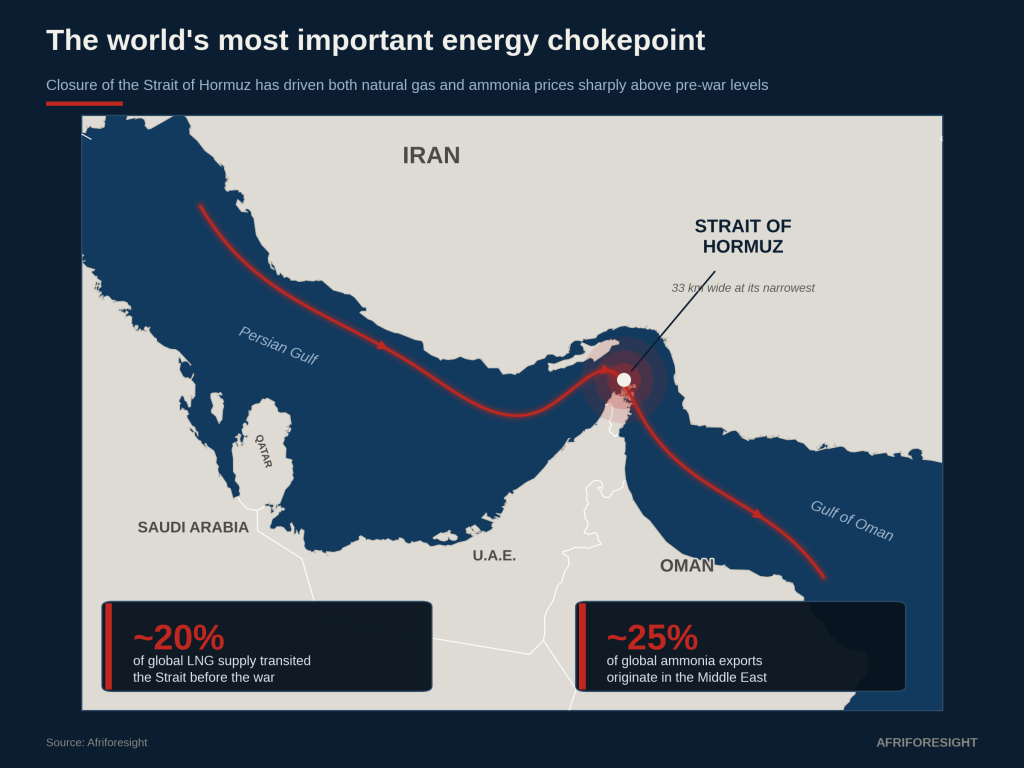
Ammonia prices, in turn, climbed not only on the back of higher gas input costs, but also as lower supply (around a quarter of global ammonia exports come from the Middle East) coincided with stronger demand at the start of US’s Spring planting season when fertilizer demand typically peaks (about 80% of ammonia is consumed in fertilizer production).
Although ammonia prices have declined since May, they remain above levels seen earlier in the year and are expected to climb further in the near term following the surge in gas prices (the CEIC report ammonia prices with about a month’s lag).
Beyond the near term, some relief may be in store for ammonia prices. Reports suggest that Iran and Oman have agreed on terms for control of traffic through the Strait; the US, however, has not been party to these talks and it remains to be seen if US President Trump is willing to concede control of the Strait to Iran. But an opening of the Strait would allow for greater exports of both natural gas and ammonia from the Middle East, greatly easing tightness in the market.
For more on the outlook for Ammonia ; see our Ammonia forecasts.
Compiler: Chinmaya Alur (Chinmaya@afriforesight.com)