


Gold has spent much of the year retreating from record highs achieved earlier in the year. After breaking above $5 000/oz in the opening months, prices suffered a series of setbacks, with recoveries in April and August failing to restore the earlier momentum. Prices are now back near $4 000/oz (see graph below). The reversal highlights a recurring challenge: when investors need cash and the prospect of higher interest rates looms, even gold’s safe-haven appeal can take a back seat.
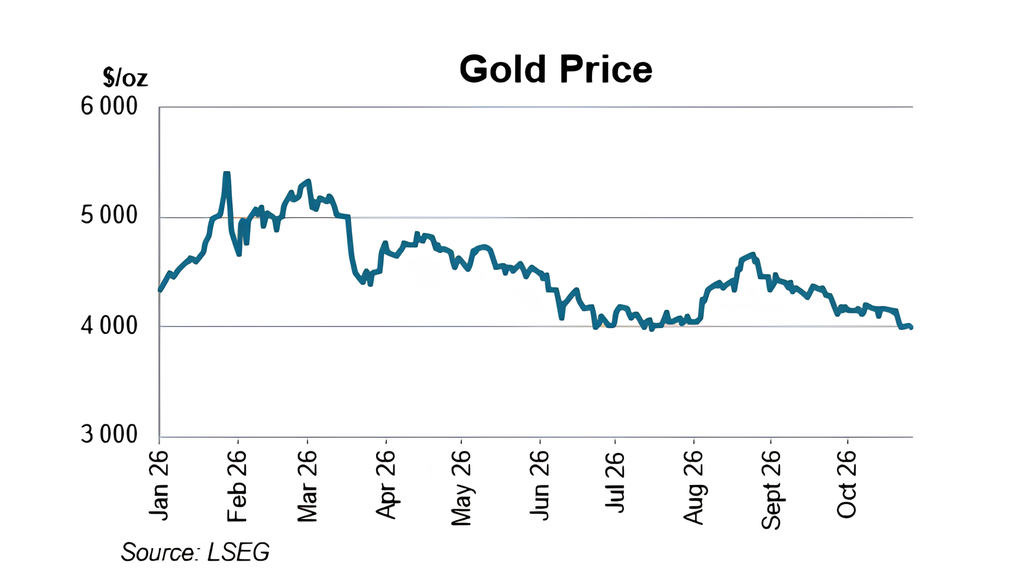
Central bank purchases laid the foundation for the early rally, while safe-haven demand attracted inflows into exchange-traded funds (ETFs) and encouraged retail buying. The outbreak of war in the Middle East, however, disrupted that momentum, where gold became a source of liquidity as investors sold profitable holdings to cover losses elsewhere. Rising oil prices added another obstacle, fuelling inflation concerns and increasing expectations of higher interest rates – as a non-interest-bearing commodity, gold prices typically fall back when interest rates increase.
The latest setback again exposed gold’s vulnerability to selling elsewhere in financial markets. As technology shares fell last week, investors liquidated gold to meet cash needs, pushing prices to their weakest since mid-July. Renewed enthusiasm for AI-related stocks has since eased that pressure. Attention now turns to the Federal Reserve: while it is widely expected that interest rates will remain unchanged this week, its guidance on future policy still suggests that more rate hikes are on the cards.
Gold’s next move will depend on whether investors return to it for protection or continue selling it for cash. A less restrictive interest-rate outlook could help the metal regain its footing, while signals of further tightening could leave another attempted recovery struggling to take hold.
For more on the outlook for Gold; see our Gold forecasts.
Compiler: Dina Alleluya (dina@afriforesight.com)