


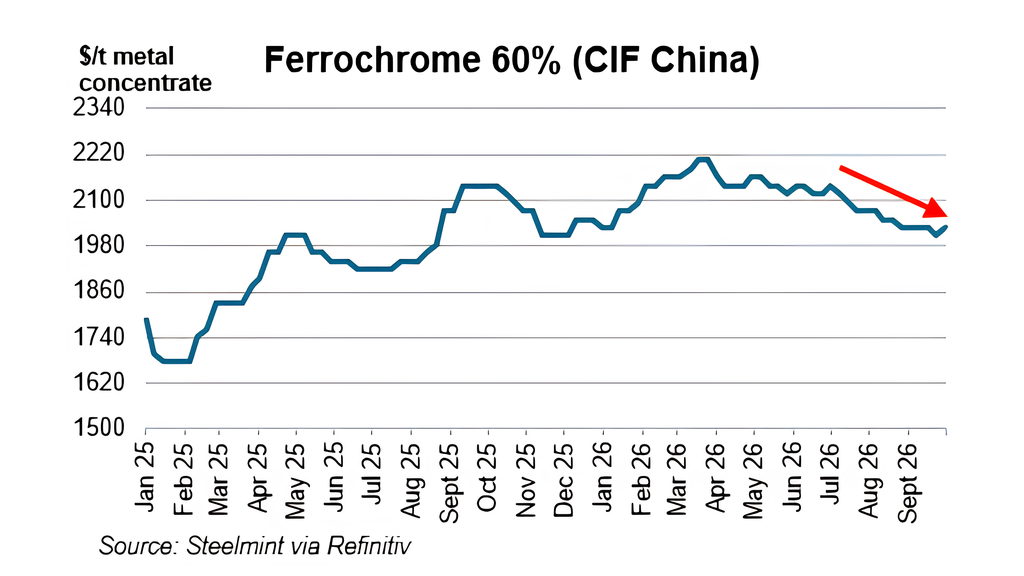
Ferrochrome prices declined over the 3rd quarter (see graph), as weak Chinese stainless-steel demand, elevated, if lower, Chinese domestic production and a persistent global surplus weighed on the market.
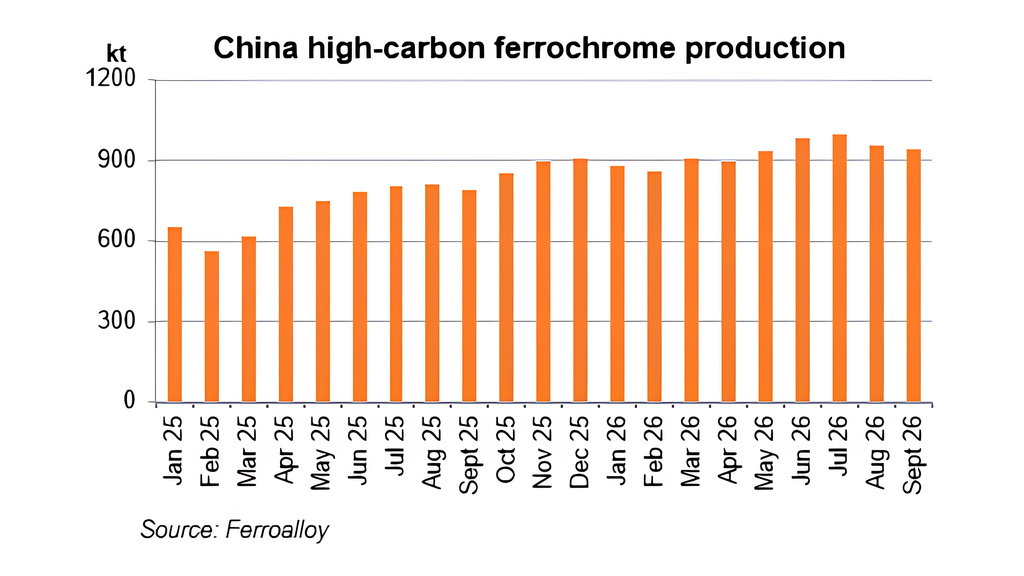
China remains the central source of pressure, with high-carbon ferrochrome output still significantly above last year’s levels despite a drop through the 3rd quarter 2026 (see graph). September production declined by 941kt, down 1.3% from August, as mounting cost pressure finally began forcing producers to cut output. The adjustment, however, has yet to absorb the surplus that accumulated during the 1st half of 2026.
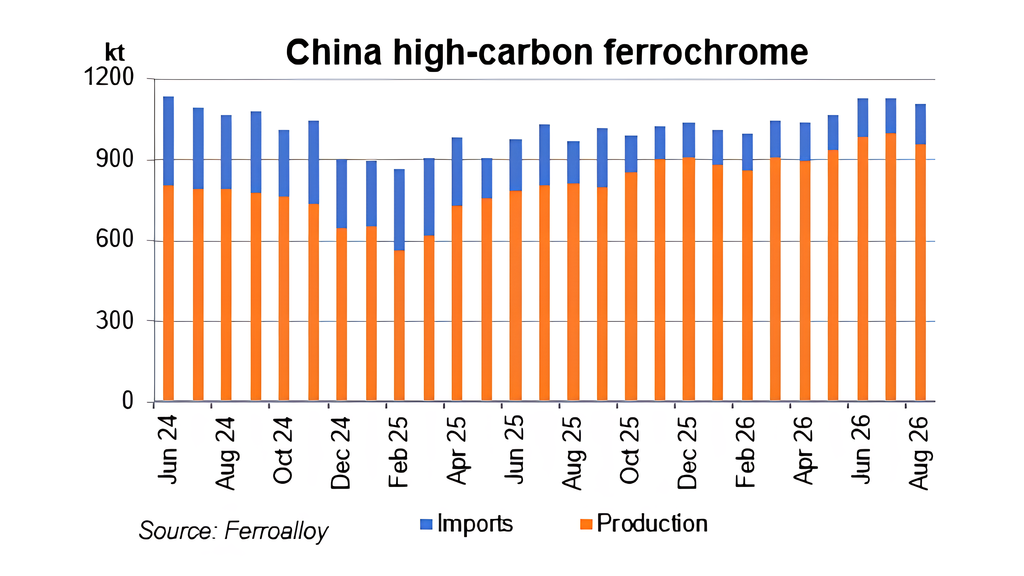
Despite elevated domestic production, Chinese ferrochrome imports increased in July-August as overseas supply returned, with South African material reappearing after no shipments were recorded in July. Kazakhstan remained the largest supplier, while India and Zimbabwe saw weaker volumes shipped to China. The renewed availability of South African ferrochrome is particularly significant because it comes at a time when Chinese producers are beginning to reduce output. Rather than these output cuts providing support to prices, returning South African now add further competition to an already well-supplied market.
The competitive picture among the major exporting countries is also evolving. Kazakhstan continues to hold a strong position in China, supported by Kazchrome’s scale, while India remains an important alternative supplier despite low Chinese shipments. Zimbabwe is pursuing a longer-term beneficiation strategy, seeking to move more of its chrome resources into domestic ferrochrome production and dedicated power generation. South Africa’s emerging recovery therefore places it in a more competitive landscape.
The movement in ferrochrome prices over the 4th quarter will therefore be less about whether ferrochrome supply is available and more about how quickly the market can absorb it. Chinese production is finally responding to deteriorating margins, but the reduction remains insufficient to eliminate the existing surplus, while returning South African smelters could provide another source of incremental supply. This creates a difficult near-term outlook for prices, even as the underlying structure of the industry begins to improve. The same cheaper power that offers South Africa a path back into ferrochrome production could, in the short term, make a global price recovery harder by bringing previously idled capacity back into the market.
For more on the outlook for Ferrochrome; see our Ferrochrome forecasts.
Compiler: Khomotso Rabutla (khomotso@afriforesight.com)