

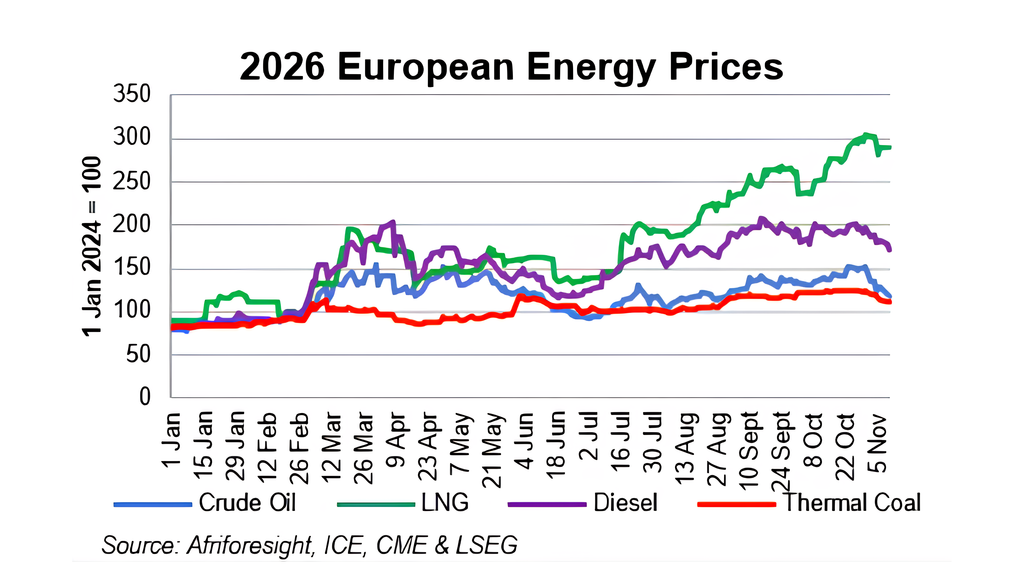
Since the Democrat sweep in the US mid-term elections last week, energy prices have generally been declining, with oil prices in particular taking a tumble (see graph), on expectations that Democrats will force President Trump to end the war in Iran, a key driver of energy costs over 2026. While a lower Middle Eastern risk premium should help to lower energy prices, physical tightness remains, particularly in the crude, products and natural gas markets. Ultimately, weather may decide how prices react through winter.
In the mid-terms, Democrats took commanding majorities in both the US House of Representatives and Senate and will assume control of Congress in early January – Trump retains the veto power, but Democrats will gain some leverage through war-power resolutions and control of military budgets. Disgruntled Republicans may offer cooperation as they try to move past the unpopular war; indeed, Vice President Vance has already blamed the war for Republicans’ electoral defeat, while Republican Congressman Massie has introduced articles of impeachment against Defence Secretary Hegseth, a convenient scapegoat.
For his part, Trump seems to have shelved (for now) plans for a major new attack on Iran and has called the war “effectively over”. If Trump does want to end the conflict, the Iranians will be acutely aware of his diminished standing and probably stick to their maximalist demands, dragging out negotiations for a little while yet.
Market sentiment, though, has already shifted. Crude oil and diesel price have seen the largest declines on hopes a deal will see traffic again freely flowing through the Strait of Hormuz. A US navy-led tanker “shuttle service” has brought crude volumes close to pre-war levels (if crude piped to alternative ports is added), but the higher number of tankers involved for longer has pushed up shipping costs, keeping oil prices above $100/b; prices have now fallen to just above $90/b as the risk premium narrows.
But Iran has kept up its attacks on ships in the Strait and Persian Gulf, while the Iran-backed Houthi’s in Yemen are still engaged in a war against the Saudi/Yemini forces, with Saudi energy infrastructure coming under attack. Traffic through the Strait will normalise only once a concrete ceasefire/peace deal is reached, with refined product markets remaining tight as Gulf refined supply stays locked-in and Russian supply falls due to incessant Ukrainian attacks on its refineries.
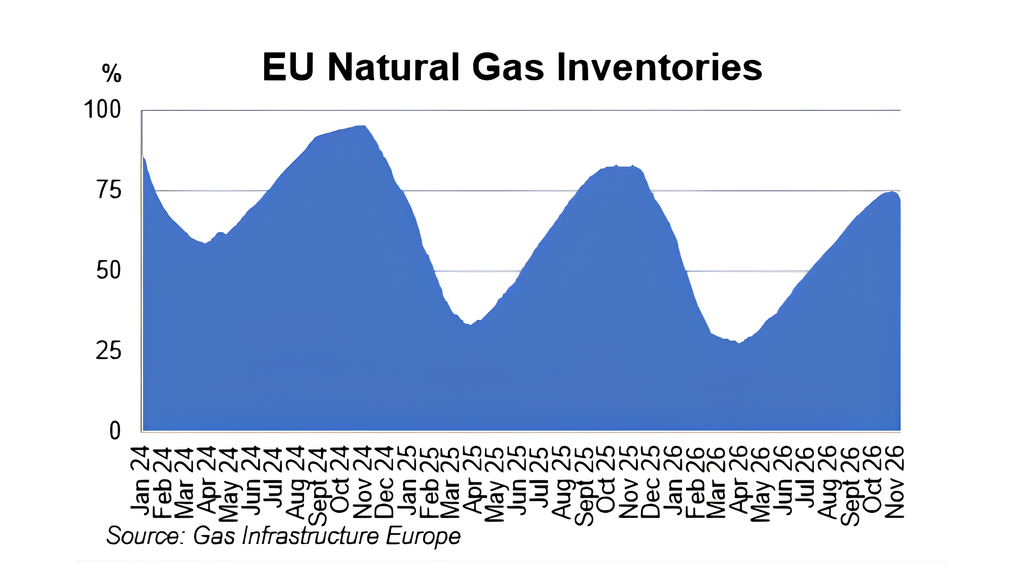
So too for natural gas, with around 20% of global liquified natural gas (LNG) supply still trapped inside the Gulf – LNG prices remain near their 2026 highs as demand for winter heating boosting competition for scarce cargoes; the EU especially has to resort to spot markets with gas inventories well below usual levels (see graph). Even after a Middle East resolution, Qatar, the world’s 2nd largest global LNG exporter, cannot easily ramp up supply after many of its LNG terminals were damaged during the war.
Thermal coal prices have also seen a downtick as the potential for more natural gas in the market weighs on its demand outlook. While there is potential for global energy supply to increase, winter temperatures in the Northern Hemisphere may have the final say in how energy prices react for the remainder for the year. El Niño is expected to peak in the 1st quarter of next year and may result in an unusually warm winter – warmer-than-usual weather has already kept heating demand in check in October, easing strain on gas demand. Conversely, El Niño raises the risks of severe cold snaps, as we have already seen in November, swinging demand the other way.
For more on the outlook for Oil; see our Oil forecasts.
Compiler: Vinesh Chetty (vinesh@afriforesight.com)