

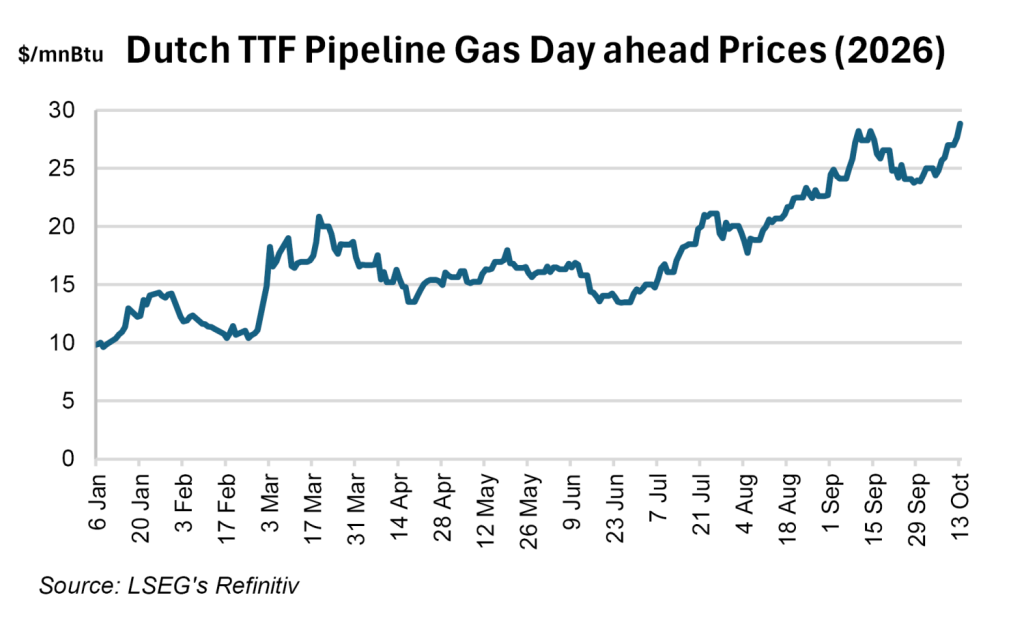
European natural gas prices have surged (see graph) as continuing Middle East liquified natural gas (LNG) supply disruptions leave pre-winter storage levels well below seasonal norms. Restricted shipments through the Strait of Hormuz have increased competition for scarce cargoes and disrupted Europe’s stockpiling efforts, leaving the market vulnerable to further price spikes ahead of winter when heating demand typically rises. However, a strong ongoing El Niño weather system could bring a milder winter in both Europe and Asia, reducing gas consumption and potentially freeing up Asia-bound LNG cargoes for Europe; later expected cold snaps could offset some of the benefits.
El Niño is a weather pattern that involves a warming of the equatorial Pacific Ocean, affecting weather patterns worldwide and generally causing warmer temperatures, although its effects vary by region. The current El Niño is expected to peak in December, with forecasts expecting a milder and windier start to winter in parts of Europe, lowering heating demand and boosting wind generation, both reducing the need for gas-fired power.
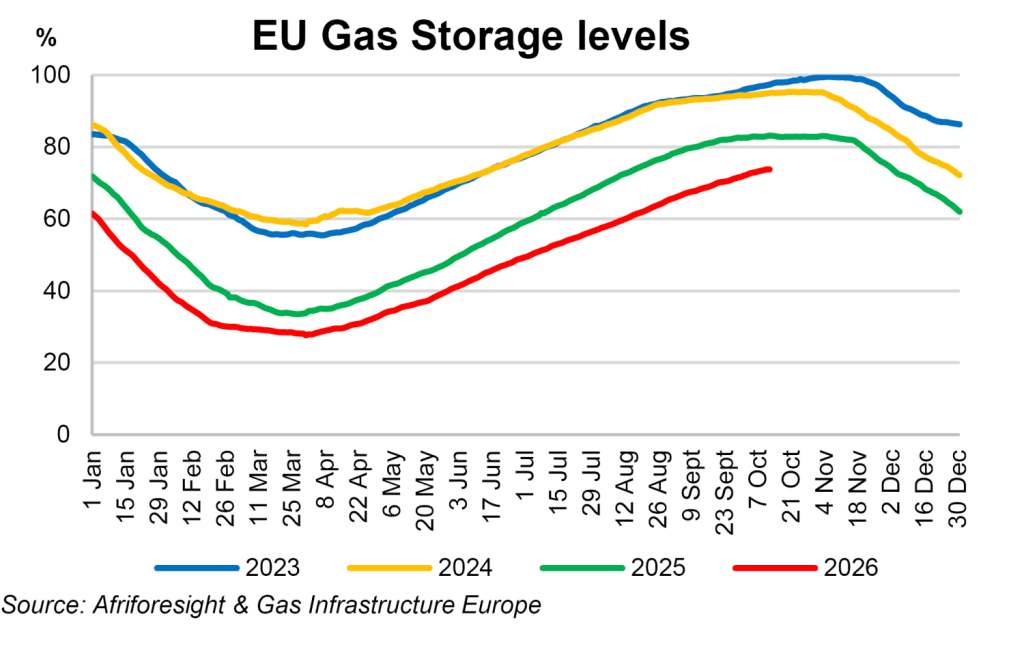
Europe’s current gas storage levels leave the continent with limited room to deal with additional demand brought on by colder temperatures – storage is currently 74% full (see graph), about 15% below the five-year average. Storage typically supplies 25–30% of EU winter gas consumption, so a smaller buffer increases dependence on pipeline deliveries and LNG imports.
Certain estimates predict that the El Niño would need to lift Europe’s temperatures around 2 °C above historical temperatures to bring LNG requirements close to the previous winter’s level – a degree of warming that has only occurred twice in recorded history. An exceptionally mild winter could therefore offer substantial relief, particularly if warmer Asian weather also makes cargoes more readily available.
Warmer temperatures are also expected across Japan, China and South Korea from November through February. As Asia’s major LNG importers, weaker demand there could ease competition for already scarce cargoes. However, possible ‘cold snaps’ in early 2027 could raise gas demand while inventories are being drawn down, which could again intensify competition for LNG cargoes.
El Niño may ease Europe’s winter gas squeeze through lower domestic demand and reduced competition from Asia, but it is unlikely to resolve the underlying supply problem. Cold snaps, especially if they affect several regions simultaneously, could accelerate withdrawals and cause renewed price spikes. Even if Middle Eastern exports recover, depleted stocks will need to be replenished in 2027, sustaining import demand beyond winter. Therefore, favourable weather would offer some temporary relief, rather than a reliable route back to pre-war gas prices.
For more on the outlook for Natural Gas ; see our Natural Gas forecasts.
Compiler: Chinmaya Alur (chinmaya@afriforesight.com)