

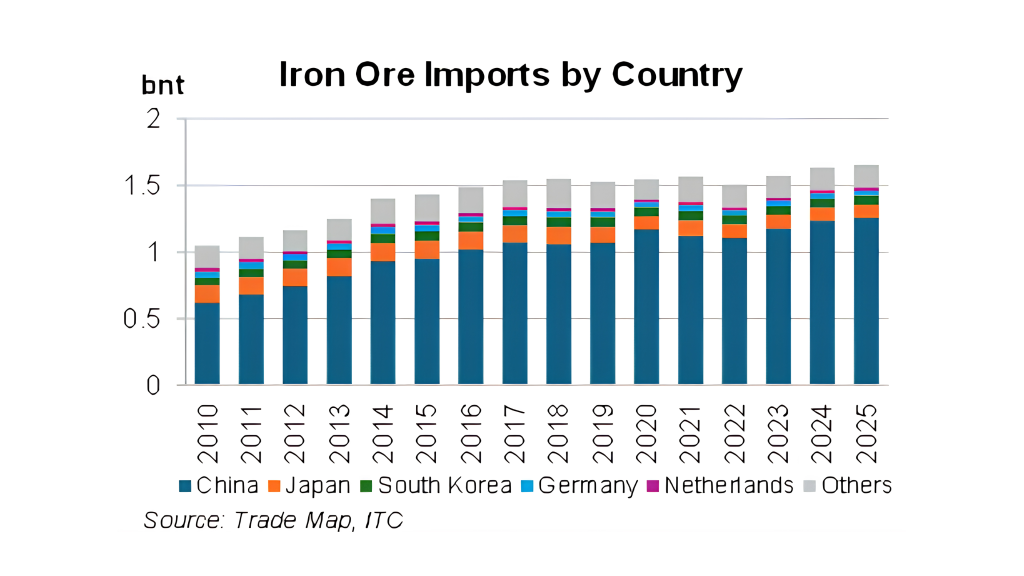
China is using its position as the world’s largest iron ore buyer to gain more influence over how the commodity is bought and priced. It established the state-owned China Mineral Resources Group (CMRG) in 2022 to centralise purchasing that had previously been spread across individual steelmakers. China imported a record 1.26bn tonnes of iron ore in 2025 and volumes have remained high in 2026 despite weaker property demand and steel production.
CMRG is becoming more assertive. In August, it reportedly asked around a dozen Chinese traders to buy ore through its online platform. It has also taken a harder line with major suppliers, previously restricting purchases of some BHP and Fortescue products and asking some mills to halt negotiations with Rio Tinto for September shipments. CMRG is estimated to be negotiating for more than half of China’s annual iron ore imports, giving China greater power to push for better prices and contract terms.
CMRG’s influence is extending beyond Australia’s major miners, with South African iron ore also becoming part of this system. CMRG agreed with Anglo American in April to handle around 10mnt of Kumba Iron Ore sales to China through to March 2027. China accounted for 54% of Kumba’s sales in the 1st half of 2026.
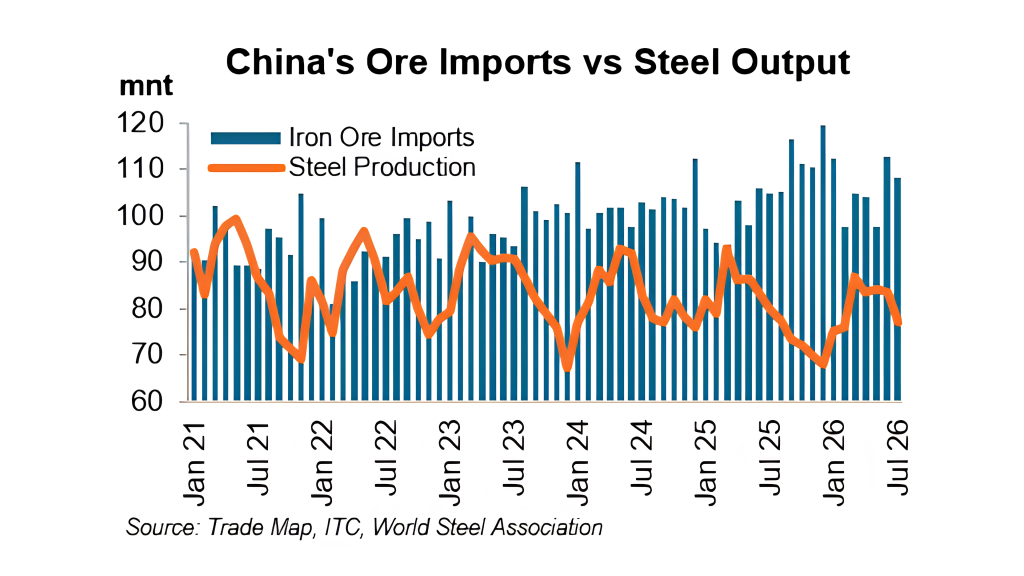
China cannot dictate prices outright because its steel industry still relies heavily on imported Australian and Brazilian ore. However, imports have remained strong even as steel output has weakened, while prices have broadly held around $95/t since June. This suggests CMRG’s strategy is less about cutting back on ore purchases and more about securing better terms on the large volumes China will continue to need.
Miners trying to out-muscle CMRG will have to adapt their strategy. One option is to reduce their dependence on China by growing sales into markets such as India, Southeast Asia and the Middle East, where steel production is expanding. They can also make their ore harder to replace by offering higher-grade or more specialised products, while keeping costs low enough to withstand tougher price negotiations.
CMRG, for its part, could gradually shift the balance of power towards Chinese buyers. Growing supply, including future volumes from Guinea’s Simandou project, could strengthen its position further by giving China more suppliers to choose from. For exporters such as Kumba, China will remain a crucial market, but who holds the stronger hand in negotiation is becoming increasingly important.
For more on the outlook for Iron Ore; see our Iron Ore forecasts.
Compiler: Devon Allers (devon@afriforesight.com)