

South Africa’s cement industry is under pressure. Construction activity is weak and local producers are competing for limited business against rising imports of cheaper cement. Cement companies are clamouring for stronger protection, saying these products threaten local factories, investment and jobs. But the latest results from PPC, Afrimat and Sephaku Cement show that imports are only part of the problem.
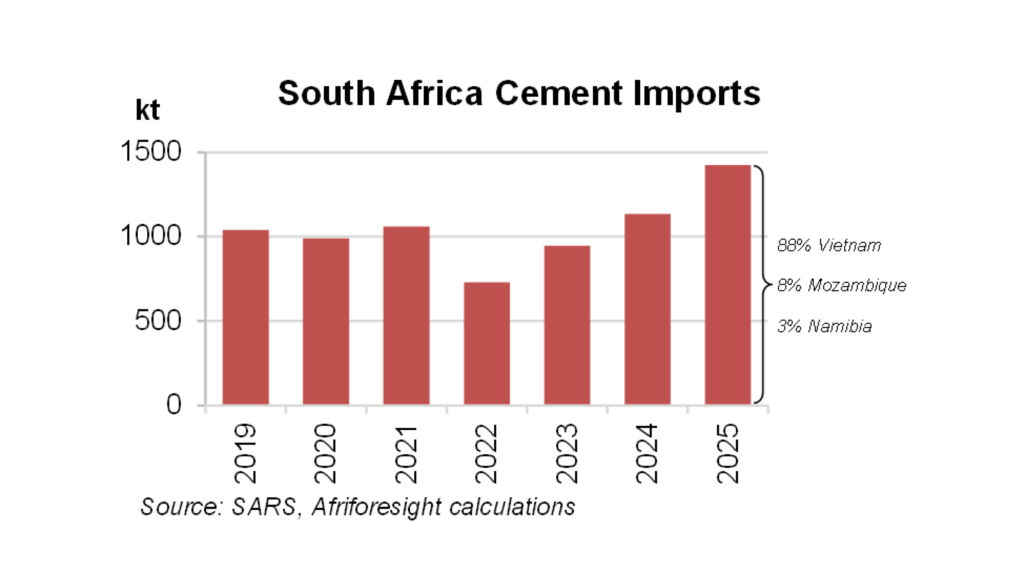
Cement imports increased by 25.7% to a record 1.4mnt in 2025 (see graph), with Vietnam supplying 88% of the total. South Africa already imposes producer-specific anti-dumping duties of 25-69% on Portland cement originating in or imported from Pakistan, but no similar measure has yet been introduced against Vietnam or Mozambique. New protection could reduce some of the pricing pressure on local producers, but it would not solve weak demand or high operating costs.
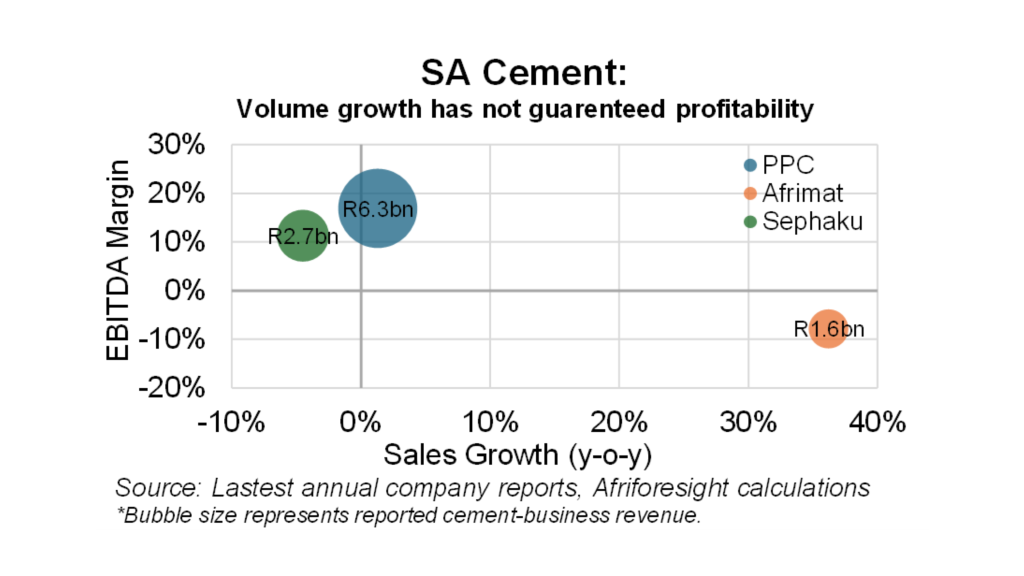
The latest financial results show that PPC performed the best, even though its South African cement sales were broadly unchanged in the year ended March 2026. Revenue from its combined South African and Botswana cement business rose by 1.8% to R6.3bn, while its underlying profit margin improved from 13.6% to 16.9%. This was mainly due to lower costs, better operations and stronger pricing.
Afrimat had a very different result: cement sales rose by 36.2% and revenue increased by more than half to R1.6bn, yet the business still made an operating loss of about R185mn. High repair, maintenance and plant-restoration costs continued to weigh on the former Lafarge South Africa operations, which Afrimat acquired in April 2024.
Sephaku Cement was more affected by weak demand. Its sales volumes fell by 4.5%, revenue declined by 4.4% to R2.7bn and earnings weakened, especially because of slow civil-construction activity.
The contrast is clearly seen in the following chart, where PPC earned the strongest margin despite little sales growth, Afrimat sold much more cement but still lost money and Sephaku remained profitable despite lower sales.
Stronger import protection could give local producers some breathing room, but it cannot create new roads, houses, power projects or other construction work. The industry’s long-term recovery will depend on whether South Africa can turn the promises of committed investment by both public and private entities into enough infrastructure and building projects to support demand and whether producers can run their plants more efficiently.
For more on the outlook for Cement; see our Cement forecasts.
Compiler: Devon Allers (devon@afriforesight.com)