


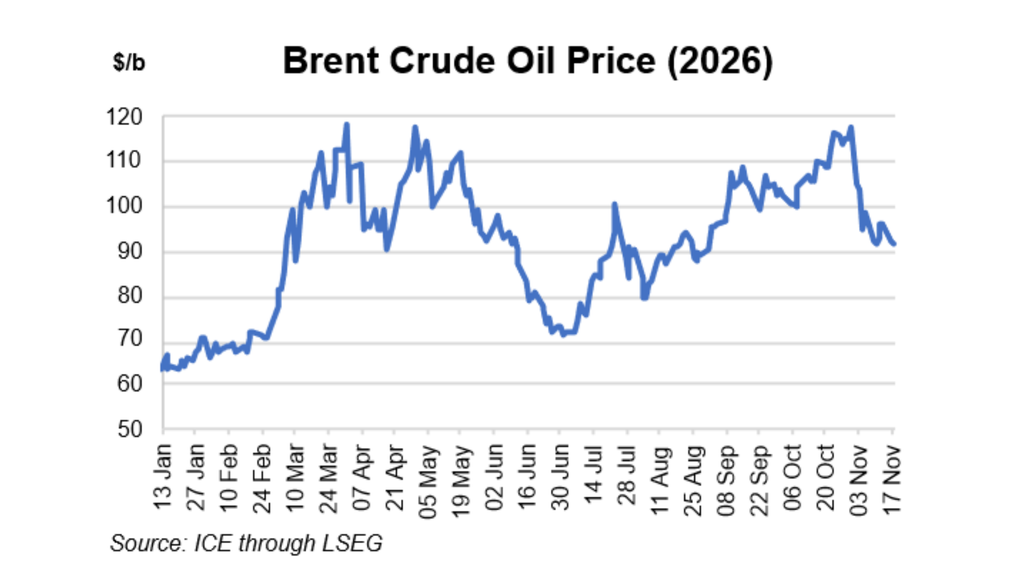
Oil prices surged at the onset of the war in the Middle East in late February (see graph), stoking fears that prices could increase to $150/b or more if supplies were choked off for a considerable amount of time. However, plenty of oil in storage, the release of Strategic Reserves and oil piped to alternative ports, helped avert the most drastic scenarios, with a sharp pull-back in China’s imports also playing a significant role. But Chinese imports are now picking up again, keeping prices elevated even as more oil is shipped out of the Middle East – the larger question is whether the cutback was just a war-time measure, or whether China’s oil consumption has taken a permanent knock.
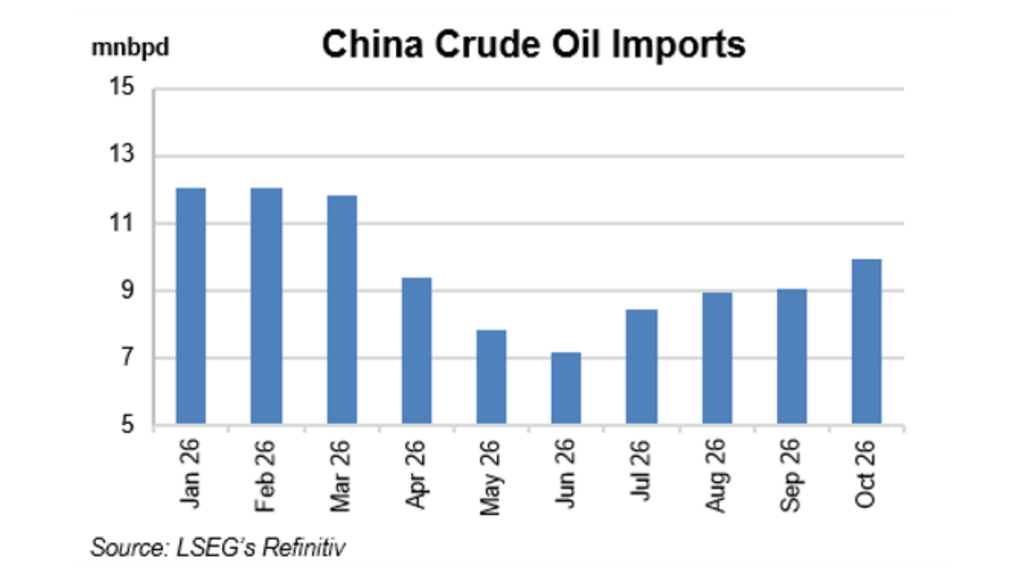
China is the world’s largest crude importer, typically accounting for around 17% of global consumption before the war. Imports, though, fell sharply after the war began as China dipped into commercial reserves, shifted some chemical production to coal feedstock, while also reducing refinery rates – a ban on exports of refined products helped ensure sufficient domestic supply. As oil flows from the Middle East have gradually picked up in recent months, China’s imports have also recovered to reach their highest level since March in October (see graph) – imports are, however, still about 13% below pre-war levels.
The question now is whether China’s oil imports fully recover to pre-war levels. Before the war, China was already the world’s leading adopter of new energy vehicles (NEVs), with the share of NEVs in monthly auto-sales now consistently exceeding 60% and could account for 20% of the overall passenger vehicle fleet by the end of 2026; the sale of alternative-powertrain trucks is also accelerating – it is estimated that as much 1.3mnbpd of petrol and diesel demand has been displaced this year. China is also investing in an expansion of its coal-to-chemicals capacity.
For now, China’s oil imports could be supported by stronger demand from independent “tea-pot” refineries for processing and exporting into tight global refined products market to take advantage of elevated prices; China will also want to build back some of its depleted inventories. Over the longer-term however, oil producers may have to contend with the fact that China has reached peak oil demand.
For more on the outlook for Oil; see our Oil forecasts.
Compiler: Chinmaya Alur (chinmaya@afriforesight.com)