


Higher platinum prices are generally believed to encourage recycling, as the value of recovered metal increases and makes processing end-of-life vehicle autocatalysts more profitable. However, the response from secondary platinum supply is not immediate, as recycling volumes depend on the availability of scrap vehicles, collection rates and processing capacity (the same dynamics apply to recycling of other PGMs such as palladium and rhodium).
Vehicles typically reach the end of their useful lives after 10-20 years, meaning that the availability of recyclable autocatalysts reflects historical vehicle production and platinum loadings rather than current prices. Longer vehicle lifespans, second-hand vehicle exports and inadequate collection infrastructure further restrict the amount of platinum entering recycling channels.
The economics of the recycling supply chain also influence how quickly higher platinum prices translate into additional secondary supply. Higher prices encourage scrapyards and scrap aggregators to collect and release more spent autocatalysts, while lower prices can make collection and processing less profitable, resulting in material being stockpiled. In addition, the movement of scrap through the supply chain requires working capital, collection infrastructure and sufficient processing capacity. Consequently, even when platinum prices improve, delays in collecting, processing and refining recovered metal can prevent an immediate increase in secondary supply.
Recent developments indicate that the recovery in platinum recycling is gaining momentum. Platinum recycling increased by 9% to 466koz in the 2nd quarter of 2026, compared to 2nd quarter of 2025, and is on track to increase by 8% in 2026 to approximately 1.8mnoz, from 2025. Despite this improvement, recycled platinum is forecast to account for approximately 25% of total platinum supply in 2026, compared with around 75% from primary mine production (see graph), highlighting the industry’s continued reliance on newly mined platinum.
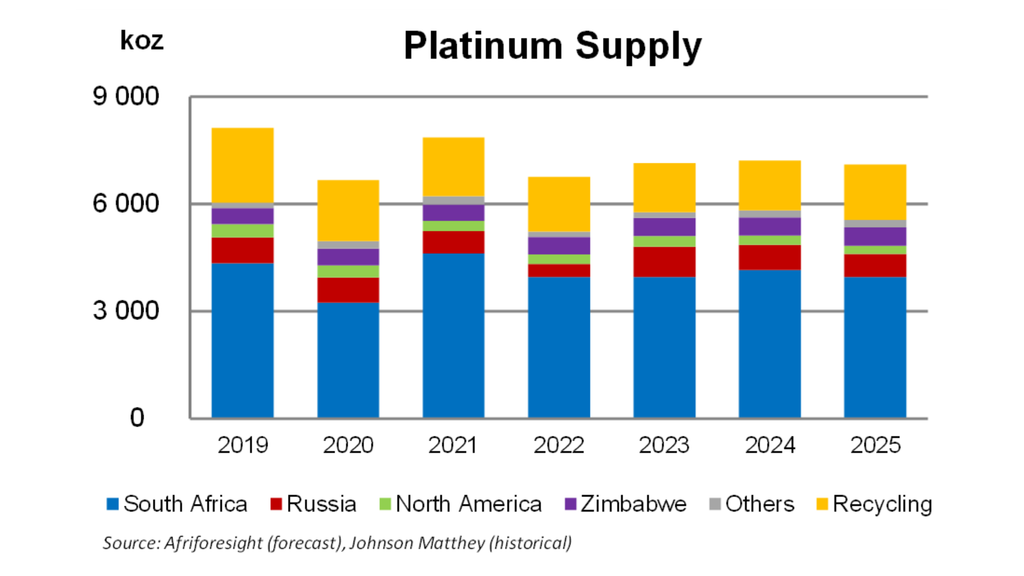
Although higher platinum prices and zero-emission vehicle government incentives are supporting a recovery in recycling, secondary platinum supply remains constrained by longer vehicle replacement cycles and lower scrap availability. Recycling should become an increasingly important contributor to platinum supply, particularly as producers face ageing mines and limited opportunities to increase primary production. However, higher prices cannot immediately create additional end-of-life vehicles or resolve collection and processing bottlenecks.
For more on the outlook for Platinum; see our Platinum forecasts.
Compiler: Kirthi Ramdhanee (kirthi@afriforesight.com)