


South African wholesale 50ppm diesel and retail 95 Octane petrol prices are set to decline to about R31.13/l and R29.76/l respectively from 4 November, as temporary government fuel levy reductions offset pressure from higher international fuel costs and a weaker rand during October. This would mark the first monthly decrease in both prices since July 2026 (see graph), providing some relief to households and fuel dependent industries after October’s sharp increases. However, prices would remain elevated, with the decline reflecting tax relief rather than an easing in underlying fuel costs.
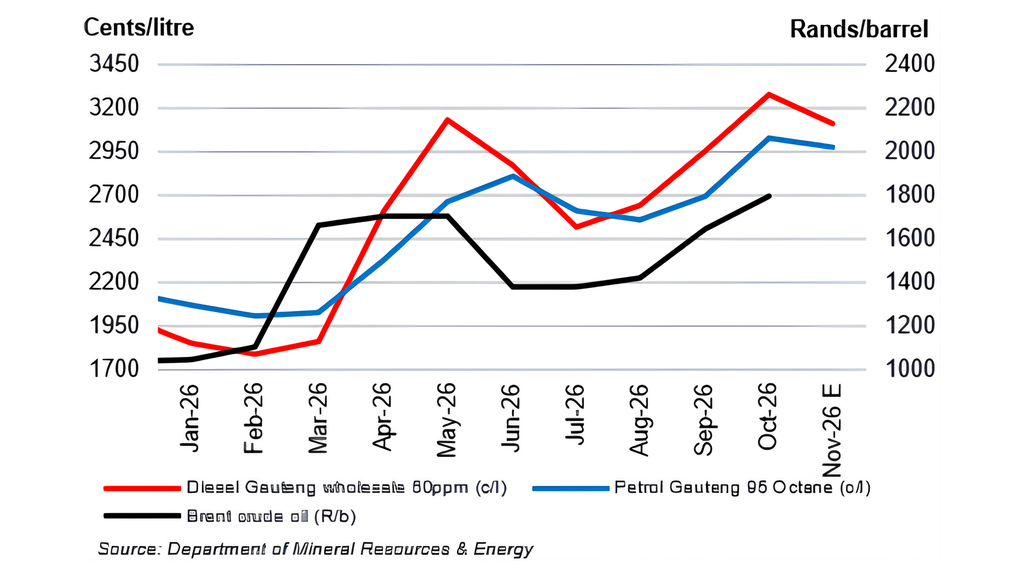
South Africa’s monthly fuel price adjustment reflects international refined fuel prices and the average rand/dollar exchange rate over the prior month. International oil prices increased further over October as ongoing Middle East tensions have sustained concerns over oil and refined product supplies; the rand, meanwhile, weakened against the dollar as expectations for further rate hikes by the US Federal Reserve Bank strengthened. Together, these factors have pushed up the rand cost of oil and refined fuels (see graph).
The decline in fuel prices for November comes in spite of an under recovery in fuel prices over October, which would normally require a price increase the following month – in fact, current estimates actually indicate fuel prices would increase by around R1.32/l for 50ppm diesel and R1.01/l for 95-octane petrol absent government relief.
But government has again stepped in to provide price relief to consumers and business. It reduced the fuel levy by R3/l for both petrol and diesel in April, then kept petrol relief unchanged and increased diesel relief to R3.93/l in May, before lowering reductions to R1.50/l for petrol and R1.96/l for diesel in June and ending both in July. From 4 November – 1 December, renewed fuel levy reductions of R3/l for diesel and R1.50/l for petrol will more than offset the expected increases. Relief will then fall to R1.50/l for diesel and R1/l for petrol until 5 January 2027.
The intervention offers temporary breathing space, particularly for fuel intensive sectors such as transport, agriculture and mining. However, the smaller levy reductions from December will reduce this support, meaning further price declines will depend on sufficient improvement in international fuel prices or the rand. Without that improvement, the eventual expiry of relief could bring renewed increases.
For more on the outlook for Fuel; see our Fuel forecasts.
Compiler: Chinmaya Alur (chinmaya@afriforesight.com)