

The 4th and 1st quarters of each year are the winter heating season in the northern hemisphere. The EU is low on natural gas, and LNG supply remains tight. Alternative heating from oil-based fuels and coal-fired electricity are also elevated, making for an expensive heating season. El Niño may tip the scale either way…
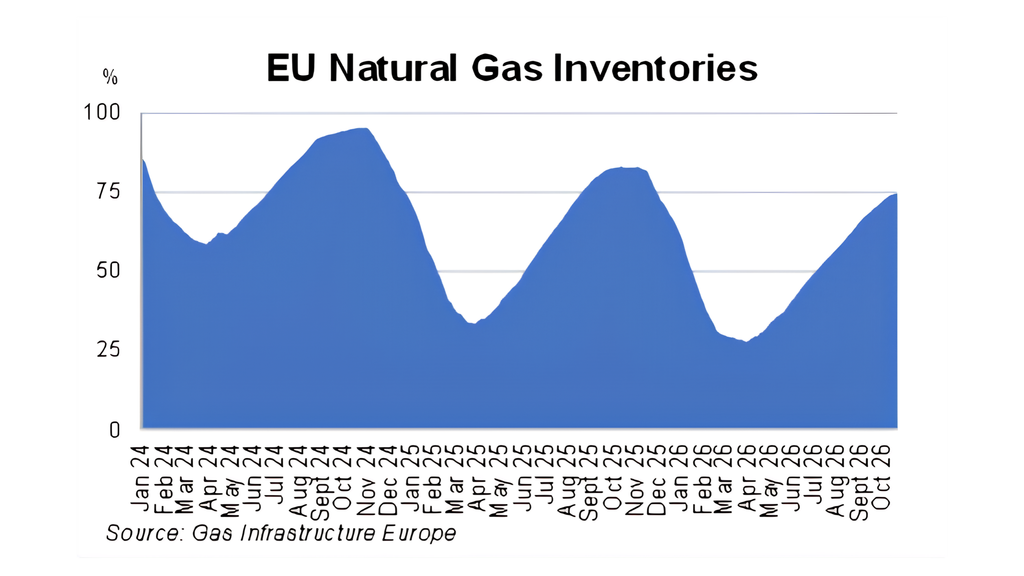
The EU has entered the winter heating season with its inventories below its 90% target, see graph below. Inventories are expected to be drawn down as weather turns colder, but will be more difficult to refill than in previous seasons, due to the ongoing Iran war. Qatar, world’s 2nd largest LNG exporter, has seen its exports severely disrupted after its facilities were damaged, while the Strait of Hormuz remains largely barred for gas transits, even as oil volumes approach pre-war levels. It has used a series of ongoing force majeures, delaying deliveries to customers. The global LNG market was tight even before the war, and is now even tighter. The EU has become increasingly LNG reliant, as it reduces Russian pipeline imports. With Asian buyers, mainly Japan and China, also importing LNG, the EU faces competition for scarce volumes.
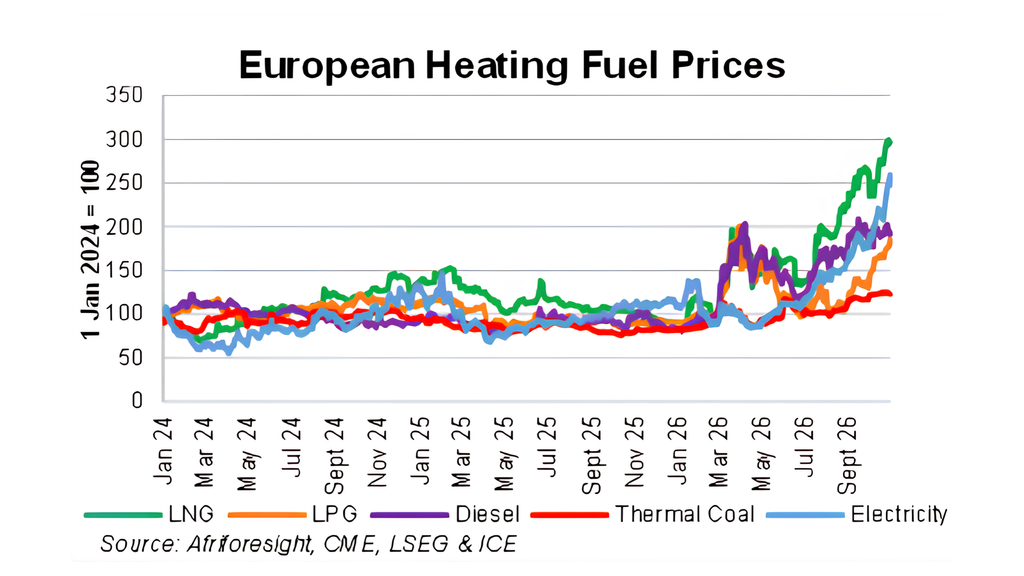
The Iran war has also boosted oil prices and curbed refining capacity, in turn pushing up costs for oil-based LPG and diesel, which is used as heating oil. Facing high gas prices, many utilities have ramped up thermal coal purchases to generate electricity. Thermal coal prices have thus increased along with heating fuels and electricity, see graph below.
A key factor in heating prices will be temperatures through winter. Warmer-than-usual weather has kept demand in check in October, but El Niño may still bring cold snaps later. Natural gas demand can rise rapidly and, given the EU’s low inventories prices, may spike to extreme levels.
For more on the outlook for Natural Gas; see our Natural Gas forecasts.
Compiler: Vinesh Chetty (vinesh@afriforesight.com)