

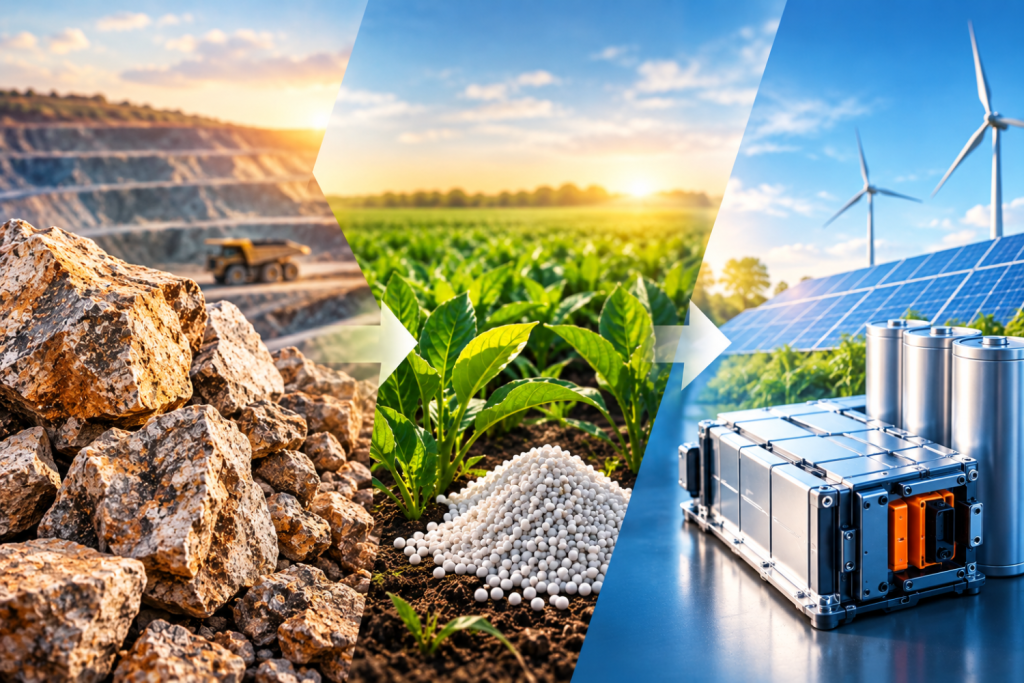
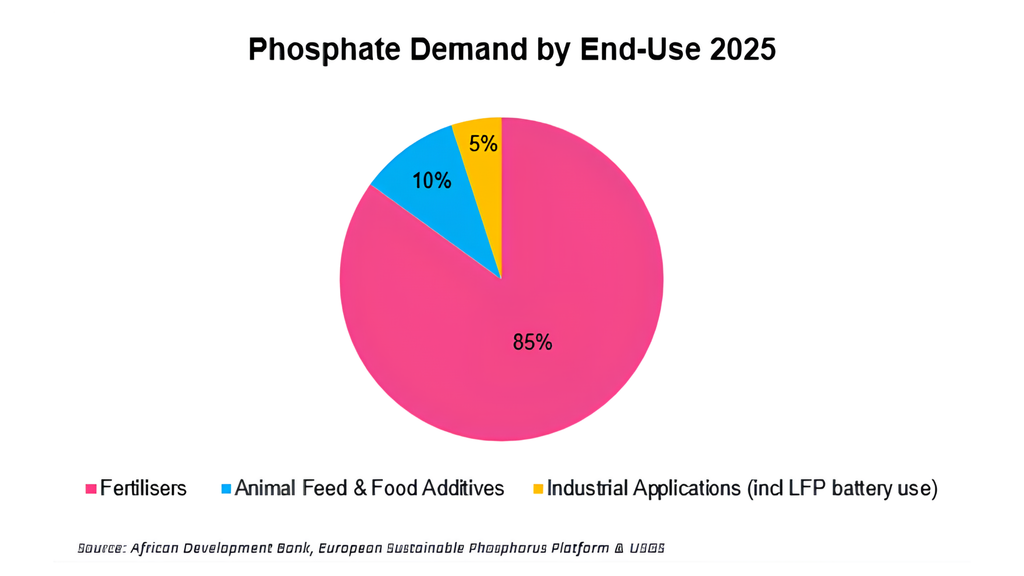
The market for phosphate is expanding beyond agriculture, with is use in lithium-iron-phosphate (LFP) batteries, while still small (see graph), gaining strength – LFP battery demand is rapidly rising for use in new energy vehicles (NEVs) and energy storage systems.
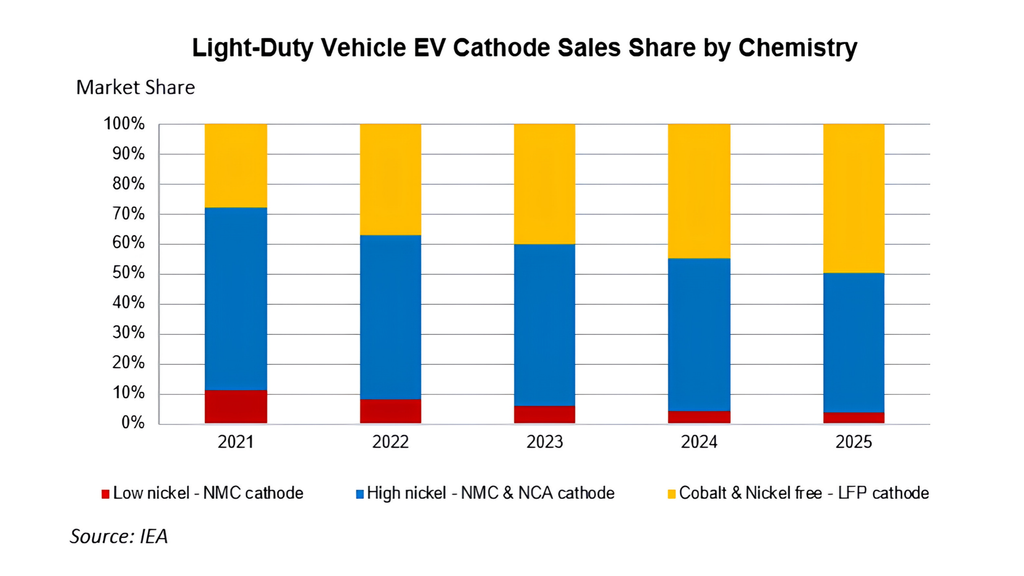
LFP batteries accounted for around 55% of global NEV battery deployment in 2025 and over 90% of stationary battery storage installations. LFPs do not use nickel and cobalt, which has resulted in lower production costs and wider adoption, creating additional demand for purified phosphoric acid and iron-phosphate precursors.
However, this is not nearly yet a substitute for fertiliser demand. Even under high LFP battery adoption, NEV batteries are only expected to account for 3% of total phosphorus demand by 2030, up from about 1% in 2022. Battery demand is therefore an additional growth stream, rather than a likely near-term driver of the entire phosphate market.
For miners, the opportunity may lie more in product quality than in simply supplying more rock, with not all phosphate deposits able to be converted economically into battery-grade material. LFP supply chains require purified phosphoric acid (PPA) with very low contaminant levels. Ore mineralogy and impurities influence the amount of processing and purification required, affecting production costs and the ability to meet customer specifications.
Several projects, however, are targeting the production of battery-grade phosphate to supply the growing LFP market, with 2 projects in Canada’s Quebec province prominent examples: Arianne Phosphate is advancing its Lac à Paul pilot project and has partnered with Travertine Technologies to produce purified phosphoric acid (PPA) at a small scale. Similarly, First Phosphate is developing its Bégin-Lamarche phosphate project and has successfully demonstrated the conversion of its phosphate concentrate into battery-grade PPA in partnership with Belgium-based Prayon Technologies, targeting production from 2030. These developments highlight efforts to establish alternative sources of battery-grade phosphate outside China (largest producer – 75% of global), although commercial production at scale remains a key milestone target.
Although LFP battery growth presents an opportunity for phosphate producers to diversify into higher-value markets, its impact on overall phosphate demand will remain limited initially. The ability to produce battery-grade materials competitively and scale up refining capacity would determine which projects can benefit. For now, agricultural demand should continue to dominate the phosphate market, but battery applications could become an increasingly important source of demand growth for high quality resources over the longer term.
For more on the outlook for Phosphate; see our Phosphate forecasts.
Compiler: Kirthi Ramdhanee (kirthi@afriforesight.com)