


Copper prices have defied the economic fall-out from the war in the Middle East to trade above $14 000/t since beginning August. Underpinning prices is strong demand for the electrification of power generation and transport, with vast investment in data centres also providing support. But concerns about future copper supply too are adding upwards pressure, with ongoing disruptions at mines across the globe further clouding the outlook.
Copper production trends among major miners were mixed in the third quarter of 2026. While Rio Tinto and Anglo American reported relatively stable output over the first nine months, BHP’s production fell sharply, reflecting lower grades, maintenance and operational disruptions, particularly in Chile. The results highlight how weather-related setbacks and declining ore quality can offset gains from improved recoveries and expanding operations.
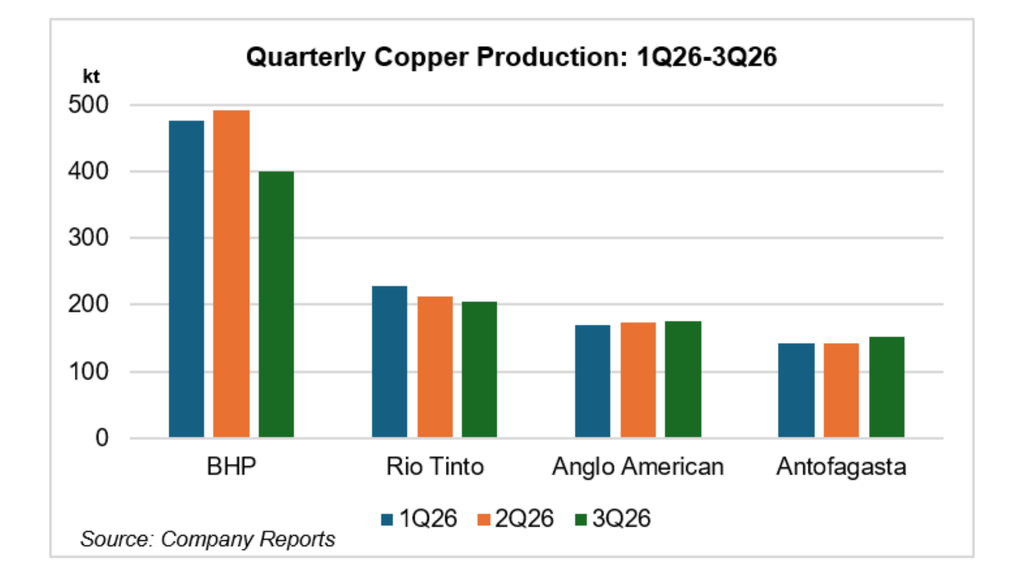
BHP’s copper production fell 18.5% quarter on quarter to 401kt. At Escondida mine in Chile (57.5% BHP interest), lower grades, planned maintenance, severe weather and a temporary suspension following a fatal incident weighed on output. A conveyor belt failure at Carrapateena in Australia added pressure, while higher production at Antamina provided only a partial offset. BHP maintained its 2026-27 production guidance of 1.7-1.8mnt.
Rio Tinto’s consolidated copper production declined 4.1% to 205kt, reflecting lower refined copper output and reduced production at Escondida, where Rio Tinto holds a 30% interest.
Anglo American 3rd quarter copper production rose 1%. Higher grades at Quellaveco mine in Peru supported output, partly offsetting severe winter weather and maintenance disruptions in Chile. Processing lower-grade stockpiled ore at Collahuasi also weighed on production. Anglo American maintained its 2026 guidance of 700-760kt, expecting improved copper grades in the 4th quarter.
Antofagasta’s 3rd quarter output increased 7% to 152kt. Higher recoveries and the processing of inventories accumulated during the previous quarter supported a rebound at Los Pelambres, despite severe weather that halted operations in July.
Weather disruptions in Chile continue to expose the vulnerability of copper supply, compounding the effects of lower ore grades and operational setbacks. The key question for the 4th quarter is whether recovering operations and planned grade improvements can lift production enough to offset earlier losses. With limited flexibility to compensate for disruptions, further setbacks could tighten an already constrained copper market.
For more on the outlook for Copper; see our Copper forecasts.
Compiler: Dina Alleluya (dina@afriforesight.com)