


India needs to bring in more coal, and quickly. A powerful El Niño has severely curbed monsoon rains, draining hydro-power reserves and shifting the burden of power generation to coal-fired stations, where coal stocks are rapidly depleting. But with global coal demand expected to hit a fresh record this year due to a switch from more expensive natural gas and with exports from major supplier Indonesia being limited, opportunity knocks for South African coal exporters, rail capacity permitting.
A powerful El Niño weather system over 2026 has resulted in the weakest Indian monsoon since 2015, with rainfall over June to September almost 13% below the long-term average – El Niño conditions are expected to strengthen and may peak only in November. Dry weather has shrunk reservoirs, with hydro-power generation down for the past 5 months – hydro-power typically accounts for about 9% of India’s total generation capacity.
The El Niño system has also boosted electricity demand for air-conditioning and irrigation and with hydro-power falling short, India is turning to coal-fired generation, which climbed by nearly 20% in September. Ironically, El Niño has also boosted rain in some coal mining regions, reducing availability of domestically mined coal. Higher coal-burn coupled with lower supply has pushed power stations to rapidly drawdown on inventories, which have fallen to a 3-year low (see graph below).
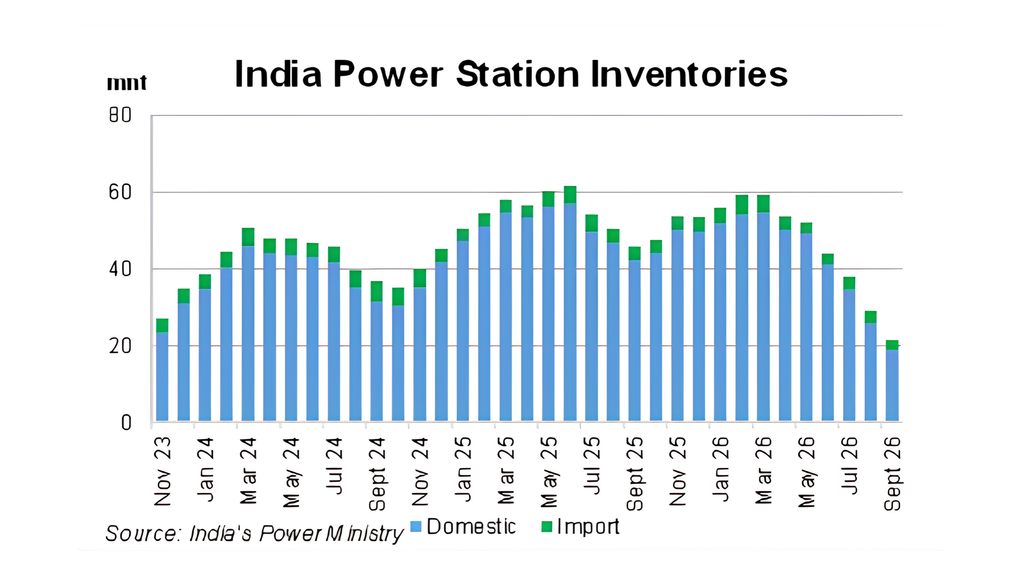
Domestic coal mines usually supply the majority of India’s coal needs and government had previously pushed to reduce and end imports. Current low coal inventories, though, have seen government reverse course to instruct power stations to increase imported coal use.
While India usually looks to Indonesia for most of its coal imports, government quotas and reservation for domestic use has seen Indonesia cut its coal exports by about 9% from January to August this year compared to the same period last year. Additionally, El Niño-driven hot weather and low rainfall in Indonesia reduced river levels, curbing coal barge volumes and limiting exports further.
With Indonesia unable to ramp up exports, India is likely to look towards South Africa to source more coal. India is the main customer for South African coal exports, typically buying about 50% of its shipments, but has cut imports from South Africa in recent months in line with government’s previous policy to rely more on domestic coal (see graph)
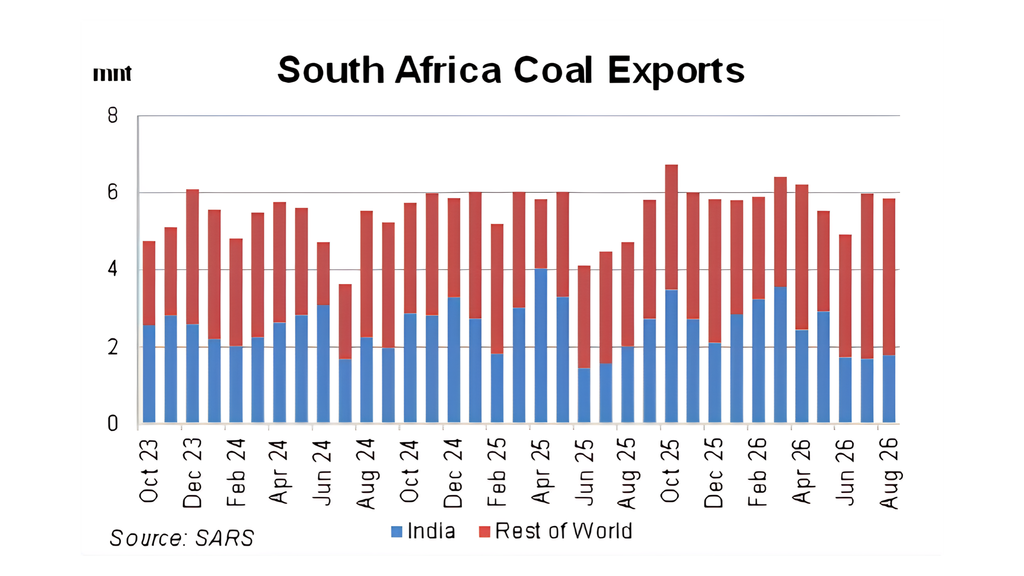
South Africa has nevertheless lifted its coal exports this year on the back of stronger demand from the rest of Asia and Europe to replace gas-fired power. An improved operational performance by Transnet has helped ramp up port and rail throughput, putting South Africa on track to export 70mnt in 2026; while that is up from 2025’s 67mnt, it remains well below 2017’s 81mnt.
Improved performance by Transnet notwithstanding, South Africa’s coal export volumes are likely near current capacity and while some extra volumes can be directed towards India, significant additional volumes will have to come at the expense of shipments currently heading elsewhere. With the competition for global coal supply heating up, Indian buyers will have to pay a premium to ensure shipments head their way.
For more on the outlook for Coal; see our Coal forecasts.
Compiler: Vinesh Chetty (vinesh@afriforesight.com)