

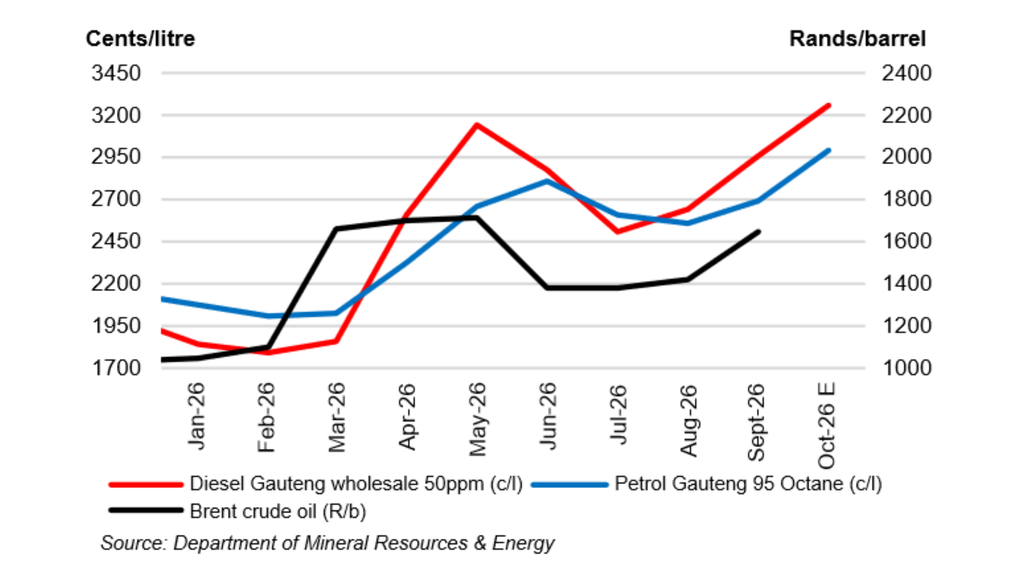
South African wholesale 50ppm Diesel and retail 95 Octane Petrol prices are both on course for sharp rises of about R3/l in October – these increases would come on top of already elevated prices, as higher international crude oil costs since the late February 2026 outbreak of the war in the Middle East (see graph) feed through to domestic prices. Continuous fuel price shocks and fears of shortages in refined products have placed renewed focus on South Africa’s dependence on imported fuel, with government looking to potentially revive two idled refineries at an estimated cost of over $8bn.
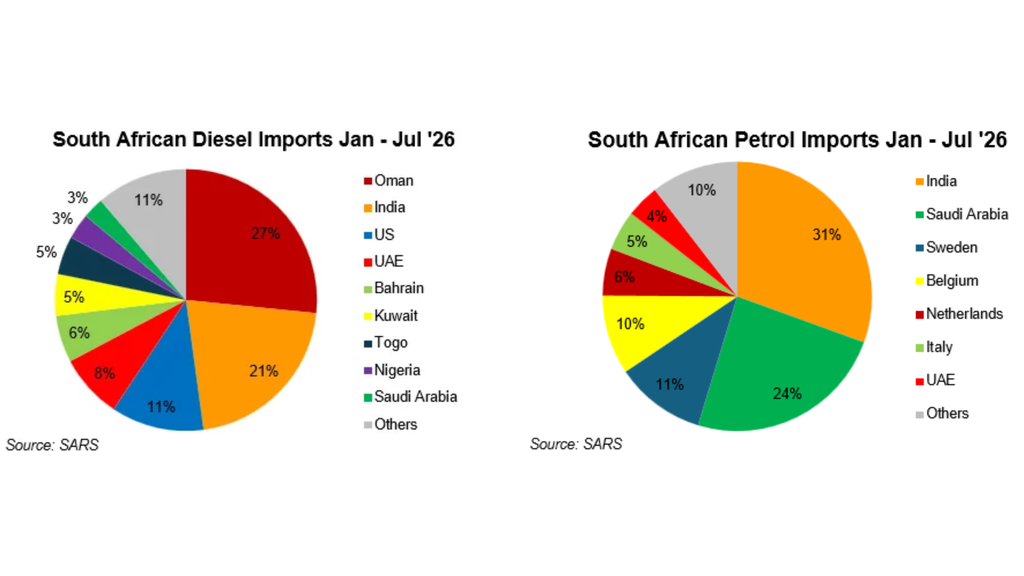
South Africa is particularly exposed to fuel supply shocks because its refining capacity has roughly halved over the past decade. Imported fuel products now meet a large portion of domestic demand – especially for diesel, leaving SA exposed to international markets to secure its supply. The Middle East war has particularly hit SA, as it imports most of its petrol and diesel from the Middle East and Asia (see graph) – in response, this year SA has ramped up imports from the US.
The government’s proposed response starts with the 180kbpd SAPREF refinery in Durban – idled since 2022 after flooding related damage; the first phase would use the site’s existing facilities to import and resell finished products, generating revenue for a planned upgrade to 400kbpd capacity and potentially as much as 650kbpd. It also plans a phased restart of PetroSA’s Mossel Bay gas to liquids plant, idled since 2020 after running short of gas feedstock. Together, the projects would cost over $8bn, with a final investment decision on SAPREF targeted only for 2027/28. In addition, the expected ‘gas cliff’ in a few years puts into question the viability of the planned restart of Mossel Bay refinery, for which natural gas is a key input.
Unfortunately, neither project offers a quick relief from high fuel prices and potential fuel shortages, and for now South Africa will remain exposed to international fuel markets, where Middle East supply and shipping disruptions persist. Additional local refining could eventually reduce dependence on imported fuel and strengthen supply security, but the projects still need funding, construction and dependable feedstock to come to fruition. And SA’s dependence on crude oil imports still leaves it exposed to international price movements, even if it is to refine most of the oil itself.
For more on the outlook for Fuel; see our Fuel forecasts.
Compiler: Chinmaya Alur (chinmaya@afriforesight.com)