

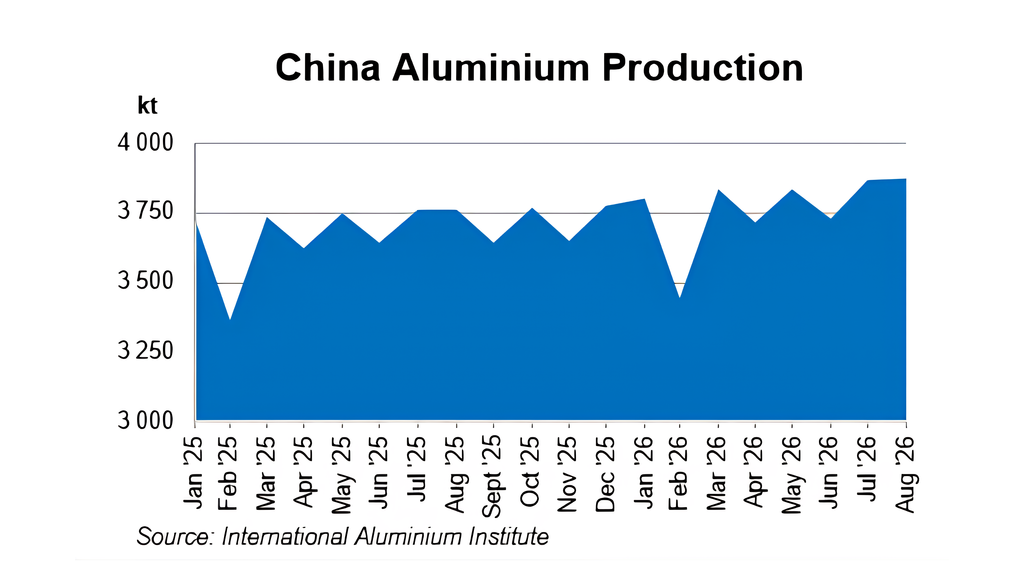
China’s aluminium industry is running at full throttle as smelters race to capture strong margins on exports after the Iran war disrupted close to 10% of global supply, tightening markets worldwide. China’s August output reached nearly 3.9mnt (see graph), the highest monthly figure ever recorded; year‑to‑date production has already surpassed 30mnt, putting the sector on track to breach the government’s long‑standing 45mnt annual ceiling.
The production boom highlights the tension between short‑term profit and long‑term policy. China’s government-mandated aluminium production capacity limit, introduced in 2017, was designed to curb structural oversupply, rein in carbon emissions and limit electricity demand in one of the most energy‑intensive industries. Yet with global shortages driving prices higher, smelters are pushing output beyond mandated levels.
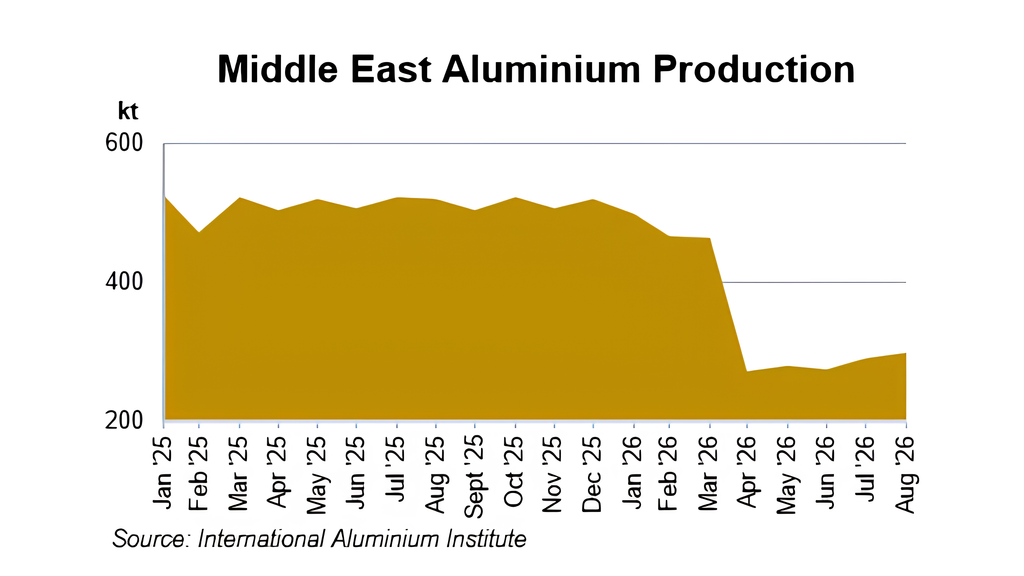
Aluminium supply from the Middle East has recovered only slightly since April, with volumes remaining well below pre‑war levels (see graph). Smelters in the UAE, Bahrain, and Qatar are gradually restoring operations, yet the region’s output remains fragile as the conflict continues to disrupt energy supplies and logistics. Until Middle Eastern supply returns fully, China has strong incentive to keep production elevated, though enforcement of the capacity cap could tighten once regional volumes normalize.
China’s aluminium surge underscores how geopolitical shocks and strong margins can override policy limits. With production already on pace to breach the 45mnt cap, the market faces a critical question: will China clamp down to protect energy and climate goals, or allow smelters to keep pushing output to meet global demand?
For more on the outlook for aluminium; see our aluminium forecasts.
Compiler: Dina Alleluya (dina@afriforesight.com)