

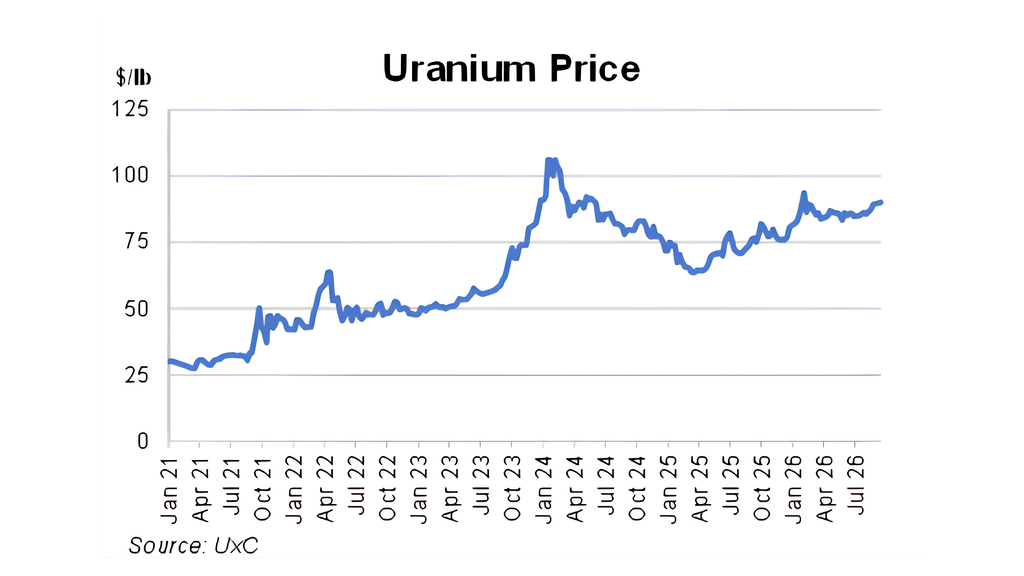
For many years now, global uranium demand has exceeded mined supply. Uranium prices slumped in the wake of Japan’s Fukushima disaster in March 2011, forcing producers across the world to shutter unprofitable production. But nuclear energy is now experiencing a bit of a revival and uranium demand is expected to continue increasing as new nuclear reactors come online. Africa has the potential to rapidly increase uranium output, with recent price increases (see graph) making mining more viable for producers in Namibia and Malawi.
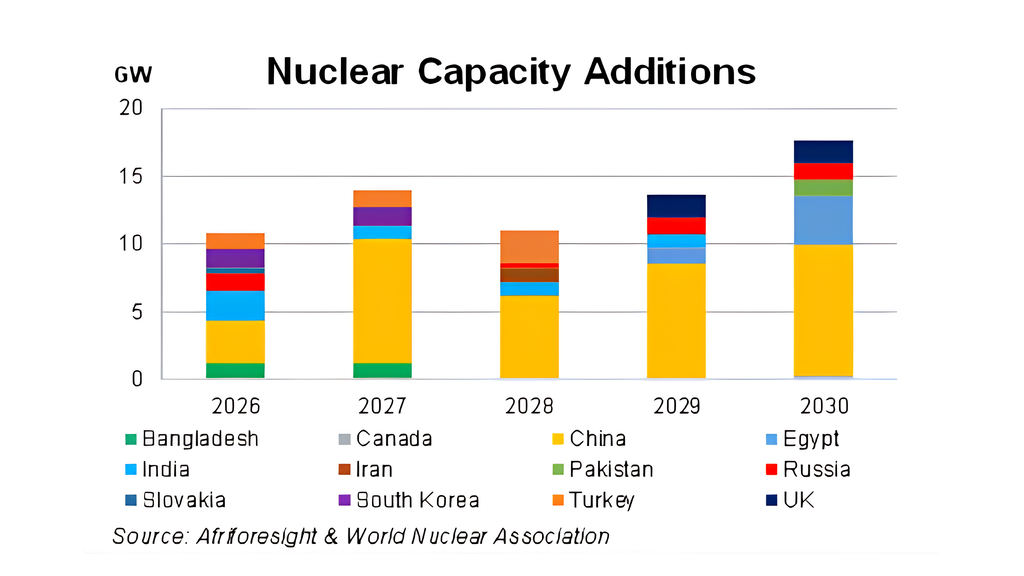
New nuclear reactors are being built around the world to meet demand for clean base load power. China dominates the pipeline for new reactors (accounting for around 54% of new capacity – see graph), but countries in Asia and the Middle East more broadly are increasing nuclear power generation to meet rising electricity demand and to shift away from carbon intensive energy sources, such as coal and gas; nuclear power also provides solid base load power, which intermittent renewables can complement. Japan has also been bringing shuttered reactors back online, permitting issues, public safety concerns and data manipulation scandals non-withstanding.
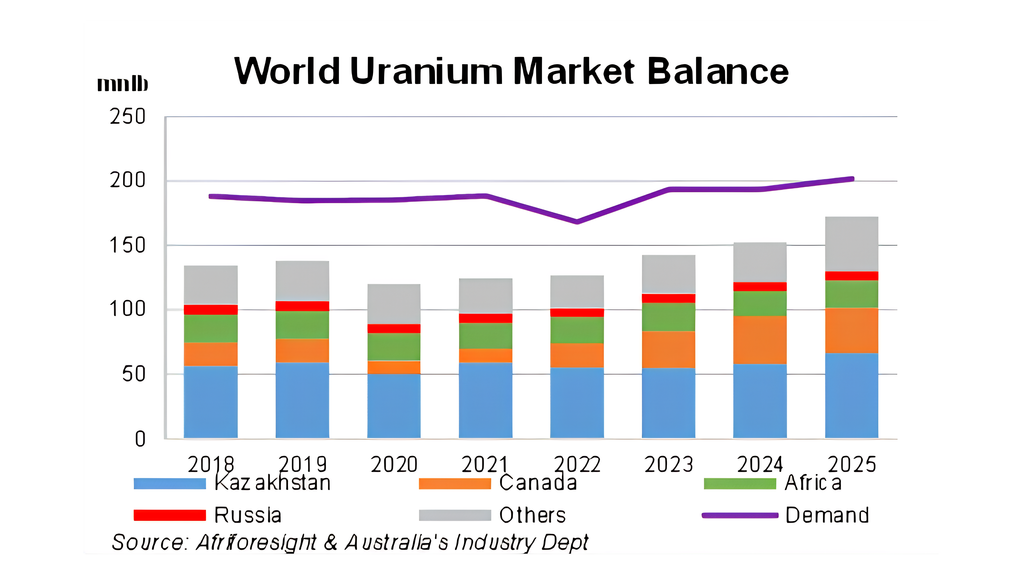
Mined uranium supply is now playing catchup, but continues to lag demand (see graph). While most uranium is mined in Kazakhstan and Canada (together around 59% of global supply), Africa is a major supplier: Namibia is the continent’s main source of output, with additional uranium coming from Niger, Malawi and South Africa.
In Namibia, Paladin is ramping up its Langer Heinrich, previously idled due to low prices; so too in Malawi, where Lotus Resources has restarted its Kayelekera mine. Paladin placed Langer Heinrich on care and maintenance in August 2018. It restarted in March 2024, and produced 4.8mnlbpa in the year-ended June 2026. Paladin expects to keep ramping up in the year-ending June 2027, targeting up to 5.6mnlb. Kayelekera was idled in 2014 by then-owner Paladin, before being sold to Lotus Resources in 2019. Lotus started output in the 1st quarter of 2025, and is ramping up to 2.4mnlbpa capacity.
Niger was previously Africa’s major uranium producer, but the military government nationalised all uranium mines after coming to power in a coup in 2023. The government has, however, now restored Atomic Eagles stake in the Madaouela project, while Global Atomic plans to develop its Dasa project. But the political situation in Niger remains precarious, with a fresh mutiny suppressed in August, and it remains to be seen whether these projects deliver any new material.
South Africa’s uranium extraction is done mostly as a by-product of gold mining and contributes very insignificant volumes to global supply.
Current uranium undersupply, rising reactor demand and high prices combine for massive opportunity for uranium miners. Africa can help to reduce the global supply deficit and companies can profit handsomely from current prices.
For more on the outlook for uranium; see our uranium forecasts.
Compiler: Vinesh Chetty (vinesh@afriforesight.com)