

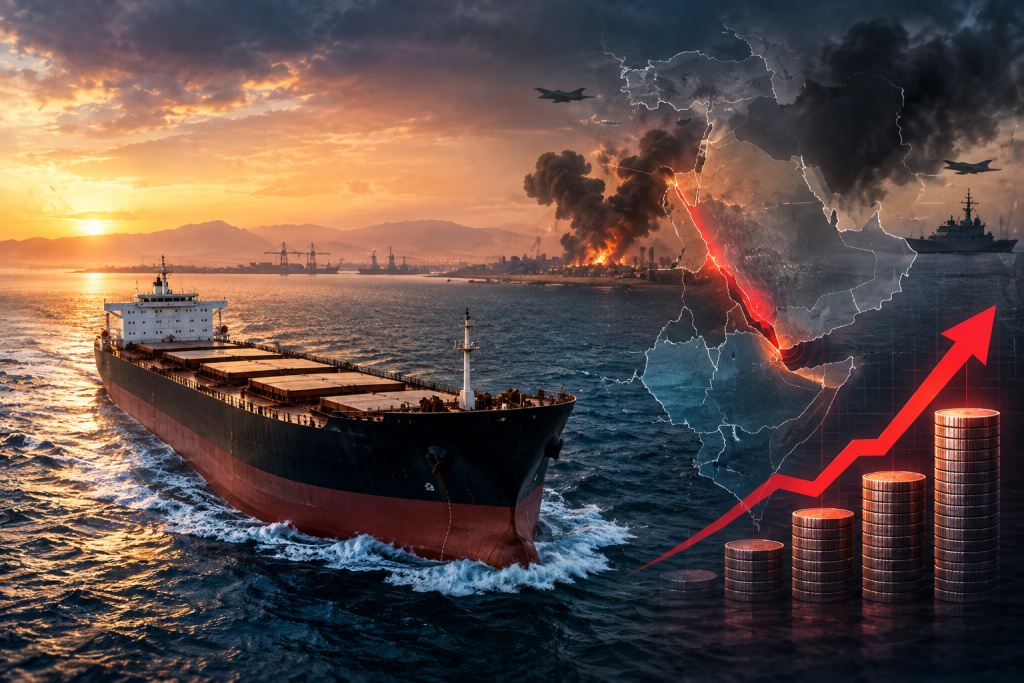
The costs of shipping dry bulk globally have generally increased since the beginning of 2025, but rate increases have picked up pace in 2026, with a surge in shipping costs over the past month boosting the Baltic Dry Index to a near 5-year high (see graph below) as China imports more coal and higher oil prices raise operating costs.
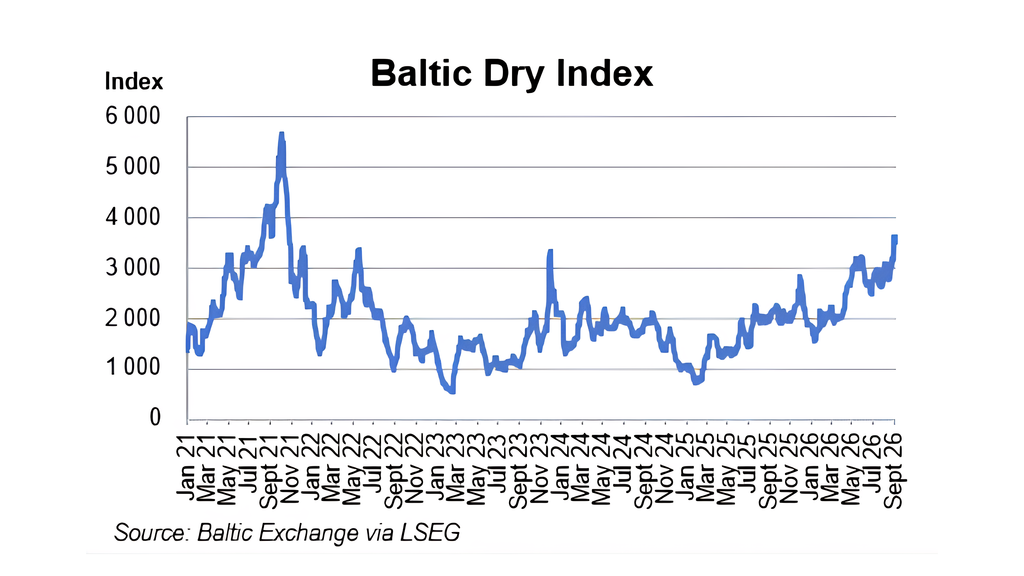
The world has many shipping routes, dry bulk commodities and ships, with near limitless combinations of routes, cargo and ship sizes. The benchmark Baltic Dry Index (BDI) tracks the cost of shipping dry bulk via 21 routes on 3 different ship sizes carrying metal ores, grains and, importantly for the recent price uptick, coal.
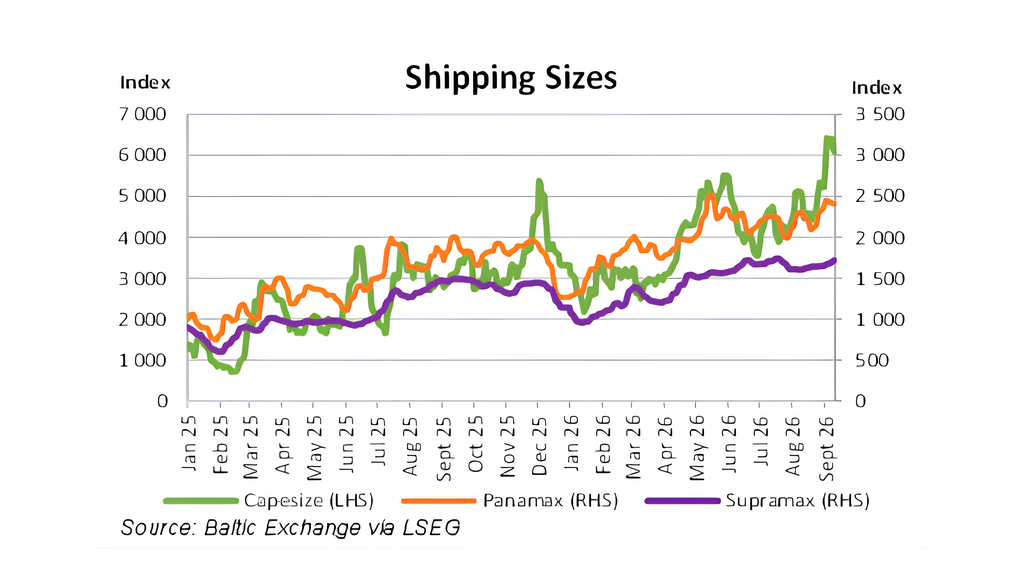
Coal is mainly shipped on the large dry bulk ships, called Capesizes, too large to use either the Suez or Panama canals and thus sail around the Cape Agulhas or Cape Horn instead. While costs of using smaller, Panamax and Supramax ships have increased too (see right hand size of graph below), recent steep increases in Capesize rates (see left hand side of graph) have been driving the increases in the overall BDI.
The increase in coal shipments is to a large extent a result of the war in the Middle East: the effective closure of the Strait of Hormuz has cut off about 20% of global oil and gas trade, forcing countries in both Europe and parts of Asia, Japan and South Korea in particular, to switch from gas to coal-fired electricity. China has also sharply ramped up coal usage in 2026 as it switched from oil to coal inputs for chemical manufacturing and lower hydro-output necessitated the burn of more coal.
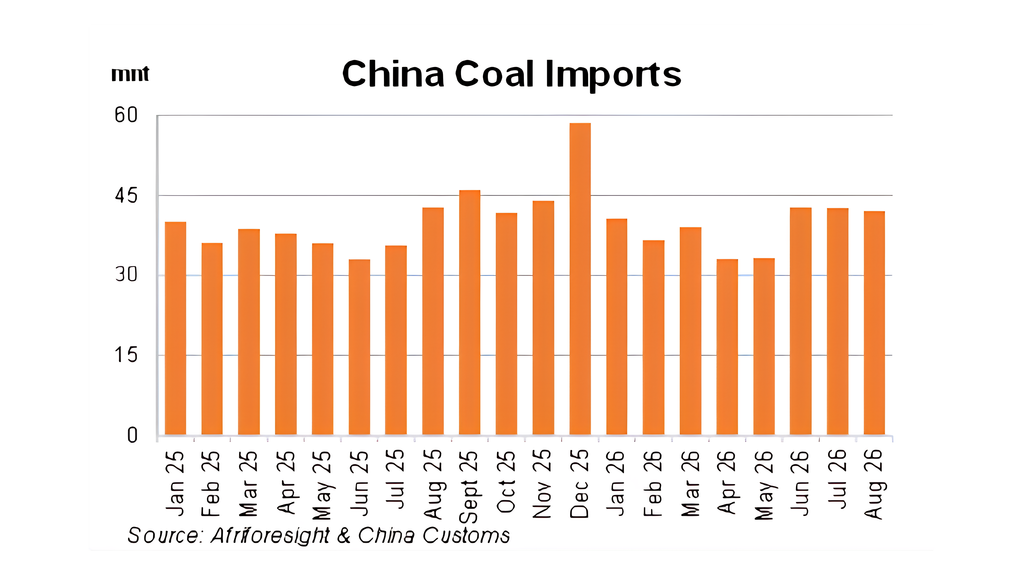
While China is the world’s largest coal miner, it still needs imports to meet its needs. Widespread safety inspections following a major mine accident in May further reduced domestic output – coal imports have climbed as a result (see graph). To compound problems, a series of typhoons in the Pacific has impacted the availability of ships in certain regions.
Additionally, the Panama Canal has also become a chokepoint for shipping in general. Drought, worsened by El Nino, has reduced water levels and led to a national State of Emergency – the canal needs fresh water to move ships between the Atlantic and Pacific. Daily transits have already been cut to 32 (down from 36) with further reduction to 27 possible. Fewer Panama Canal shipments push up fuel usage and costs on longer routes.
Since the start of the war at end February, shipping rates have also been boosted by higher fuel & insurance costs. The cost of ship bunker fuel has increased drastically at ports around the world, see graph below, as crude oil-based input costs climbed and refineries prioritised the production of higher value petrol, diesel and jet fuel. The war has also pushed up prices to insure vessels.
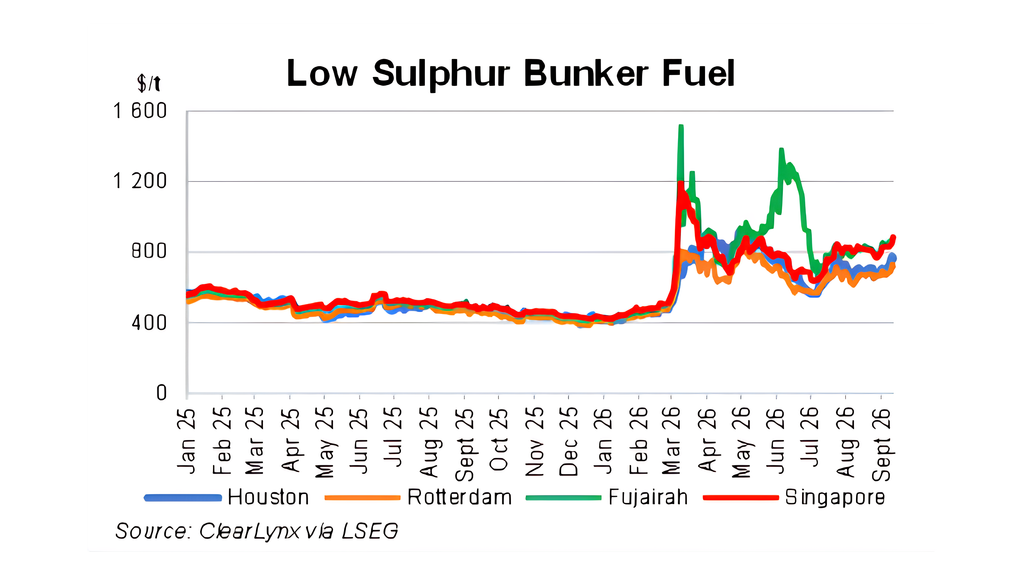
With China continuing to bring in large coal volumes, shipping rates are expected to remain elevated. An escalation in Middle East fighting has already pushed oil prices back above $100/b again, and bunker fuel costs and insurance rates are likely to follow soon. Additionally, China is likely to increase iron ore imports in the coming weeks as it stockpiles ahead of holidays starting 1 October; China may also increase imports ahead of winter, when ice can make shipments more difficult. All of this points to ongoing elevated shipping costs for the time being.
For more on the outlook for Shipping; see our Shipping forecasts.
Compiler: Vinesh Chetty (vinesh@afriforesight.com)