

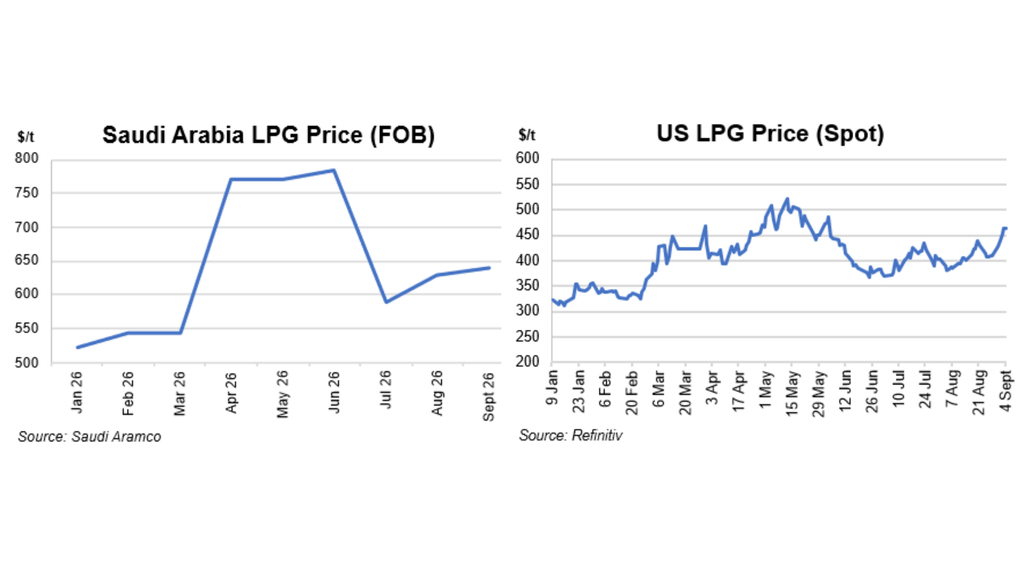
Global liquefied petroleum gas (LPG) prices have risen since the middle of the year as Middle East supply disruptions continue to tighten the market; shipping restrictions through the Panama Canal are now adding to the squeeze – the graphs show LPG prices for Saudi Arabia, the Middle East benchmark, along with prices in the US, the world’s largest LPG exporter.
LPG is widely used for cooking and domestic or commercial heating, where it can substitute for natural gas when pipeline gas is unavailable or too expensive – hence, its demand and prices are particularly sensitive to disruptions in the gas market – about 20% of global liquefied natural gas (LNG) supply has been cut off by the war.
Asia is heavily reliant on Middle Eastern LPG, where it is largely used as cooking fuel. As the war in the Middle East cut off regional supply of LPG (about 30% of global supply), Asian importers responded by boosting imports from the US (accounting for about 40% of global exports in 2025). But this back-stop supply is now also running into trouble as low rainfall amidst the El Nino weather system reduced water levels in the Panama Canal, the most direct route from the US Gulf Coast to Asia.
Lower water levels have forced a controlled reduction in daily transits through the Canal. Vessels unable to secure a booking must either wait for a transit slot or sail via longer routes. The immediate impact is higher freight costs and longer voyage times, raising delivered costs of US LPG into Asia.
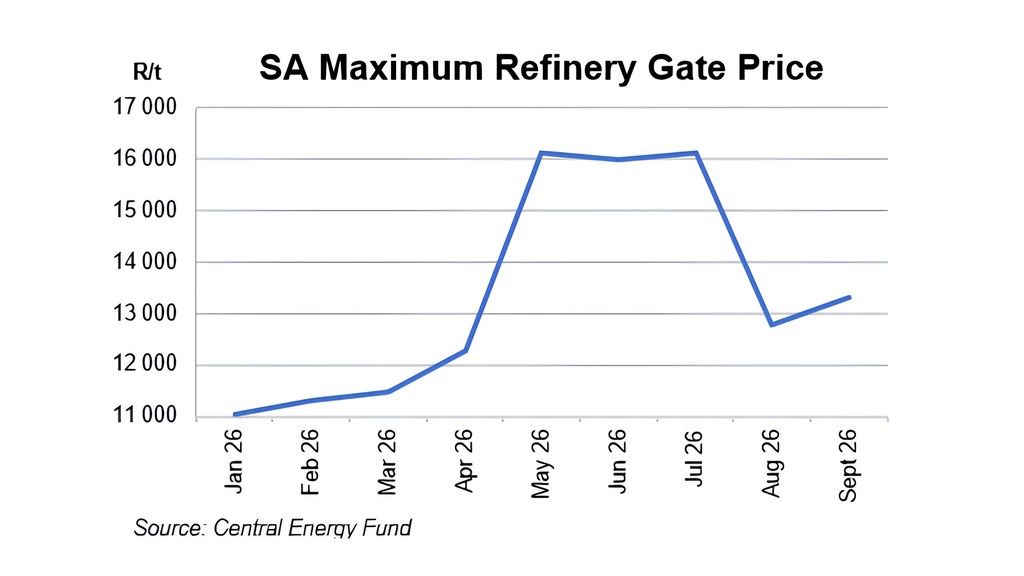
South Africa’s domestic LPG prices are influenced by international product benchmarks, rand strength and import-related costs such as shipping. South Africa’s LPG supply does not directly depend on the US to Asia route, but it remains exposed to higher global freight costs and constrained US supply, which accounted for about 75% of its LPG imports in 2025. As a net importer when refinery output is insufficient, South Africa could be exposed to higher landed LPG costs if Panama restrictions persist and global LPG availability remains tight, adding to the price increases already seen in September (see graph).
For more on the outlook for LPG; see our LPG forecasts.
Compiler: Chinmaya Alur (chinmaya@afriforesight.com)