


The Iran War has severely curbed global oil supply as the traffic through the Strait of Hormuz remains at a fraction of pre-war levels. While most of the talk has been about the elevated crude oil prices in 2026, the situation in refined product markets is even more stark, with prices for petrol and diesel at even more elevated levels – see graph.
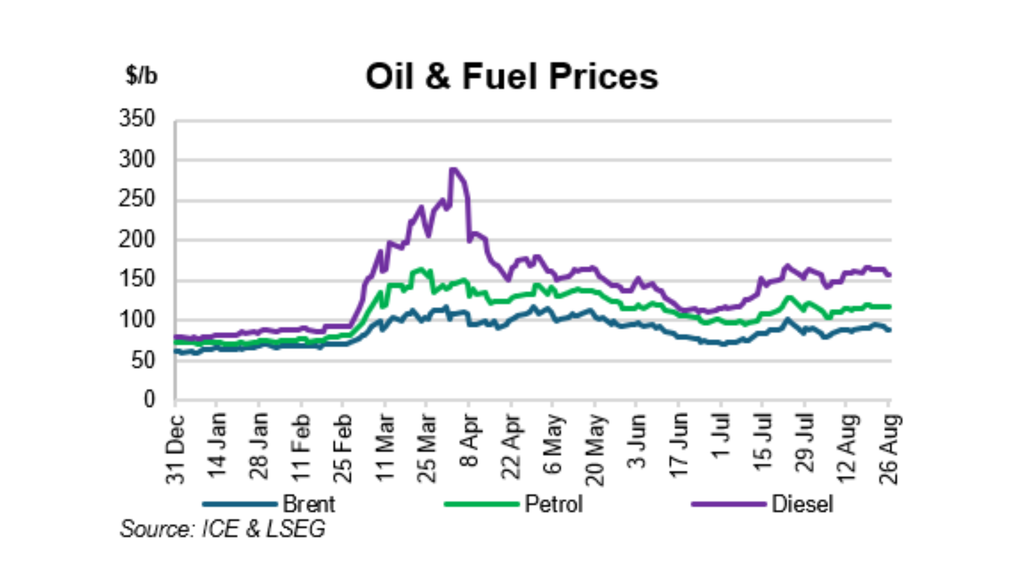
Crude oil is critical for the global economy, but still needs to be refined before it can be used; most oil is refined into petrol and diesel. Above, we show the price for 95 octane petrol from Singapore (Asia’s benchmark refining region) and 10ppm diesel. Diesel demand is still strong globally, as economic growth keeps ticking over; also, tariff battles and the Iran war make for inefficient trade, boosting international trucking, railing and shipping distances, and therefore diesel use.
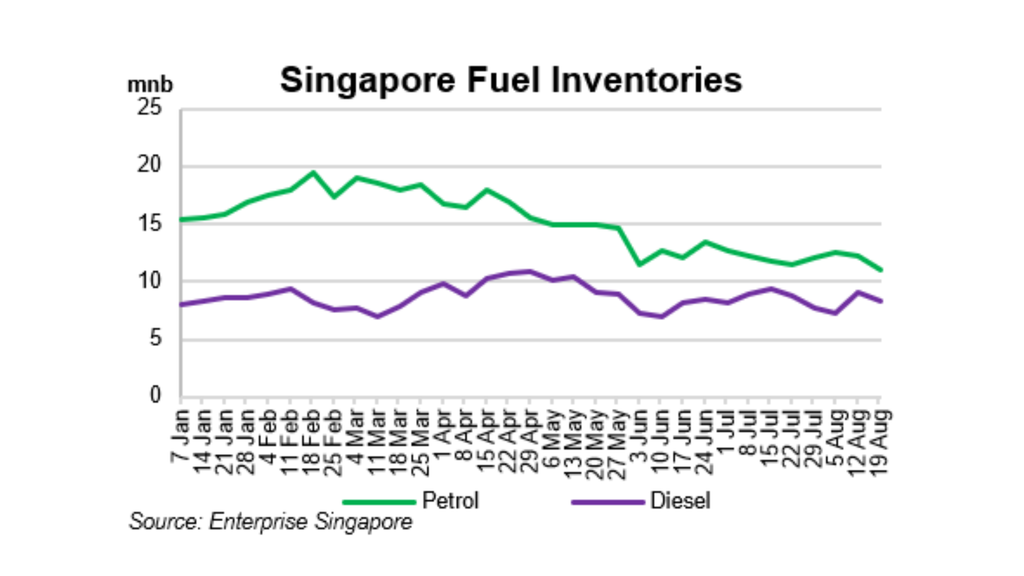
Refineries around the world have struggled for months to source enough crude oil to meet global petrol and diesel demand. Asian refiners have been particularly hard hit, as they usually import oil from the Middle East – arrivals of Middle East crude for July and August was in the region of 11mbpd, compared to just short of 16mbpd before the war. As a result, Singapore product inventories have been drawn down over 2026, see graph, as demand continues to outstrip supply.
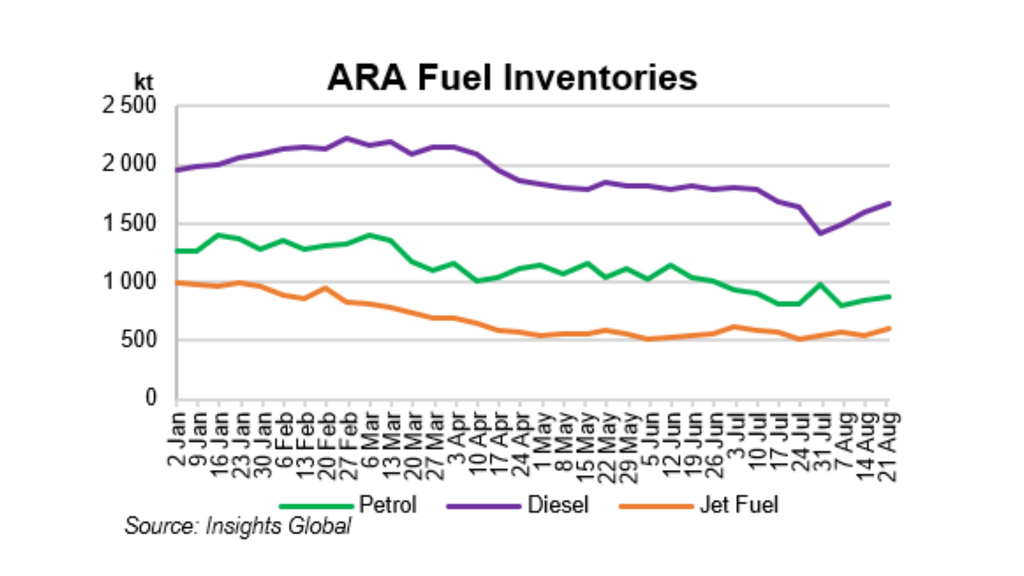
Inventories are also tight in other regions. Europe’s main refining region is around Amsterdam, Rotterdam & Antwerp (ARA) in the Netherlands and Belgium. European jet fuel inventories have taken even an even bigger knock than their petrol or diesel levels, see graph.
A story similar to Asia and Europe is playing out in the US, see graph.
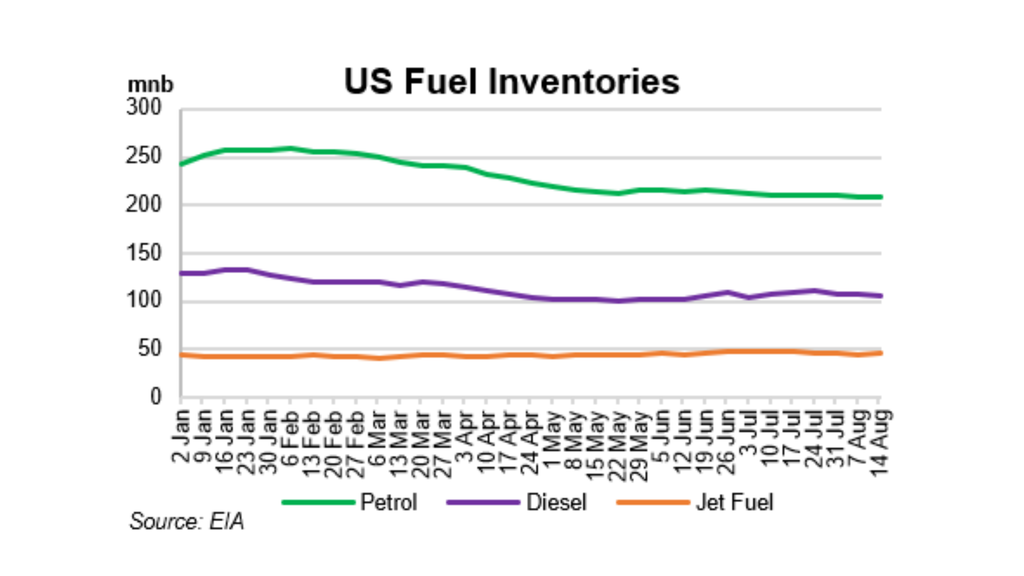
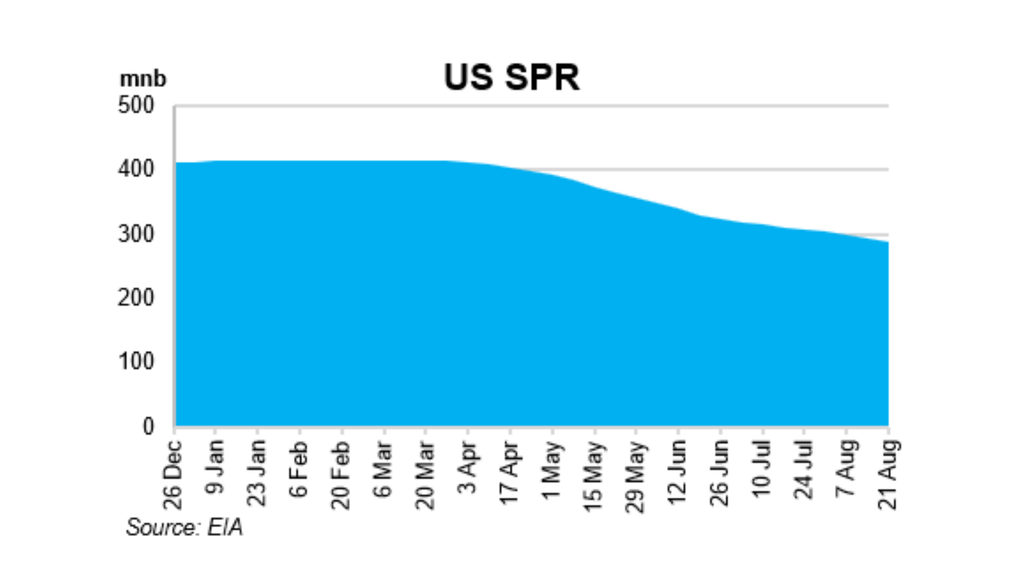
The US though is relatively shielded by its huge domestic oil supply. Additionally, the US has drawn down sharply on its Strategic Petroleum Reserves (SPR), see graph, to keep refineries processing and end users well supplied. The SPR is, however, at its lowest levels since 1982 and can’t be drawn down much further.
Oil shipments through the Strait of Hormuz have evolved into clandestine efforts by ships who have turned off their transponders “shuttling” crude to ships anchored in safer waters. Ships going “dark” increases the difficulty of tracking flows, but best we can tell they amount to around 5mbpd (compared to 15mbpd before the war – the US government claims as much as 9mbpd, initial estimates from ship-trackers Kpler suggest as little as 2.3mbpd over August (. How ever much oil is getting out, none of it is refined product.
US/Iran diplomacy has come to a standstill – neither side appears eager to resume military strikes, although Iran is still targeting ships transiting the Strait; US President Trump for his part has resorted to an economic pressure campaign, with its implementation and impact still highly uncertain.
With no end in sight to the Iran war, the world looks set to continue facing tight fuel supplies and elevated prices. It appears that only a return to oil flowing freely out of the Middle East is likely to push oil and fuel prices back to pre-war levels.
For more on the outlook for Oil; see our Oil forecasts.
Compiler: Vinesh Chetty (vinesh@afriforesight.com)