

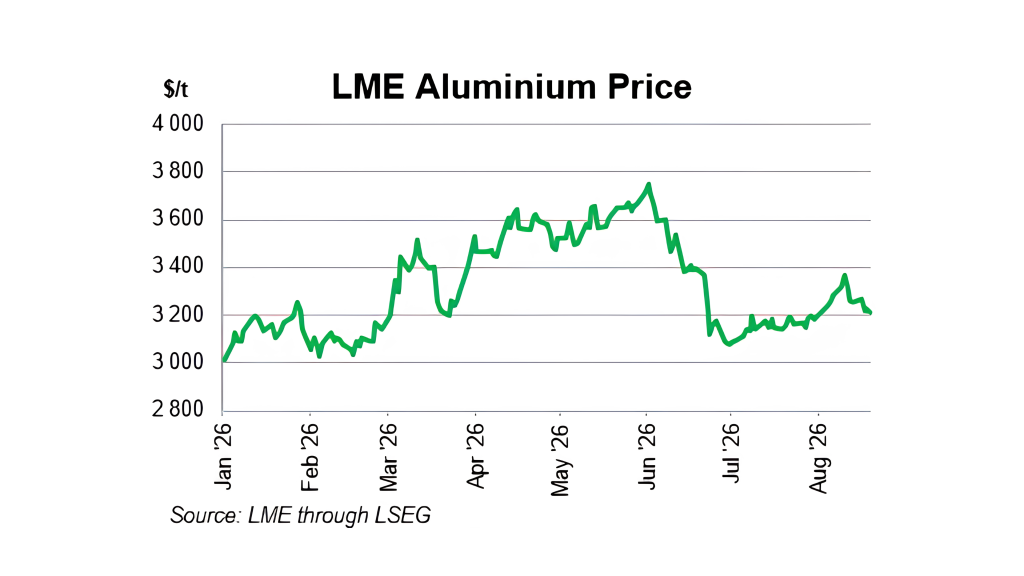
Aluminium prices tumbled back to pre‑war levels in July, dropping below $3 200/t as the mid‑June ceasefire reignited hopes of supply returning to markets (see graph below). Prices remain anchored near these levels; supply fears have eased, while shrinking LME and Shanghai inventories lend upward pressure, leaving the market caught between relief and strain.
The US-Iran war ripped nearly 10% of aluminium supply out of the global market as production from the Middle East was locked in. Missile strikes crippled smelters in the UAE and Bahrain, while Qatar slashed output amid gas shortages. Emirates Global Aluminium has staged a partial comeback of operations at Al Taweelah in the UAE: the alumina refinery is aiming for full output by year‑end while the 1.5mntpa aluminium smelter is ramping from 18% capacity, with full recovery expected by 1st quarter 2027. The region’s supply outlook remains fragile, but even these incremental restarts have been enough to ease price pressures.
Aluminium inventory drawdowns, on the other hand added upwards price pressure as Middle East production losses triggered a scramble for available metal; LME stocks are down 52% since the start of the year and Shanghai stocks down 40% since June (see graph below).
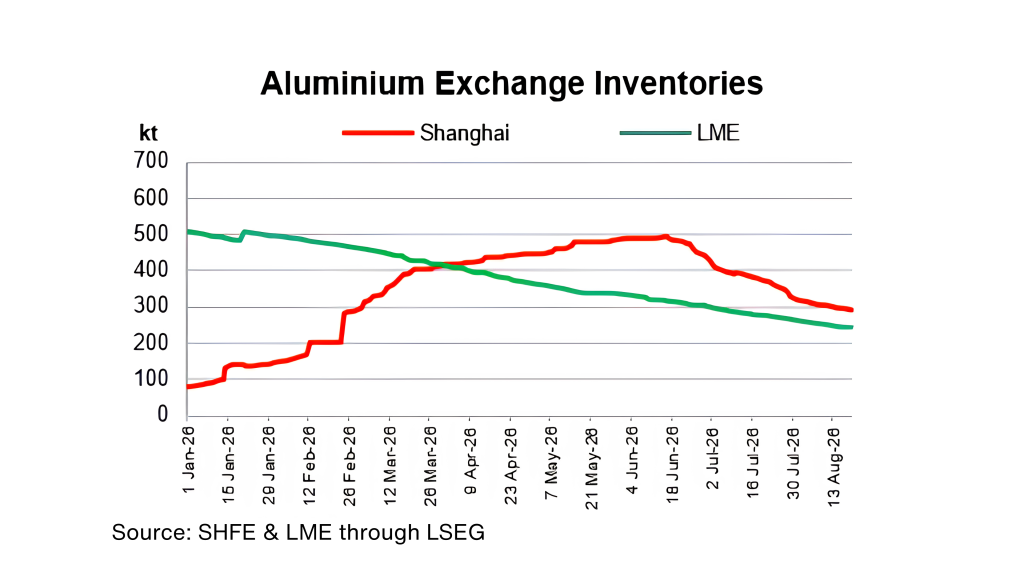
The catch? Almost all the metal left in LME warehouses is of Russian-origin, which accounts for around 95% of available aluminium in the LME system. For buyers in the US and Europe, sanctions make this metal off‑limits, while many Asian buyers are steering clear as well. That leaves most of the exchange’s visible inventory effectively sidelined. With non‑Russian aluminium scarce and Russian stocks largely unusable, there is a growing dilemma of where LME-deliverable aluminium will come from.
This all leaves the aluminium market navigating between hopes of a Middle Eastern supply recovery and the reality of declining exchange stocks. Any stumble in the expected production ramp-up from the Middle East and elsewhere, or further diversion of metal away from exchange warehouses, could quickly transform the current price stability into renewed upwards volatility.
For more on the outlook for Aluminium; see our Aluminium forecasts.
Compiler: Dina Alleluya (dina@afriforesight.com)