


South Africa’s ferrochrome industry has entered a new phase as lower electricity costs begins to unlock idled smelting capacity — but the recovery is unfolding against a global market where rising supply and subdued Chinese import demand continue to weigh on prices – see graph below.
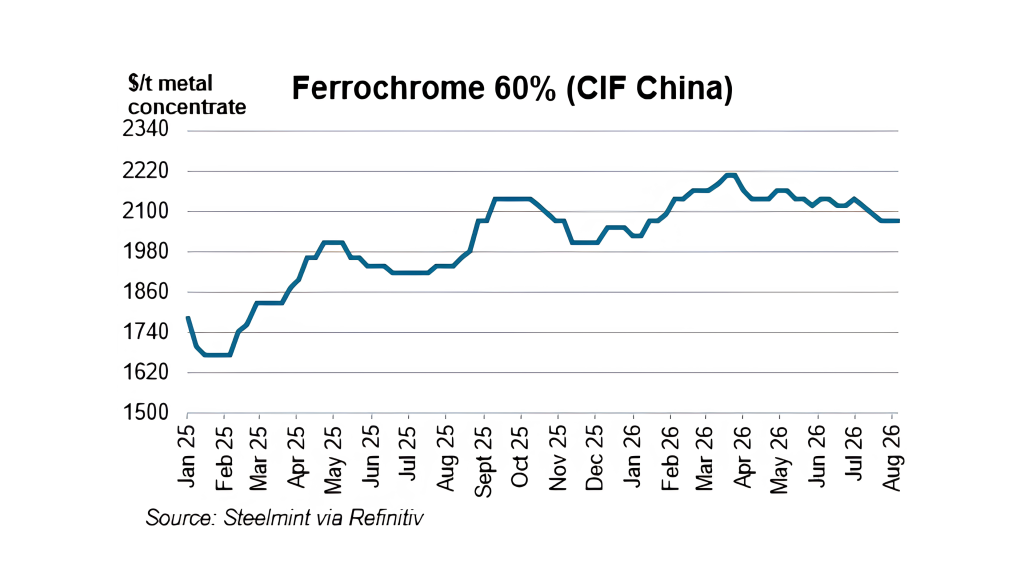
The negotiated pricing agreement earlier in the year between Eskom and major ferrochrome producers to cut electricity tariffs by about 35% to 62c/kWh marked an important step towards rebuilding South Africa’s ferrochrome production base after prolonged capacity suspensions driven largely by high power costs. The recovery is already underway at Glencore-Merafe Chrome Venture’s Lion smelter, where production resumed earlier this year, while the restart of the Boshoek and Wonderkop smelters is currently underway, with the ramp-up expected to be fully completed toward the end of the year. Samancor received the same deal as Glencore but have not reported any progress on restarts.
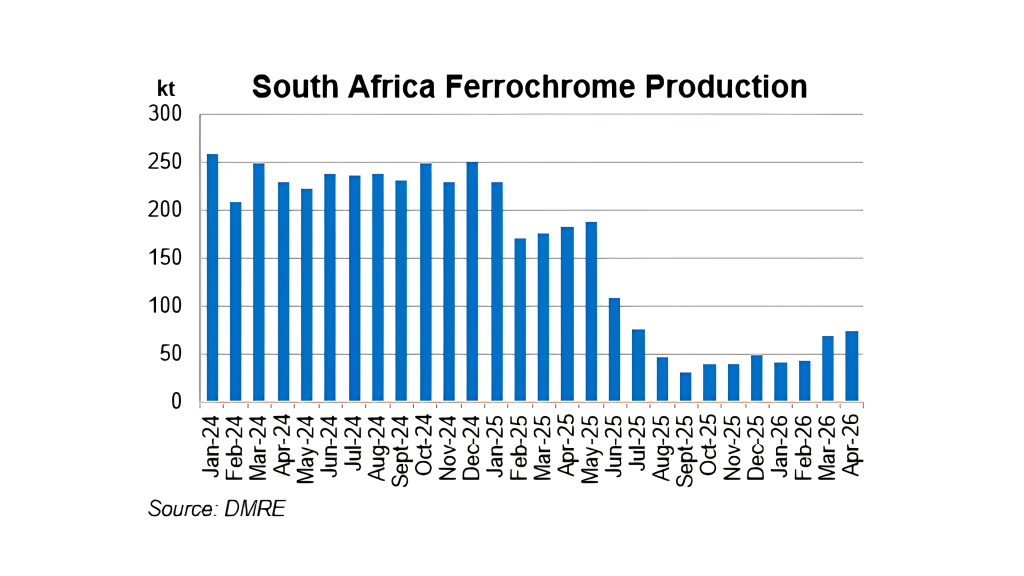
However, South Africa’s ferrochrome output is recovering from a very low production base – see graph below. Merafe’s attributable ferrochrome output fell 75% year-on-year to 28kt in the 1st half of 2026, largely because Boshoek and Wonderkop remained suspended and Lion operated at reduced capacity – South Africa’s government targets the restart of 49 out of 66 smelters by the end of 2027, which would bring volumes back to earlier levels.
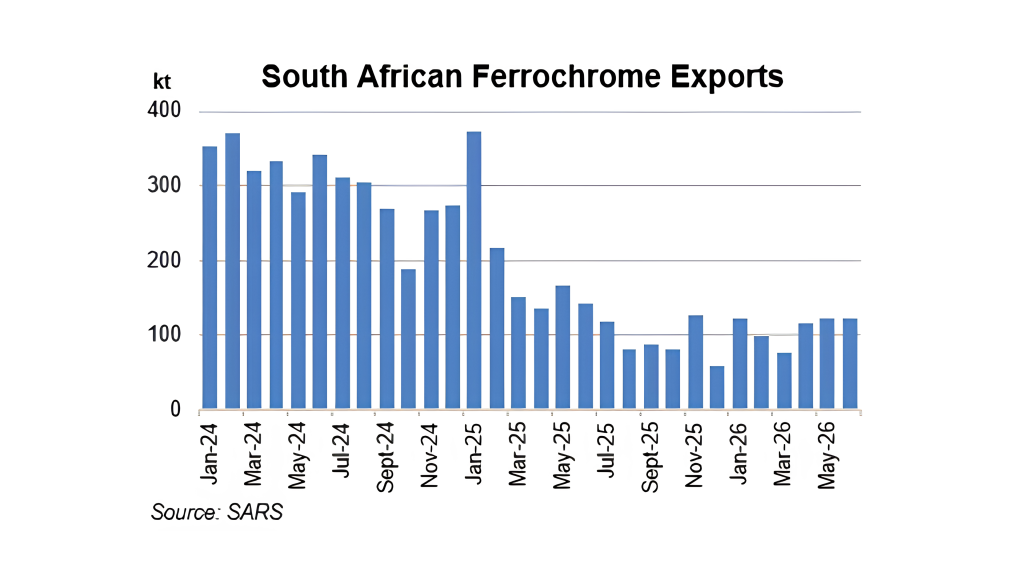
The prolonged shutdown of South African ferrochrome capacity has pushed more chrome ore into the export market. However, as more smelters restart, more domestic chrome ore could increasingly be absorbed locally rather than exported, with a recovery in ferrochrome output also boosting exports, but again from a much lower base – see graph below.
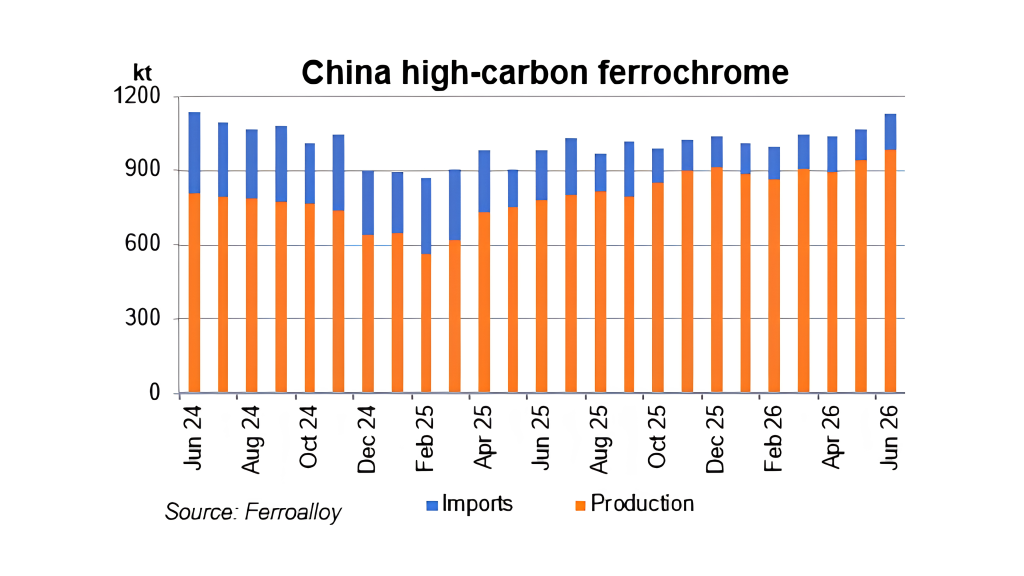
Meanwhile, China’s ferrochrome output has been on the rise, while imports have fallen sharply. China’s high-carbon ferrochrome imports for the 12months to June 2026 were down 42% from preceding 12months, with imports from South Africa plunging by 77.6%. Part of the decline in imports can be attributed to rising Chinese domestic production, but the slowdown in China’s (non-tech) industrial investment over the past few months also points to much weaker demand.
Cheaper electricity has reopened the door for domestic ferrochrome producers. But global competitiveness, Chinese supply growth and the strength of its ferrochrome demand will determine if South Africa can walk through it.
For more on the outlook for ferrochrome; see our ferrochrome forecasts.
Compiler: Khomotso Rabutla (khomotso@afriforesight.com)